Are Peptides Good for You? A Guide to Precision Vitality in 2026
- 13 hours ago
- 12 min read
What if your body already holds the blueprint for its own restoration, and all it needs is a precise signal to turn the lights back on? You've likely felt the frustration of slow muscle recovery after a workout or the persistent cloud of brain fog that caffeine just can't clear. It's common to wonder if these shifts are just an inevitable part of aging or if there's a more targeted way to reclaim your edge. You're asking are peptides good for you because you want more than a temporary fix; you want a strategy that works with your biology.
We agree that navigating modern health options can feel overwhelming, especially with the shifting landscape of medical science. This guide explores the science-backed benefits and safety profiles of these signaling molecules, showing you how they can help you reclaim your health and vitality. We'll break down the latest April 2026 regulatory updates, explain how peptides enhance metabolic health, and show you exactly how to begin a medically supervised journey toward precision vitality.
Table of Contents
What Are Peptides and Why Are They Essential for Vitality?
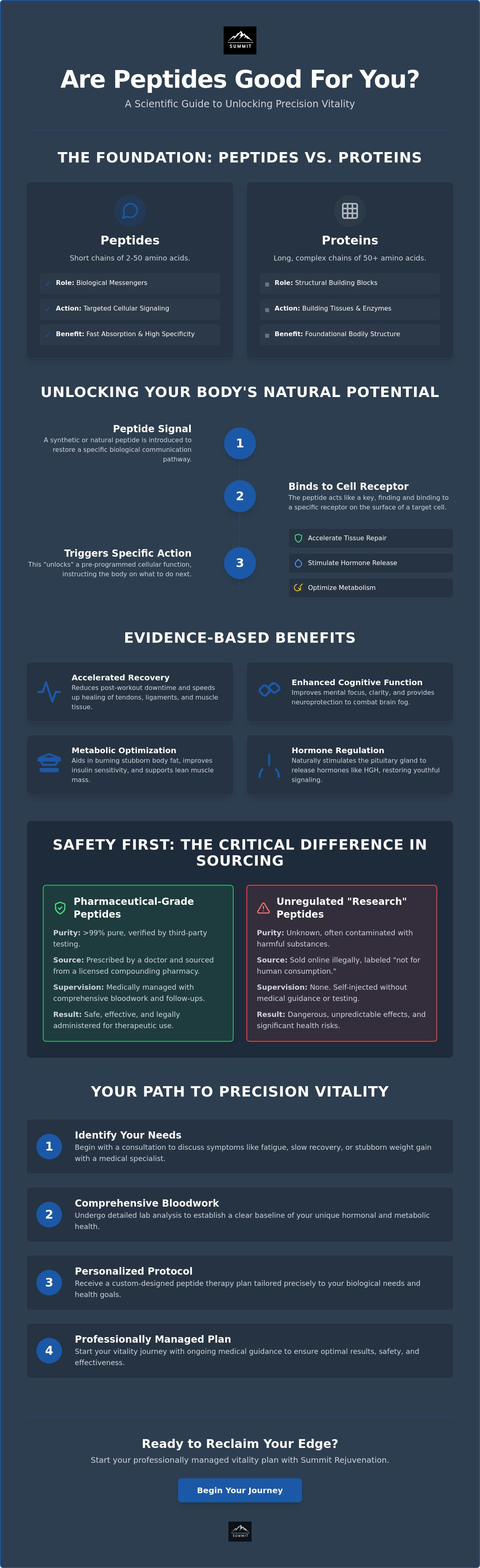
To understand why people ask What are peptides and whether they can truly transform health, we must look at the foundational building blocks of life. Peptides are short chains of 2 to 50 amino acids, linked together by peptide bonds. They are smaller than proteins but carry an immense amount of biological information. If proteins are the structural beams of a building, peptides are the specialized messengers delivering the blueprints to the construction crew. They don't just exist as passive structures; they actively participate in your body's most critical functions.
These molecules function through a precise signaling mechanism. They travel through your system and bind to specific receptors on the surface of cells, acting as a key that unlocks a particular biological response. This is why the question of are peptides good for you is so relevant; they don't just provide raw material, they provide instructions. They tell your body to repair skin, release hormones, or burn fat. This high level of specificity allows for targeted health improvements that traditional supplements often miss.
Your body is already a master at peptide production. You rely on them every second of every day. Insulin, the hormone that regulates your blood sugar, is a peptide. Growth hormone, which facilitates tissue repair and muscle development, is another. Without these natural messengers, your body's systems would lose their ability to communicate. This breakdown in signaling often leads to the metabolic slowdown and recovery issues many experience as they age. By understanding these molecules, we can begin to see how are peptides good for you when used to restore these vital pathways.
The Difference Between Peptides and Proteins
The primary distinction lies in size and complexity. Scientists generally use a 50-amino-acid threshold to separate the two. Once a chain exceeds 50 amino acids, it's classified as a protein. This smaller size is exactly what makes peptides so effective for therapeutic use. Because they are less complex, they can be designed for more targeted applications, interacting with receptors in ways that larger, bulkier proteins cannot. While your body eventually breaks both down into reusable amino acids, peptides offer a more direct pathway for cellular communication and faster absorption into the system.
Natural vs. Synthetic Peptides
It's helpful to distinguish between where these molecules originate. Endogenous peptides are those produced naturally by your organs, like the heart, brain, and stomach. Exogenous, or synthetic, peptides are created in a laboratory setting. These are designed to either mimic the natural signals your body is already sending or to enhance those signals when they begin to fade. Synthetic peptides are bioidentical tools for precision health optimization. By using these lab-verified versions, we can restore signaling pathways that have become sluggish over time, helping you regain the vitality of your younger years with clinical precision.
How Peptides Support Your Body’s Natural Functions
Peptides act as the biological software of your body. When people ask "are peptides good for you", they're often looking for a way to fix a specific problem, like a slow metabolism or a nagging injury. These molecules play an essential role in fundamental physiological processes by binding to receptors on your cells. This binding acts like a key, unlocking specific repair mechanisms. In your tendons and ligaments, peptides can signal the body to increase collagen production, accelerating healing times that would otherwise take months. This targeted approach is why they're becoming a cornerstone of modern vitality.
In the pituitary gland, peptides serve as powerful secretagogues. Instead of just adding a foreign substance to your blood, they encourage your body to release its own growth hormones. This natural stimulation helps maintain metabolic signaling, ensuring your body effectively oxidizes fat and maintains insulin sensitivity. This isn't about overriding your biology; it's about optimizing the systems you already have. By focusing on these natural triggers, you can achieve results that feel both powerful and sustainable. We believe in a human-centric approach where your understanding of the process is just as important as the treatment itself.
The Role of Peptides in Hormone Optimization
Peptides offer a unique synergy when paired with other clinical interventions. For men, they can effectively complement trt therapy by supporting pathways that testosterone alone might not address. Similarly, for women, these molecules enhance the results of hormone replacement therapy for women by focusing on tissue repair and cellular energy. The beauty of this approach is that peptides often prompt your body to produce its own hormones. This creates a more balanced and supportive internal environment tailored to your specific needs.
Metabolic and Weight Management Signals
Weight loss plateaus are often the result of broken signaling. GLP-1 peptides have gained significant attention for their ability to manage appetite and blood sugar, but they're just one part of the puzzle. By improving how your cells respond to energy, peptides help you overcome stubborn weight gain that diet alone can't touch. When considering are peptides good for you in the context of weight, it's vital to consider the entire metabolic landscape. To ensure these pathways have the raw materials they need, it's helpful to consider how vitamins for hormone balance support the overall signaling process. Working with a dedicated partner can help you determine which protocols are right for your body's unique chemistry. You can explore personalized options to see how these advanced therapies align with your goals.
The Benefits of Peptide Therapy: From Recovery to Longevity
The scope of peptide therapy extends far beyond simple supplementation. When evaluating whether are peptides good for you, it's essential to look at the broad spectrum of systemic improvements they offer. From cognitive enhancement to immune modulation, these molecules provide a versatile toolkit for health restoration. They support neuroprotection by improving focus and mental clarity, while also helping your body manage inflammation more effectively. This comprehensive support is why many patients find that addressing one symptom, like fatigue, often leads to improvements in areas they hadn't even considered, such as better skin elasticity or deeper sleep.
Quality of life often hinges on the rhythm of your recovery and rest. Specific secretagogues can help normalize circadian rhythms, allowing for the deep, restorative sleep cycles that become harder to achieve as we age. On a cellular level, these molecules boost collagen production from the inside out, improving skin health and structural integrity. Columbia University experts note that peptide therapies are increasingly recognized for their diverse clinical applications, provided they are managed under professional supervision. This clinical oversight ensures that the benefits are maximized while maintaining a steady, reliable path toward your health goals.
Accelerated Healing and Injury Repair
For those managing chronic joint pain or recovering from strenuous exercise, peptides like BPC-157 offer significant promise. These compounds facilitate angiogenesis, the formation of new blood vessels, and stimulate collagen synthesis to repair damaged tissues. Athletes and active adults frequently use these protocols to reduce downtime and address lingering injuries that haven't responded to traditional rest. BPC-157 is often called the "Body Protection Compound" due to its systemic healing properties. It doesn't just mask the pain; it signals the body to rebuild the structural foundations of your tendons and ligaments.
Body Composition and Muscle Retention
Maintaining lean muscle mass is a cornerstone of metabolic health. Growth hormone secretagogues, such as CJC-1295 and Ipamorelin, work by prompting the pituitary gland to release its own growth hormone in natural pulses. This is a far more refined approach than traditional anabolic steroids, as it carries a significantly lower side effect profile and works with your body's existing regulatory systems. These protocols help you preserve muscle while encouraging the body to utilize fat stores for energy. For those focused on optimizing their physique, our peptides for weight loss guide provides deeper insights into how these signaling molecules can help you overcome stubborn metabolic plateaus.
Safety and Quality: Therapeutic Peptides vs. Supplements
The rise of biohacking has led many to ask are peptides good for you, but the answer depends entirely on the quality of the source. While the therapeutic potential is immense, the market is currently flooded with "research chemicals" that aren't meant for human use. These gray market products often lack third-party testing for purity and potency, posing significant risks to your health. Choosing pharmaceutical-grade peptides ensures that you're receiving a precise, sterile compound free from contaminants or heavy metals. It's the difference between a controlled medical intervention and an unregulated gamble with your biology.
Medical supervision isn't just a formality; it's a safety requirement. Attempting a "DIY" protocol can disrupt your delicate endocrine system, leading to hormonal imbalances that are difficult to correct. A professional provider monitors your progress and adjusts dosages based on real-time data from your bloodwork. While peptides are generally well-tolerated, some individuals may experience mild side effects like water retention, tingling in the extremities, or slight irritation at the injection site. Having a dedicated partner in your health journey allows you to manage these responses effectively and maintain your path toward restoration. You can connect with a clinical expert today to ensure your protocol is both safe and effective.
Why OTC Collagen Isn’t the Same as Peptide Therapy
It's easy to confuse over-the-counter collagen powders with clinical peptide therapy. Oral collagen peptides are essentially food; your digestive system breaks them down into basic amino acids before they ever reach your bloodstream. This process often prevents the specific signaling required for systemic repair. In contrast, injectable therapeutic peptides bypass the digestive tract to deliver a direct message to your cells. This method ensures the molecule remains intact to trigger the desired biological response. To understand these delivery methods more deeply, read our comprehensive guide to peptides.
Identifying Real Peptides and Avoiding Scams
Protecting yourself starts with recognizing red flags. Legitimate peptides don't come in bottles labeled "not for human consumption" or lack verifiable lab reports. If a website doesn't require a prescription or a medical consultation, it's likely selling unregulated substances. A safe protocol always involves a US-licensed pharmacy and a physician's oversight. Compounding pharmacies play a critical role here, as they create high-purity blends tailored to your specific needs. By prioritizing transparency and pharmaceutical-grade sourcing, you ensure that the answer to are peptides good for you remains a resounding yes.
Reclaiming Your Vitality: Is Peptide Therapy Right for You?
Deciding to optimize your health is a significant step toward restoration. While we've explored the science and safety, the ultimate question remains: are peptides good for you specifically? The answer depends on your unique biological needs and health goals. If you're experiencing persistent fatigue, slow recovery from exercise, or metabolic shifts that don't respond to diet and lifestyle changes, your body's signaling pathways might be lagging. Moving from a state of decline to one of thriving requires a methodical, professional approach rather than a "one-size-fits-all" solution.
The journey to precision vitality follows a structured path. It starts with identifying the subtle signals your body is sending and moves into clinical validation. This process ensures that every intervention is purposeful and safe. You can expect a collaborative experience where your understanding of the therapy is prioritized at every stage.
Step 1: Identifying Symptoms. Recognize when your body’s signaling is lagging through signs like brain fog, decreased libido, or stubborn weight gain.
Step 2: Comprehensive Bloodwork. This is the mandatory foundation for any safe protocol. We analyze your biomarkers to understand your internal chemistry before recommending any treatment.
Step 3: Expert Consultation. Connect with a provider who understands peptide synergy. General practitioners often lack training in these advanced signaling molecules, making specialized expertise vital.
Step 4: Personalized Protocol. Your dosage and peptide selection are tailored to your specific bloodwork results and lifestyle goals.
Step 5: Ongoing Monitoring. Optimization isn't a one-time event. We adjust your plan based on real-world results and follow-up labs to ensure you stay on the right track.
The Summit Rejuvenation Approach to Peptides
We believe that high-level medical care should be accessible and streamlined. Our model utilizes telehealth to bring expert consultations directly to you, regardless of where you live in the United States. Once your personalized protocol is established, we facilitate the shipping of prescribed medications from a licensed pharmacy straight to your home. This approach removes the logistical hurdles often associated with advanced therapies. Our focus remains on proactive empowerment, giving you the tools to manage your health before minor symptoms turn into chronic issues. We act as your dedicated partner, ensuring that the question of are peptides good for you is answered through measurable, life-changing results.
Starting Your Journey to Optimization
Viewing peptide therapy as a long-term partnership in your health is the most effective way to see lasting change. These molecules often work in harmony with other treatments to create a comprehensive foundation for vitality. For many, this includes integrating their protocol with hrt online services to address broader hormonal imbalances. By combining these targeted signals with expert oversight, you can reclaim the energy and focus you thought were lost to time. It's time to stop settling for "fine" and start pursuing your peak state. Schedule your consultation with Summit Rejuvenation today and take the first step toward a more vibrant, optimized version of yourself.
Embracing the Future of Personalized Health
Peptide therapy represents a shift from reactive medicine to proactive empowerment. By understanding how these molecules act as precise messengers, you can begin to restore the signaling pathways that drive your energy, recovery, and metabolic health. We've explored why medical-grade quality is non-negotiable and how the right protocol helps you overcome stubborn plateaus. The question of are peptides good for you finds its answer in the clinical precision of a plan built specifically for your unique biology.
Taking the next step is straightforward and professionally managed. Our process includes a comprehensive bloodwork analysis and consultations with US-licensed medical providers to ensure your safety and success. With direct-to-home medication delivery, reclaiming your vitality has never been more accessible. You don't have to navigate this journey alone. You can Start Your Personalized Peptide Protocol with Summit Rejuvenation today and move toward the vibrant life you deserve. We're here to partner with you every step of the way.
Frequently Asked Questions
Are peptides safe for long-term use?
Peptides are generally safe for long-term use when they're administered under medical supervision and incorporated into a structured cycle. Because these molecules mimic the signals your body already produces, they're typically well-tolerated. However, it's vital to include "off" periods in your protocol to prevent your receptors from becoming desensitized. Regular follow-up labs allow your provider to monitor your progress and ensure your endocrine system remains in a healthy, balanced state.
How long does it take to see results from peptide therapy?
You'll likely notice improvements in sleep quality and energy levels within the first 2 to 4 weeks of starting your protocol. More significant changes, such as enhanced muscle tone, fat loss, and improved joint health, usually become apparent between 3 and 6 months of consistent use. Since peptides work by signaling cellular repair and metabolic shifts, your body needs this time to rebuild tissues and adjust its internal chemistry for lasting results.
Can I take peptides if I am already on TRT?
Yes, many patients find that peptides effectively complement Men's Hormone Therapy (TRT) by addressing different biological pathways. While TRT replaces declining testosterone levels, peptides can focus on growth hormone stimulation, tissue repair, or metabolic efficiency. This combination often creates a powerful synergy that provides a more comprehensive approach to restoration than hormone replacement alone. Your provider will help you coordinate these therapies to ensure they work together harmoniously.
Do peptides have side effects like traditional hormones?
Peptides typically have a much lower side effect profile than traditional anabolic hormones because they encourage your body to produce its own signals rather than replacing them entirely. While they're highly targeted, some individuals may experience mild water retention, slight tingling in the hands, or minor irritation at the injection site. Because they don't cause the systemic shutdowns often seen with exogenous steroids, they're considered a more refined tool for long-term vitality.
Are peptide injections better than oral pills?
Injectable peptides are significantly more effective than oral versions because they bypass the digestive system and enter the bloodstream directly. When you take peptides orally, stomach acid and enzymes often break the delicate amino acid chains down into basic nutrients before they can send any signals. Injections ensure the molecule remains intact, allowing it to reach cellular receptors and trigger the specific biological responses you're looking for.
What is the most effective peptide for fat loss?
Semaglutide and Tirzepatide are currently the most effective options for medical weight loss and appetite regulation. These peptides function as GLP-1 agonists to improve insulin sensitivity and manage hunger signals. When asking are peptides good for you in the context of body composition, these pharmaceutical-grade tools offer the most documented success for overcoming metabolic plateaus and achieving sustainable fat loss under clinical oversight.
Is peptide therapy legal in the United States?
Yes, peptide therapy is legal in the United States when it's prescribed by a licensed physician and fulfilled by a regulated pharmacy. Following the April 2026 regulatory updates, several key peptides have been reclassified to make them more accessible through legal compounding. It's important to distinguish these prescribed treatments from unregulated "research chemicals," which are not legal for human consumption and carry significant safety risks.
Do I need a prescription for peptides?
You must have a valid prescription from a licensed healthcare provider to legally obtain high-quality, pharmaceutical-grade peptides. This requirement is a safety measure that ensures the answer to are peptides good for you stays positive by involving professional diagnosis and bloodwork analysis. Sourcing your peptides through a prescription protects you from the contaminated or inaccurately dosed products frequently found on the unregulated gray market.


Comments