Hormone Replacement Therapy for Women: The 2026 Guide to Reclaiming Vitality
- 2 days ago
- 12 min read
What if the "brain fog" and exhaustion you feel every afternoon aren't just inevitable signs of aging? For years, many women have been told to simply endure the loss of libido and vitality that often comes with hormonal shifts. You might feel frustrated by generic medical advice or confused by lingering myths about the safety of hormone replacement therapy for women. It's time to look past the outdated headlines. The medical consensus in 2026 has shifted significantly, especially following the FDA's recent removal of "black box" warnings from several major hormone therapy products.
We understand that you want more than just a way to stop hot flashes; you want to feel like yourself again. This guide will show you how modern hormone optimization can transform your energy, sleep, and mood stability. You'll discover the latest research on bioidentical options and learn why a personalized, bloodwork-driven approach is the key to long-term wellness. We are going to walk through the newest safety data and the practical steps you can take to build a health plan that prioritizes your unique biology and helps you reclaim your edge.
Table of Contents
Understanding Hormone Replacement Therapy for Women: Beyond the Basics
The Core Hormones: How Estrogen, Progesterone, and Testosterone Shape Your Vitality
Comparing HRT Delivery Methods: Pills, Creams, and Injections
The Diagnostic Shift: Moving from Normal Ranges to Optimal Health
Reclaiming Your Life: How Telehealth HRT Simplifies Your Wellness Journey
Understanding Hormone Replacement Therapy for Women: Beyond the Basics
Hormones act as the master conductors of your body's most critical systems. When they begin to fluctuate during the transition from perimenopause to menopause, the impact is felt far beyond the occasional hot flash. You might notice your concentration slipping or your once steady mood becoming unpredictable. Hormone replacement therapy (HRT) is a medical approach focused on restoring these declining levels to their natural state. While traditional medicine often views this as a way to simply quiet bothersome symptoms, modern hormone optimization seeks to return your body to a state of peak performance. Hormone replacement therapy for women is a targeted medical strategy that replenishes deficient hormone levels to restore biological equilibrium, enhance long-term health, and reclaim the vibrant energy of your younger years.
The Role of Estrogen and Progesterone
Estrogen is often discussed in the context of reproductive health, but its influence is vast. It supports bone density by regulating the cells that build bone; it also maintains the elasticity of your blood vessels to protect heart health and supports cognitive function. Progesterone plays a complementary role, acting as a natural stabilizer for the nervous system. Women often find that progesterone is the key to restoring deep, restorative sleep and reducing daily anxiety. If you have an intact uterus, using these two hormones together is the standard of care. This "combined therapy" ensures the uterine lining remains healthy and protected while you receive the systemic benefits of estrogen.
Why HRT is Not Just for Menopause
Many women are surprised to learn that hormonal shifts can begin as early as their mid-30s. This phase, known as perimenopause, can cause years of unexplained fatigue and weight gain before your cycle even changes. Proactive hormone replacement therapy for women addresses these early disruptions before they settle into chronic health issues. By focusing on preventative benefits, such as maintaining metabolic health and preventing the onset of osteoporosis, we shift the conversation away from merely "aging gracefully." Instead, we prioritize living optimally. We want to ensure your body has the hormonal support it needs to stay strong, sharp, and resilient for decades to come. This approach moves the focus from reacting to decline to actively managing your long-term vitality through precise, medical partnership.
The Core Hormones: How Estrogen, Progesterone, and Testosterone Shape Your Vitality
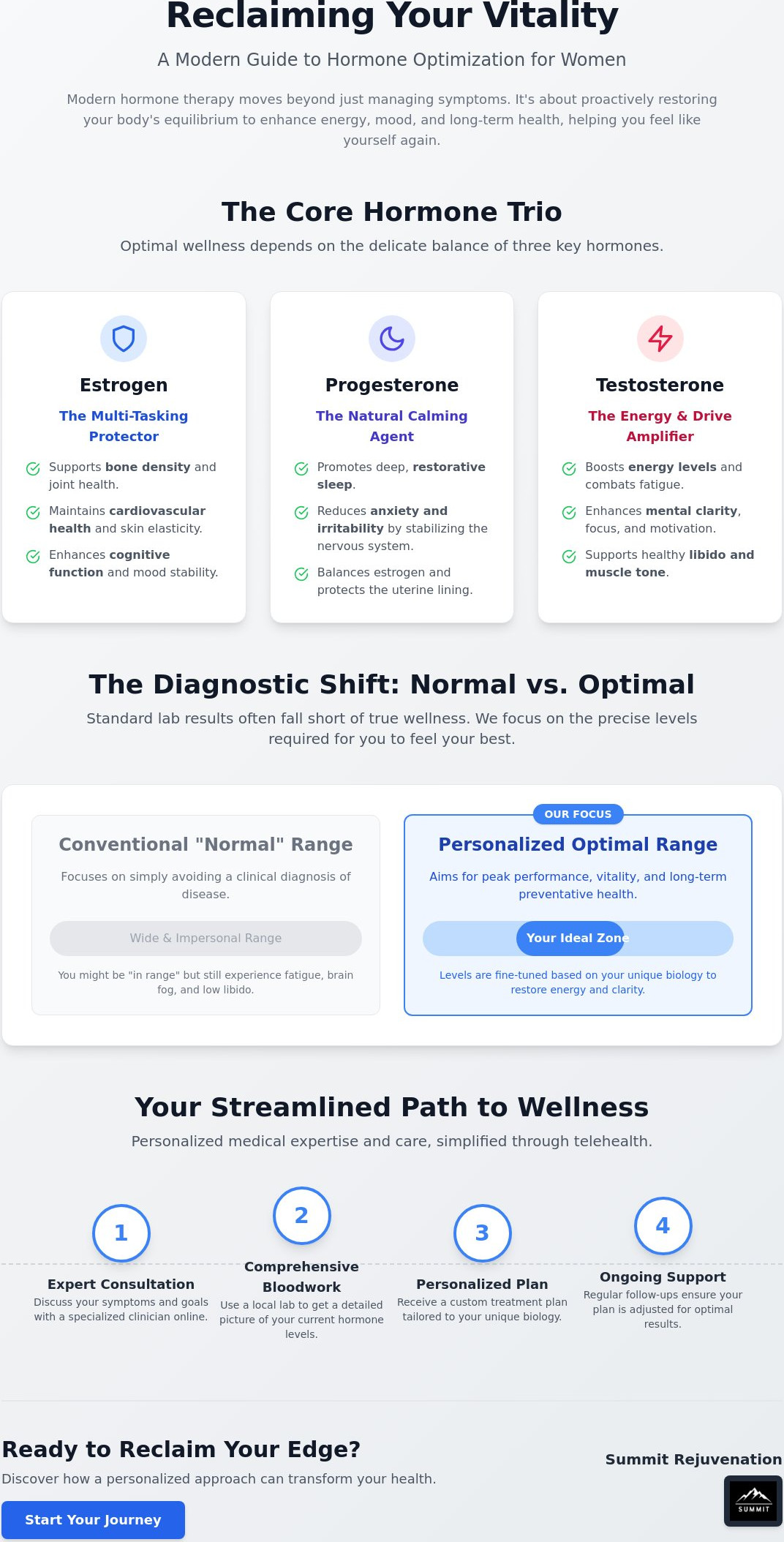
Your body relies on a delicate harmony between three primary hormones to function at its peak. When these levels are in balance, you feel resilient, sharp, and energized. However, a deficiency in even one of the "Big Three" can trigger a cascade of symptoms that disrupt your mood, metabolism, and cognitive function. This is why a one-size-fits-all approach to hormone replacement therapy for women rarely yields the best results. Your body doesn't need a generic dose; it needs a customized ratio that respects your individual biology and restores your unique equilibrium.
Estrogen: The Multi-Tasking Powerhouse
Estrogen acts as a multi-tasking powerhouse that influences almost every system in your body. It maintains skin elasticity by supporting collagen production and ensures vaginal health by keeping tissues lubricated and flexible. When levels plummet, the resulting hot flashes and night sweats are often just the beginning. You may find that your joints ache more than usual or that you're struggling with a persistent brain fog that clouds your decision-making. Beyond daily comfort, estrogen is a vital ally for your heart. It helps manage cholesterol and keeps blood vessels supple, providing long-term protection for your cardiovascular system.
Progesterone: The Natural Calming Agent
Think of progesterone as your body's natural calming agent. It directly counters the stimulatory effects of estrogen, which is crucial for preventing a state known as "estrogen dominance." This imbalance often leads to heavy, painful cycles and heightened irritability. Progesterone is also a key player in neurological health. It helps to reduce anxiety and facilitates the deep, restorative sleep your body needs to repair itself. When considering Menopausal hormone therapy treatment options, it's vital to ensure progesterone is part of the conversation to maintain both physical and emotional stability.
Testosterone for Women: The Missing Link
Testosterone is often the missing piece of the puzzle for women. While it is frequently labeled a "male" hormone, it is essential for female mental drive, libido, and the maintenance of lean muscle mass. Without adequate levels, you might feel a sense of apathy or find it difficult to maintain your physical strength despite regular exercise. Optimizing these levels through trt therapy can revitalize your metabolic rate and provide the daily energy needed to thrive. It is a critical, though often overlooked, component of comprehensive hormone replacement therapy for women. If you're ready to find your ideal balance, you can start with a comprehensive bloodwork analysis to get the clarity you deserve.
Comparing HRT Delivery Methods: Pills, Creams, and Injections
Selecting the right delivery method is just as important as identifying which hormones your body needs. Your lifestyle, medical history, and specific absorption rates all play a role in determining which path will yield the best results. While traditional medicine often relies on a standard prescription, modern hormone replacement therapy for women prioritizes bioidentical hormones. These are molecularly identical to the hormones your body naturally produces, offering a more seamless integration into your biological systems than synthetic alternatives. For a deeper technical look at these options, you can explore our detailed guide on hrt replacements.
Oral Pills vs. Topical Creams
Oral pills are a familiar delivery method, but they come with a specific metabolic hurdle known as the "first-pass effect." When you swallow a hormone tablet, it must be processed by your digestive system and liver before entering your bloodstream. This process can be taxing on the liver and may result in fluctuating hormone levels throughout the day. In contrast, transdermal creams and gels are absorbed directly through the skin. This method bypasses the digestive tract entirely, allowing for a steadier release of hormones into your system. Many women prefer creams because they mimic the body's natural rhythmic release, though they do require consistent daily application to maintain efficacy. When reviewing FDA guidance on hormone replacement therapy, it's clear that the choice between systemic and localized delivery should be tailored to your specific symptoms and health goals.
The Rise of Hormone Injections
Injections have become increasingly popular for women who want maximum precision and bioavailability. Unlike creams, which can sometimes have variable absorption based on skin thickness or site of application, injections deliver the exact dose directly into the muscle or subcutaneous tissue. This ensures that the hormones are fully utilized by the body without any waste or interference. This method is particularly effective for achieving consistent blood serum levels, which helps you avoid the "roller-coaster effect" of energy peaks and crashes. Injections offer the highest level of customization for hormone optimization. By working with a specialist to fine-tune your dosage, you can ensure that your hormone replacement therapy for women is perfectly calibrated to your body's demands, providing a reliable foundation for your daily vitality and long-term health.
The Diagnostic Shift: Moving from Normal Ranges to Optimal Health
One of the most common frustrations women face is being told their lab results are "perfectly normal" while they continue to struggle with chronic fatigue, weight gain, and mood swings. This disconnect happens because traditional medicine often relies on a clinical range, which is essentially a broad statistical average designed to identify the absence of disease. If you fall anywhere within that wide window, you're often sent home without answers. In contrast, a proactive approach to hormone replacement therapy for women focuses on an optimal range. This is the specific window where your body performs at its peak, rather than just surviving. Understanding how much does hrt cost per month often involves looking at how these critical diagnostic steps are integrated into your long-term health plan.
Why Comprehensive Bloodwork is Mandatory
Your bloodwork acts as the definitive blueprint for your restoration. A basic panel that only looks at a few surface-level markers isn't enough to build a personalized protocol. To get the full picture, we must examine specific data points, including:
Total and Free Testosterone: To measure how much hormone is actually available for your body to use.
Estradiol and Progesterone: To determine the exact ratio needed to restore balance.
Thyroid Function: To ensure your metabolism isn't being hindered by an underactive thyroid.
Vitamin Levels: Specifically Vitamin D3 and B12, which often mirror hormonal symptoms when deficient.
By analyzing these markers together, a specialist can see how your systems are interacting. This level of detail allows for a treatment plan that is precisely calibrated to your biology, ensuring you aren't just "in range," but optimized for vitality.
Symptoms vs. Lab Results
A truly effective medical provider treats the patient, not just the piece of paper. If your labs are technically "normal" but you can't focus at work or have lost your zest for life, those symptoms are valid medical data. We look for "subclinical" deficiencies. These are the subtle shifts that traditional practitioners often miss because they don't yet qualify as a diagnosed disease. Recognizing these early warning signs allows you to take control of your health before it declines further. There is immense power in understanding your own biological data. It transforms you from a passive recipient of care into an empowered partner in your own wellness journey. If you are ready to stop guessing and start optimizing, you can book your comprehensive bloodwork analysis today to uncover what your current levels are actually telling you.
Reclaiming Your Life: How Telehealth HRT Simplifies Your Wellness Journey
Finding a provider who truly understands the nuances of hormone replacement therapy for women shouldn't depend on where you live. Many women find that their local general practitioners, while excellent for primary care, may not have the specialized training required to move beyond standard lab ranges into true optimization. This gap in care often leads to the frustration we've discussed: being told everything is "fine" when you know it's not. Telehealth has emerged as a powerful solution, offering proactive women a direct line to national-level experts without the need for multiple, time-consuming office visits.
The Telehealth Advantage
The modern telehealth model is designed for efficiency and precision. You can access specialized medical teams from the comfort of your home, ensuring that your care is managed by professionals who focus exclusively on hormonal health. One of the most significant benefits is the logistical simplicity. Medications are shipped discreetly and directly to your door, which eliminates the need for monthly pharmacy runs. More importantly, telehealth allows for frequent, specialized follow-ups. Rather than waiting for an annual checkup, you have ongoing access to a medical team that can fine-tune your dosage based on how you actually feel and what your follow-up bloodwork shows.
Taking the First Step Toward Vitality
Your journey toward restoration begins with a comprehensive bloodwork analysis. This isn't a standard physical; it's a deep dive into your biological data that provides the blueprint for your personalized protocol. Once your results are ready, you'll have a virtual medical consultation with a specialist who will explain your levels and listen to your specific health goals. This partnership ensures that you are an active participant in your care. During this initial phase, you can expect:
A thorough review of your symptoms and medical history.
Clear explanations of how your current hormone levels are impacting your energy and mood.
A customized treatment plan tailored to your specific biological needs.
While every woman's body responds differently, many patients report initial improvements in sleep and mood within the first few weeks of starting hormone replacement therapy for women. More significant changes, such as increased muscle tone, improved libido, and sustained energy levels, typically become more apparent over the first three to six months. This timeline reflects the body's natural process of re-establishing equilibrium. By choosing a specialized telehealth partner, you aren't just getting a prescription; you're gaining a dedicated team committed to helping you reclaim your vitality and live your life to the fullest.
Your Path to Lasting Vitality Starts Here
Reclaiming your energy and mental clarity is a journey that begins with precise data and expert guidance. We've explored how moving beyond generic "normal" lab ranges allows you to target optimal health rather than just the absence of disease. By balancing the synergistic relationship of estrogen, progesterone, and testosterone, you can address the root cause of chronic fatigue and brain fog. Modern hormone replacement therapy for women has evolved into a streamlined, patient-centric process that prioritizes your long-term wellness over temporary symptom management.
You don't have to settle for feeling "fine" when peak performance is within reach. Summit Rejuvenation provides personalized treatment plans built on the foundation of comprehensive bloodwork. Our model offers convenient telehealth consultations with specialized providers and ensures your prescribed medications are shipped directly to your home. It's time to stop guessing and start optimizing your biological potential. Reclaim your vitality and schedule your comprehensive bloodwork with Summit Rejuvenation today. You deserve a health partner who is as dedicated to your restoration as you are.
Frequently Asked Questions
Is hormone replacement therapy safe for women in 2026?
Yes, hormone replacement therapy for women is considered safe for most healthy individuals, especially when started within ten years of the onset of menopause. In 2026, the medical community has shifted its perspective following the FDA's decision to remove "black box" warnings from several major hormone products. This change reflects a more accurate understanding of the risks and benefits. We prioritize a personalized approach that uses your unique bloodwork to ensure your treatment is both safe and effective.
How do I know if I need hormone replacement therapy or if I am just tired?
The only way to distinguish between general fatigue and a hormonal deficiency is through comprehensive bloodwork analysis. While lifestyle factors like stress and poor sleep cause tiredness, hormonal shifts often present as persistent brain fog, a sudden loss of libido, or mood instability that doesn't improve with rest. By measuring your specific levels of estradiol, progesterone, and testosterone, we can identify if your symptoms are rooted in a biological imbalance that requires medical intervention.
What is the best age to start hormone optimization?
There is no single "best" age, as hormonal decline can begin as early as your mid-30s during perimenopause. Many women wait until they reach menopause to seek help, but proactive optimization is often more effective. If you notice changes in your energy, cycles, or cognitive function, it's the right time to investigate your levels. Starting earlier allows you to maintain bone density and cardiovascular health while preventing the most disruptive symptoms of aging before they become chronic.
Will HRT help with weight loss and metabolic health?
Optimizing your hormones can significantly improve your metabolic rate and support weight loss efforts. Estrogen and testosterone play critical roles in how your body processes insulin and maintains lean muscle mass. When these levels are low, many women experience stubborn weight gain, particularly around the midsection. While hormone replacement therapy for women isn't a weight loss drug, it restores the biological environment necessary for your metabolism to function efficiently alongside a healthy lifestyle and proper nutrition.
Do I have to take HRT forever once I start?
You are never required to take hormone therapy indefinitely. The duration of your treatment depends entirely on your personal health goals and how you feel. Some women use HRT to navigate the most intense years of the menopausal transition, while others choose long-term optimization for its preventative benefits against osteoporosis and heart disease. We work with you to reassess your needs regularly, ensuring your plan always aligns with your current lifestyle and health priorities.
What is the difference between bioidentical and synthetic hormones?
Bioidentical hormones are molecularly identical to the hormones your body produces naturally. This allows them to bind to your receptors more effectively and often results in fewer side effects compared to traditional synthetic versions. Synthetic hormones are often derived from sources like pregnant mare urine and have a slightly different chemical structure. We prioritize bioidentical options because they offer a more natural and precise way to restore your body's biological equilibrium and overall vitality.
Can I get HRT online through a telehealth provider?
Yes, you can access specialized hormone care through a secure telehealth platform. This model is ideal for busy women who want to work with national-level experts without the need for frequent in-person office visits. The process typically involves a local blood draw followed by a virtual consultation with a specialist to discuss your results. Once your personalized plan is established, your medications are shipped directly to your home, making the entire journey streamlined, efficient, and discreet.
What happens if I stop taking hormone replacement therapy?
If you choose to stop your treatment, your hormone levels will eventually return to their baseline state. This means that symptoms like hot flashes or brain fog may reappear as your body readjusts to lower hormone levels. However, you won't be in a worse position than you were before starting. We recommend working closely with your medical team to taper your dosage gradually, which helps minimize any discomfort during the transition and ensures your body remains stable as you adjust.



Comments