Perimenopause Weight Gain Solutions: A Clinical Guide to Metabolic Restoration
- 2 days ago
- 12 min read
What if the stubborn abdominal weight you're fighting isn't a result of poor discipline, but a complex clinical shift in your biology? For many women, the sudden appearance of a "menopause belly" coupled with night sweats and brain fog feels like an unsolvable puzzle. You've likely tried the traditional routes of cutting calories and increasing cardio, only to find the scale won't budge while your energy levels hit new lows. Finding effective perimenopause weight gain solutions requires looking past generic advice and addressing the hormonal root causes that primary care often overlooks.
We understand that feeling like a stranger in your own body is both exhausting and discouraging. This guide delivers the science-backed medical strategies you need to reverse these shifts and reclaim your metabolic health through precision hormone and peptide therapy. You'll learn how targeted clinical interventions can resolve insomnia, clear mental fog, and restore your natural energy. We'll walk through a professional, step-by-step approach to metabolic restoration, ensuring you have the clarity and partnership required to achieve sustainable weight loss and lasting vitality.
Table of Contents
Understanding the Perimenopause Weight Gain Cascade
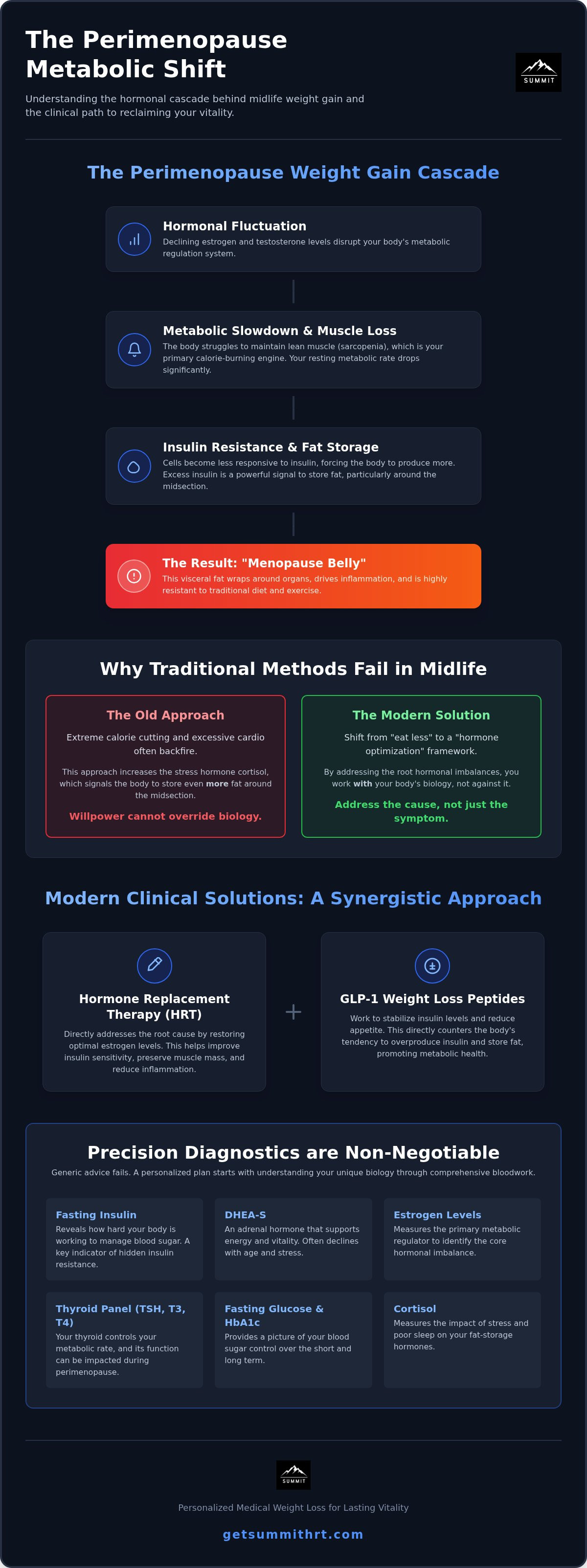
Perimenopause weight gain isn't a failure of willpower; it's a systemic metabolic shift. Understanding Perimenopause involves recognizing that as hormones fluctuate, your body's biological priorities change. This transition often manifests as "menopause belly," which is biologically distinct from the soft, subcutaneous fat found elsewhere on the body. This visceral fat wraps around your internal organs and drives a pro-inflammatory state, making it far more resistant to standard perimenopause weight gain solutions like simple calorie cutting or increased cardio.
Muscle loss, known clinically as sarcopenia, is the silent partner in this metabolic decline. As estrogen and testosterone levels begin to waver, your body struggles to maintain lean muscle tissue. Because muscle is your primary metabolic engine, losing even a small percentage of it significantly drops your resting metabolic rate. You burn fewer calories just by existing, which creates a weight gain surplus even if your eating habits haven't changed at all. This creates a frustrating cycle where you feel you're doing everything right, yet the scale continues to climb.
The Estrogen-Metabolism Connection
Estrogen is far more than a reproductive hormone. It acts as a primary metabolic regulator, ensuring your cells use energy efficiently and maintain healthy insulin sensitivity. When estrogen levels drop, your brain receives signals to conserve energy, often by increasing the hunger hormone ghrelin and decreasing the satiety hormone leptin. Essentially, your body is signaling you to eat more while simultaneously refusing to burn the fuel you've already stored. Estrogen is the master thermostat of the female metabolism; when it fluctuates, the body's ability to burn fuel is fundamentally compromised.
Why Traditional Dieting Often Fails in Midlife
Most women reach for the tools that worked in their 20s: eating less and exercising more. However, in perimenopause, extreme calorie restriction often triggers a "starvation response." This stresses the adrenal glands and increases cortisol, which only encourages more fat storage around the midsection. Willpower cannot override a biological mandate. Real progress requires moving away from the "eat less" mindset and toward a "hormone optimization" framework. By addressing the underlying hormonal imbalances first, you stop fighting your biology and start working with it to find sustainable perimenopause weight gain solutions.
The Estrogen-Insulin Connection: Why Your Body Stores Fat
As estrogen levels decline, your body's relationship with insulin undergoes a fundamental change. Estrogen helps muscle cells absorb glucose and stay sensitive to insulin's signals. Without it, your cells begin to resist insulin, forcing the pancreas to pump out more of the hormone to keep blood sugar stable. This excess insulin is a fat-storage signal that the body cannot ignore. According to Johns Hopkins on Perimenopause, these hormonal shifts can lead to significant physical changes that aren't easily reversed by diet alone.
This hormonal environment creates a pro-inflammatory state. Chronic, low-grade inflammation further degrades insulin sensitivity, creating a feedback loop where fat storage becomes the body's default setting. Many women find that their fasting glucose levels still appear "normal" on standard tests. However, this often masks the reality that their bodies are overproducing insulin to maintain those numbers. It's a state of "functional" health that feels anything but healthy. Finding effective perimenopause weight gain solutions requires looking deeper into these hidden metabolic markers to see the full picture of your internal health.
Insulin Resistance: The Silent Driver of Midlife Weight
Symptoms like intense sugar cravings, fatigue after meals, and increased waist circumference are hallmark signs of insulin resistance. When insulin levels remain chronically high, your body loses its ability to access stored fat for fuel. It's like having a full tank of gas but a broken fuel pump; you have the energy, but you can't use it. Identifying these markers through comprehensive bloodwork is the first step toward restoration. Understanding these nuances helps you move toward personalized hormone optimization that addresses the root cause rather than just the symptoms.
Cortisol and the 'Stress-Weight' Loop
Perimenopausal women are uniquely sensitive to cortisol, the primary stress hormone. When night sweats and insomnia disrupt your sleep, your cortisol levels spike the following morning. This elevation triggers the liver to release stored glucose, which in turn spikes insulin. It's a "stress-weight" loop that makes fat loss nearly impossible regardless of exercise intensity. Lowering this stress response isn't just about relaxation; it's a clinical necessity for unlocking fat loss. Strategies like prioritizing circadian rhythm alignment and using targeted micronutrients can help. By stabilizing your hormonal profile, you can break the cycle of sleep deprivation and metabolic dysfunction, allowing your body to finally release the weight it has been holding onto.
Clinical Solutions: Comparing HRT vs. Weight Loss Peptides
For many women, lifestyle changes alone aren't enough to counteract the profound metabolic shifts of midlife. While traditional medicine often treats weight gain as an inevitable part of aging, modern clinical standards in 2026 recognize it as a treatable endocrine issue. Effective perimenopause weight gain solutions now leverage the synergy between hormone stabilization and advanced metabolic signaling. Understanding how these tools work together is essential for moving from frustration to results. According to the Mayo Clinic, addressing menopause weight gain requires a focus on both hormonal health and muscle preservation.
Hormone Replacement Therapy for Women
A primary goal of hormone replacement therapy for women is to restore the baseline metabolic rhythm that estrogen loss has disrupted. Bioidentical hormones, which share the exact molecular structure as those your body produces, offer a precise way to improve insulin sensitivity and reduce the pro-inflammatory state discussed earlier. Contrary to the outdated myth that HRT causes weight gain, properly managed therapy often helps redistribute fat away from the midsection by stabilizing your body's "energy thermostat." By reclaiming your hormonal balance, you create a physiological environment where fat loss is actually possible. Recent 2026 clinical updates have further validated the safety of these treatments, with the FDA removing several long-standing black box warnings from many hormone products, acknowledging that appropriately prescribed therapy is safer than previously suggested.
The Power of Peptides for Sustainable Fat Loss
While HRT fixes the hormonal foundation, peptides for weight loss provide the metabolic spark needed to overcome deep-seated insulin resistance. GLP-1 and GIP peptides work by mimicking natural signaling molecules that regulate appetite and improve how your cells process glucose. For perimenopausal women, these peptides are particularly effective because they target the specific pathways that estrogen loss impairs. This isn't about "trendy" quick fixes; it's about using precision medicine to reset your body's relationship with fuel. When used under expert medical supervision, these peptides help preserve lean muscle mass while specifically targeting visceral fat. This combination approach is often the most effective of all perimenopause weight gain solutions, as it addresses both the hormonal deficiency and the metabolic resistance simultaneously, leading to sustainable restoration rather than temporary weight loss.
Precision Diagnostics: Why Comprehensive Bloodwork is Non-Negotiable
Standard lab panels are often a source of frustration for women seeking perimenopause weight gain solutions because they're designed to identify overt pathology rather than metabolic efficiency. You might be told your results are "fine" even as you struggle with new visceral fat and persistent fatigue. This discrepancy occurs because traditional reference ranges are based on broad averages that don't account for the specific hormonal shifts occurring in midlife. Precision health requires a more granular look at your biology to find the exact points where your metabolism is stalling.
Comprehensive testing provides the necessary data to move from guesswork to clinical precision. We prioritize markers that reveal how your body is actually managing energy. For instance, testing during the mid-luteal phase can pinpoint progesterone deficiencies that a random blood draw would miss. These insights form the foundation of a plan that treats you as an individual, not a statistic. Key markers we evaluate include:
Fasting Insulin: The most sensitive indicator of the resistance that fuels abdominal weight gain.
HbA1c: A critical look at three-month blood sugar trends that standard glucose tests can overlook.
DHEA-S: An essential precursor to estrogen and testosterone that supports metabolic resilience.
Full Thyroid Panels: Moving beyond TSH to measure active Free T3 and Free T4 levels.
Moving Beyond 'Normal' Lab Results
There's a vast difference between being "within range" and being at your best. At Summit Rejuvenation: The Comprehensive Guide to Precision Vitality and Hormone Optimization, we use your data to target optimal ranges that restore metabolic function. A "normal" TSH doesn't always reflect a healthy thyroid since it only measures the brain's signal, not the active hormone your cells are using to burn fat. By identifying these nuances, we address the root causes of weight gain with precision rather than generic advice.
The Telehealth Diagnostic Process
Our national telehealth model makes expert diagnostic care accessible and straightforward across the United States. We streamline everything from your initial lab order to your clinical consultation with a provider who understands the perimenopausal transition. Once your personalized protocol is established, we ship your medications directly to your home. This ensures you have consistent access to your therapy without the need for frequent office visits or pharmacy lines. We prioritize regular monitoring to ensure your dosages evolve as your body responds, keeping your safety and results at the forefront. If you're ready to stop guessing and start measuring, you can order your comprehensive bloodwork panel today to begin your restoration.
Personalized Medical Weight Loss: The Summit Rejuvenation Path
Success in midlife isn't about chasing the latest fad; it's about a synchronized clinical strategy that respects your biology. By combining the metabolic insights from your bloodwork with targeted therapies, you can finally access the perimenopause weight gain solutions that deliver measurable results. We don't just provide a generic prescription. We offer a comprehensive roadmap for metabolic restoration that addresses your unique hormonal profile, ensuring that every intervention is purposeful and precise.
The journey to reclaiming your vitality requires a shift in perspective. Instead of viewing weight gain as an inevitable sign of aging, we treat it as a medical condition that responds to the right clinical signals. This proactive approach allows you to stop fighting your body and start supporting its natural ability to maintain a healthy weight. Through a dedicated partnership, we provide the education and medical expertise you need to navigate this transition with confidence and clarity.
A Comprehensive Approach to Midlife Wellness
True restoration happens when you treat the body as an interconnected system. Accessing hrt online allows you to stabilize the estrogen-insulin connection while medical weight loss peptides accelerate fat loss and improve satiety. This clinical foundation is further supported by specific vitamin and peptide protocols designed to enhance cellular health and energy production. Your plan isn't static; it's a living strategy that we adjust as your symptoms resolve and your metabolic health improves. This ensures that your perimenopause weight gain solutions remain effective as your body's needs evolve over time.
Getting Started with Professional Support
Embarking on a medical weight loss program can feel daunting, but the first 90 days are designed to provide rapid clarity and relief. During this initial phase, you'll work closely with your health partner to review your personalized lab results and initiate your specific protocol. You'll likely notice improvements in your sleep quality and mental clarity within the first few weeks, creating the momentum needed for significant body composition changes. We prioritize your understanding of the process, ensuring you feel empowered rather than overwhelmed.
Our national telehealth model ensures that expert care is accessible regardless of where you live in the United States. We manage the logistics, from the initial consultation to shipping medications directly to your home, so you can focus entirely on your restoration journey. Reclaiming your energy and confidence starts with a single step toward proactive, science-backed care. Schedule your precision health consultation today.
Reclaiming Your Metabolic Vitality
You don't have to accept midlife weight gain as an inevitable part of aging. By understanding the intricate link between estrogen decline and insulin resistance, you can move beyond the frustration of traditional dieting and embrace a clinical approach that actually works. Real metabolic restoration begins with precision diagnostics that identify your unique hormonal markers, allowing for a strategy that is as individual as your biology. Effective perimenopause weight gain solutions are no longer out of reach; they're simply a matter of choosing a clinical partner who prioritizes your long-term health.
Summit Rejuvenation provides the expertise needed to navigate this transition with confidence. Our comprehensive bloodwork-driven plans ensure your treatment is grounded in data, while our telehealth convenience nationwide means expert care is always accessible. With direct-to-home medication delivery, your path to restoration is streamlined and supportive. You have the power to stop fighting your body and start feeling like yourself again. Significant improvement isn't just a possibility; it's professionally managed and entirely within your reach.
Start Your Journey to Metabolic Restoration with Summit Rejuvenation.
Frequently Asked Questions
Does HRT actually help with weight loss in perimenopause?
HRT helps by addressing the underlying hormonal triggers that cause fat redistribution and insulin resistance. While it's not a weight loss drug, it stabilizes your metabolic environment so your body can respond to exercise and nutrition again. Many women find that restoring estrogen levels helps reduce visceral fat and prevents the loss of lean muscle. It's an essential component of comprehensive perimenopause weight gain solutions because it fixes the broken biological signaling that drives midlife weight changes.
What are the best peptides for female fat loss in midlife?
Modern clinical standards in 2026 highlight GLP-1 and GIP agonists as highly effective for midlife fat loss. Medications like semaglutide and tirzepatide help regulate blood sugar and suppress the "food noise" that often increases during perimenopause. Additionally, growth hormone secretagogues can support muscle preservation, which is vital for maintaining a healthy metabolic rate. These peptides work best when they're part of a supervised medical plan that considers your specific hormonal profile and health goals.
How long does it take to see results from medical weight loss treatments?
Most patients begin to feel internal shifts, such as improved energy and better sleep quality, within the first two to four weeks of treatment. Visible changes in body composition and weight typically become more apparent between the eight and twelve week marks. Achieving full metabolic restoration is a gradual process that usually requires six months of consistent therapy. This steady pace ensures that the weight loss is sustainable and that your body has time to adapt to its new hormonal balance.
Is perimenopause weight gain permanent if left untreated?
Perimenopausal weight gain isn't technically permanent, but it becomes significantly harder to reverse the longer the metabolic dysfunction persists. Visceral fat is biologically active and promotes a pro-inflammatory state that can further damage your insulin sensitivity over time. Untreated hormonal imbalances often lead to a permanent shift in your "set point," making future weight loss efforts feel like an uphill battle. Early clinical intervention is the most effective way to prevent these metabolic changes from becoming deeply rooted.
Can I use GLP-1 peptides if I am also on hormone replacement therapy?
Combining GLP-1 peptides with hormone replacement therapy is often considered the gold standard for metabolic restoration. This dual approach works because HRT restores your foundational hormonal signals while peptides directly target the insulin resistance and appetite dysregulation common in midlife. Using them together allows you to address the weight gain from multiple biological angles simultaneously. This synergy often leads to faster results and a more significant improvement in overall vitality than using either therapy alone under medical supervision.
Why am I gaining weight even though I haven't changed my diet?
You're likely gaining weight because your resting metabolic rate has decreased due to a combination of muscle loss and dropping estrogen levels. Even if your calorie intake remains the same, your body is no longer burning fuel as efficiently as it once did. This shift creates a caloric surplus that leads to fat storage, particularly around the midsection. It's a clear signal that your body's internal "thermostat" needs adjustment through clinical perimenopause weight gain solutions rather than just more restrictive dieting.
Do I need bloodwork before starting a weight loss peptide program?
Comprehensive bloodwork is an absolute requirement before starting any medical weight loss or peptide program. We must evaluate your kidney and liver function, thyroid health, and baseline insulin levels to ensure the treatment is safe for you. This data acts as a blueprint, allowing clinicians to determine the precise dosages needed for your specific metabolic state. Starting a program without these diagnostics is guesswork and can overlook underlying health issues that might hinder your progress or compromise your safety.
Is it safe to get HRT and peptides through an online telehealth clinic?
Telehealth is a safe and highly effective way to access specialized care, provided the clinic uses board-certified providers and licensed US compounding pharmacies. This model often offers a higher level of expertise in hormone optimization than traditional primary care settings. You receive the same clinical rigor as an in-person visit but with the added convenience of direct-to-home medication delivery. It's a modern solution that ensures women across the country can access high-quality, professional medical support for their metabolic health.


Comments