The 2026 Hormone Replacement Therapy Checklist: Is It Time to Reclaim Your Vitality?
- Jul 3
- 12 min read
Did you know that in February 2026, the FDA officially removed the most severe "boxed warnings" from several major hormone therapy products, finally acknowledging that the risks of the past were largely overstated? For decades, a cloud of fear hung over the conversation regarding hormone replacement therapy, but the medical landscape has fundamentally shifted toward proactive restoration. It's frustrating to be told your bloodwork is "normal" when your energy is gone, your libido has vanished, and your mental clarity feels like a distant memory. You know your body better than a standard lab range does, and you deserve a partner who listens to your symptoms as much as your data.
This guide provides a comprehensive, expert-led checklist to help you identify the real signs of hormonal imbalance and navigate the modern path to restoration. We'll explore why the "10-year rule" is a game changer for safety, the differences between TRT and HRT, and how to build a personalized medical roadmap that makes you feel like yourself again. It's time to stop settling for "fine" and start reclaiming your vitality through a process that's professionally managed and deeply supportive.
Table of Contents
Recognizing the Silent Signals: A Symptom Checklist for Men and Women
Beyond Estrogen and Testosterone: The Role of Peptides and Vitamins
The Critical Diagnostics Checklist: Why Normal Labs Aren’t Enough
Evaluating Your HRT Delivery Options: A Comparison Framework
Your Roadmap to Restoration: The Summit Rejuvenation Telehealth Process
Recognizing the Silent Signals: A Symptom Checklist for Men and Women
Hormonal decline isn't an overnight event. It is a quiet, progressive shift that often begins years before you notice a major change. Many people dismiss these early markers as just getting older, but your body is actually sending signals that its chemical messengers are out of sync. Recognizing these signs is the first step toward deciding if hormone replacement therapy is the right path for you. For those looking for a comprehensive overview of HRT, it's helpful to understand that these treatments aim to restore what your body is no longer producing at optimal levels.
Physical changes are often the most visible and frustrating symptoms. You might notice unexplained weight gain, particularly around the midsection, that doesn't respond to your usual diet or gym routine. Muscle loss, or sarcopenia, can make you feel weaker and less defined even if you're still lifting weights. Even your skin can change, becoming thinner, drier, or losing its elasticity as collagen production drops alongside your hormones. These aren't just aesthetic concerns; they're indicators of a shifting metabolic rate.
The mental and emotional shifts are just as telling, though they're often misdiagnosed as general stress or depression. You may experience:
Brain fog: A persistent lack of focus or difficulty recalling names and dates.
Irritability: A "short fuse" or feeling overwhelmed by minor daily tasks.
Lack of motivation: A loss of the "get up and go" drive for hobbies or career goals.
Sleep disturbances: Chronic fatigue despite a full night's rest or waking up from night sweats.
Sexual health is another critical area where imbalances manifest. A decreased libido or performance issues aren't just "part of life" after 40. They're often the result of declining testosterone or estrogen levels affecting blood flow and neurological response. Addressing these symptoms early can prevent them from impacting your relationships and self-esteem.
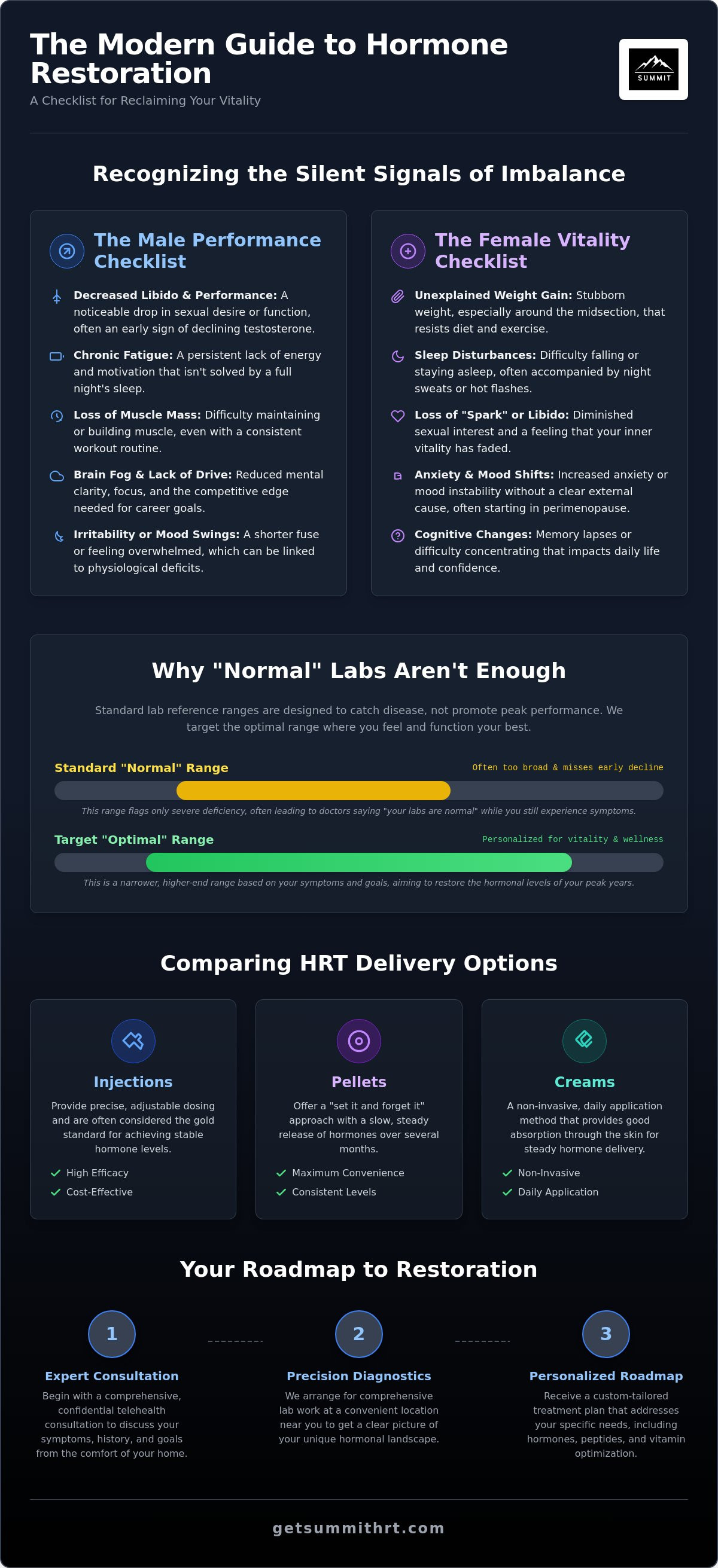
The Female Vitality Checklist
Women often feel the impact of hormonal shifts long before they reach menopause. Perimenopause can bring irregular cycles, but it also affects bone density and mood stability. Estrogen decline isn't just about hot flashes; it's about protecting your long-term cognitive and skeletal health. If you feel like your "spark" is gone or your anxiety has spiked without a clear cause, your hormones might be the culprit. Symptoms often start in the late 30s, long before traditional menopause is on the radar.
The Male Performance Checklist
Men often ignore the "Low-T" slump until it affects their performance, but testosterone is vital for more than just libido. It's a key player in cardiovascular health and maintaining a healthy metabolic rate. When levels drop, men often lose their mental resilience and drive. It's not a character flaw; it's a physiological deficit that affects how you handle stress. Identifying this slump early can help protect your heart and maintain the lean muscle mass essential for longevity.
Beyond Estrogen and Testosterone: The Role of Peptides and Vitamins
Traditional medicine often views hormone replacement therapy through a narrow lens, focusing solely on bringing low levels back to a baseline. In 2026, we've moved beyond simple replacement to a philosophy of "optimization." This means looking at the entire cellular environment. While estrogen and testosterone are the stars of the show, they require a supporting cast of peptides and vitamins to function at their peak. When you understand the benefits and risks of hormone therapy, it becomes clear that a holistic approach creates the most sustainable results.
Peptides are short chains of amino acids that act as precise signaling molecules. Unlike hormones, which have broad systemic effects, peptides target specific cellular functions like tissue repair, immune response, and fat metabolism. Integrating these into a protocol can accelerate recovery and enhance the vitality you feel from your primary therapy. This synergy is particularly powerful for patients who feel "stuck" despite having improved lab numbers.
Understanding Peptide Integration
Many patients ask, are peptides good for you? The answer lies in their ability to bridge the gap between basic health and high-level performance. Growth Hormone Releasing Peptides (GHRPs), for example, work in synergy with TRT to improve lean muscle mass and cognitive clarity. They don't replace your hormones; they optimize how your body uses them. This partnership is especially effective for those struggling with the "Low-T" slump, as it addresses cellular repair alongside hormonal levels.
The Nutrient Foundation
Your body cannot manufacture hormones out of thin air. It requires specific co-factors, such as Vitamin D, Zinc, and Magnesium, to fuel the synthesis process. If you're nutrient-deficient, even the most advanced hormone protocol will struggle to deliver full results. Oral supplements often fall short because they lack the bioavailability needed to make a clinical difference. Medical-grade vitamin therapy ensures that these essential nutrients bypass the digestive system's barriers. By customizing your nutrient protocol based on precision bloodwork, we ensure your internal machinery has the raw materials it needs. If you're ready to see how these elements work together, you can explore our comprehensive optimization programs to find your path forward.
Weight loss peptides also play a crucial role in this ecosystem. Excess adipose tissue can aromatize testosterone into estrogen, complicating your hormonal balance. By using peptides to manage weight, you create a cleaner environment for your hormones to thrive. This isn't just about looking better. It's about building a metabolic foundation that supports long-term health and keeps your energy levels stable throughout the day.
The Critical Diagnostics Checklist: Why Normal Labs Aren’t Enough
It's a common scenario: you feel exhausted, your drive is gone, and your mood is erratic, yet your doctor reviews your bloodwork and says everything is "normal." This disconnect happens because standard medicine relies on a broad "reference range." This range is a statistical average that includes everyone from elite athletes to the chronically ill. To truly reclaim your vitality, you must look at an "optimal range" specifically tailored to your age and health goals. The FDA guidance on hormone replacement therapy emphasizes its role in managing bothersome symptoms, yet achieving these results requires a diagnostic approach that looks beyond basic averages.
Timing is everything when it comes to accuracy. Your hormone levels follow a circadian rhythm, peaking in the early hours. For the most reliable data, blood draws should occur between 7:00 AM and 10:00 AM while fasting. This ensures we're capturing your peak natural production rather than a late-day dip. We also look at metabolic markers like A1C and lipid panels because hormones don't exist in a vacuum. If your blood sugar is poorly managed or your inflammation is high, your body won't utilize hormone replacement therapy effectively.
The Comprehensive Lab Checklist
Testing only "Total Testosterone" provides a shallow view of your health. You need to know how much of that hormone is actually bioavailable. Sex Hormone Binding Globulin (SHBG) acts like a sponge, soaking up hormones and making them unusable. By measuring Free T and SHBG alongside Total T, we can see the full picture. Our mandatory baseline markers include:
Total and Free Testosterone: To measure both overall production and usable levels.
Estradiol: To ensure a healthy balance between estrogen and androgens.
SHBG: To determine your "free" hormone percentage.
Thyroid Panel (TSH, Free T3/T4): To rule out metabolic slowdowns that mimic hormonal decline.
CRP: To identify systemic inflammation that might be blocking your progress.
Translating Your Results
A specialist interprets these numbers through the lens of performance and restoration, whereas a general practitioner often looks only for disease. We prioritize a "Symptom-First" approach. If your labs are technically within the reference range but you're still suffering from the brain fog and fatigue discussed earlier, those numbers aren't "normal" for you. We partner with you to find where your body functions best. Optimal Hormonal Range is the level where symptoms resolve and health markers improve.
Evaluating Your HRT Delivery Options: A Comparison Framework
Once you've identified your hormonal needs through the precision diagnostics we discussed, the next step is choosing a delivery method that aligns with your lifestyle. Not all hormone replacement therapy is created equal. The delivery system you choose determines how quickly you feel results and how stable your energy remains throughout the week. While traditional care often defaults to oral pills, modern optimization protocols favor methods that bypass the digestive system entirely to ensure maximum absorption and safety.
Oral hormones face a significant hurdle known as "first-pass metabolism." When you swallow a pill, it must pass through your liver before entering your bloodstream. This process can significantly reduce the hormone's potency and, in some cases, increase the risk of side effects like blood clots or liver strain. By choosing transdermal or injectable options, you ensure the medication enters your system directly, maintaining higher bioavailability and more predictable levels. When evaluating your options, consider the following factors:
Consistency: How easily can you stick to a daily or weekly routine?
Control: Do you need the ability to adjust your dose quickly based on symptoms?
Absorption: Does your skin or digestive system respond better to specific formulations?
Lifestyle: Does your schedule allow for regular clinic visits or self-administration at home?
Injections and Topical Solutions
For many, injections are considered the gold standard for trt therapy because they allow for precise dosage control. Injections provide a steady release of hormones, preventing the "rollercoaster" effect of peaks and valleys in your mood. If you prefer a needle-free approach, hrt replacements like creams and gels offer a convenient alternative. These topical solutions are applied daily to the skin, absorbing directly into the capillaries. While they require consistent application, they're excellent for maintaining a steady state of vitality without the need for weekly injections.
Safety and Long-Term Management
Choosing the right delivery method also involves managing long-term safety and skin health. Pellets, for instance, offer the ultimate convenience by providing several months of therapy with a single minor procedure, but they lack the immediate dosage adjustability of creams or injections. We prioritize regular monitoring to ensure your chosen method remains effective and irritation-free. It's time to move past common hrt treatment myths that suggest delivery is a one-size-fits-all decision. Your protocol should evolve as your body responds to treatment. If you're ready to find the delivery method that fits your life, schedule your expert consultation today and take the next step in your restoration journey.
Your Roadmap to Restoration: The Summit Rejuvenation Telehealth Process
Reclaiming your health shouldn't feel like a part-time job. Traditional medical models often require multiple office visits, long waits, and repetitive explanations, but the modern approach to hormone replacement therapy leverages technology to put you back in control. We've streamlined the path to vitality into a methodical, step-by-step journey designed for clinical precision and personal convenience. This process ensures that your restoration is professionally managed while fitting seamlessly into your daily life.
The journey follows a logical progression from identification to optimization:
Step 1: The Initial Consultation: You'll sit down virtually with a specialist to discuss your specific symptoms and long-term goals. This is a dedicated time for you to be heard and for us to understand your unique health history.
Step 2: Precision Labs: We coordinate comprehensive bloodwork at a convenient location near you. These aren't standard tests; they're deep dives into the markers we discussed earlier to find your optimal ranges.
Step 3: Personalized Protocol: After a thorough medical review of your labs, we create a tailored plan. This protocol is built specifically for your body's needs rather than a generic template.
Step 4: Direct Delivery: Your medications and supplies are shipped securely and discreetly to your door. There's no need to wait in line at a pharmacy.
Step 5: Ongoing Support: We remain your dedicated partner through regular follow-ups and lab re-checks. This allows us to fine-tune your protocol as your body responds and improves.
The Convenience of HRT Online
Telehealth removes the "waiting room" barrier that often prevents people from seeking the care they deserve. You don't have to settle for a local generalist who may lack specialized knowledge in hormone optimization. By accessing care remotely, you gain national access to specialized experts while maintaining a high standard of medical oversight. It's a transparent and efficient way to manage your health without geographical limitations.
Starting Your Journey with Confidence
The first 90 days of treatment are a period of discovery and adjustment. You'll likely start noticing improvements in your sleep and mood within the first few weeks, while metabolic changes like lean muscle gain and fat loss become more apparent as you reach a steady state. We're here to adjust your plan based on your feedback and ongoing lab results, ensuring the path to restoration is both safe and effective. If you're ready to stop guessing and start feeling like yourself again, schedule your consultation with Summit Rejuvenation today.
Take the First Step Toward Your Restored Vitality
Reclaiming your energy and mental clarity is a journey that requires more than just a standard medical checkup. You now understand that "normal" lab results often mask underlying imbalances and that a modern approach to hormone replacement therapy involves much more than basic supplementation. By integrating precision diagnostics, synergistic peptides, and personalized delivery methods, you can move past the symptoms of premature aging and back into a life of purpose and drive.
Summit Rejuvenation provides the expert-led roadmap you need to navigate this restoration. Our process is designed for your convenience and clinical success. We offer specialized telehealth consultations for both men and women, ensuring your unique concerns are heard by experts who prioritize your results. With our comprehensive bloodwork analysis and direct-to-home medication delivery, the path to feeling like yourself again is streamlined and professionally managed every step of the way.
Don't settle for a life of fatigue when restoration is within reach. Start Your Personalized Vitality Assessment with Summit Rejuvenation today. It's time to stop surviving and start thriving with a plan built specifically for your body.
Frequently Asked Questions
Is hormone replacement therapy safe to start in my 30s?
Yes, hormone replacement therapy is safe and often necessary for individuals in their 30s who exhibit clinical deficiencies. While many associate hormonal decline with older age, factors like chronic stress and environmental toxins can cause levels to drop prematurely. We prioritize a comprehensive bloodwork analysis to ensure any treatment is based on actual physiological needs rather than age alone. Early intervention can prevent long-term health issues and restore your quality of life before symptoms worsen.
How long does it take to feel the results of HRT or TRT?
Most patients begin noticing improvements in sleep quality and mood stability within the first three to four weeks of treatment. Physical changes, such as increased lean muscle mass and fat loss, typically become more visible between the three and six-month marks. It is a progressive journey where your body gradually adjusts to optimized levels. We monitor your progress closely during the initial 90 days to ensure your protocol is delivering the desired results safely.
Will I need to stay on hormone therapy for the rest of my life?
Whether you remain on therapy indefinitely depends on the underlying cause of your deficiency and your personal health goals. Hormone therapy is a treatment for a chronic deficiency, much like wearing contacts to correct your vision. If you stop the treatment, your levels will likely return to their previous baseline, and symptoms may reappear. Many individuals choose to continue long-term to maintain the protective health benefits and the high level of vitality they have reclaimed.
Can hormone replacement therapy help with weight loss?
Yes, optimizing your hormones can be a powerful tool for weight loss by improving your metabolic rate and insulin sensitivity. When testosterone or estrogen levels are low, the body tends to store fat more easily, particularly around the midsection. By restoring balance, you make it easier for your body to burn fat and build lean muscle. We often combine these protocols with medical weight loss support and peptides to accelerate your results and improve overall body composition.
What is the difference between bioidentical and synthetic hormones?
Bioidentical hormones are molecularly identical to the hormones your body produces naturally, allowing your receptors to utilize them more efficiently. Synthetic versions may have slightly different chemical structures, which can sometimes lead to different metabolic pathways and side effects. Many patients find that bioidentical options provide a smoother experience that aligns with their body's natural chemistry. We focus on providing high-quality, bioidentical formulations to ensure a safer and more effective restoration process for every individual.
Do I need a referral from my primary care doctor to start HRT?
No, you don't need a referral from a primary care physician to begin your journey with us. As a specialized telehealth provider, we conduct our own comprehensive medical evaluations and bloodwork analysis. This streamlined approach allows you to work directly with experts who focus exclusively on hormonal health and restoration. We handle everything from the initial consultation to the secure delivery of your medications, making professional care accessible without the need for traditional medical gatekeepers.
What are the most common side effects of testosterone therapy?
Common side effects can include mild acne, fluid retention, or an increase in red blood cell count. These are typically manageable and often occur when levels are not correctly optimized for your specific body chemistry. This is why regular monitoring through precision labs is so critical to our process. By adjusting your dosage and delivery method based on your specific response, we can minimize these risks and ensure your therapy remains both safe and effective.
How much does hormone replacement therapy cost per month?
The monthly cost of hormone replacement therapy varies based on your specific protocol, the delivery method you choose, and the medications required for your optimization. Factors such as whether you utilize injections, creams, or pellets will influence the final investment. While we don't provide a one-size-fits-all price, we are committed to transparency and will discuss all costs during your initial consultation. Investing in your hormonal health is a proactive step toward avoiding the long-term costs of untreated metabolic decline.


Comments