The Link Between Low T and Depression: Why Your Mood Might Be a Hormonal Issue
- 2 days ago
- 12 min read
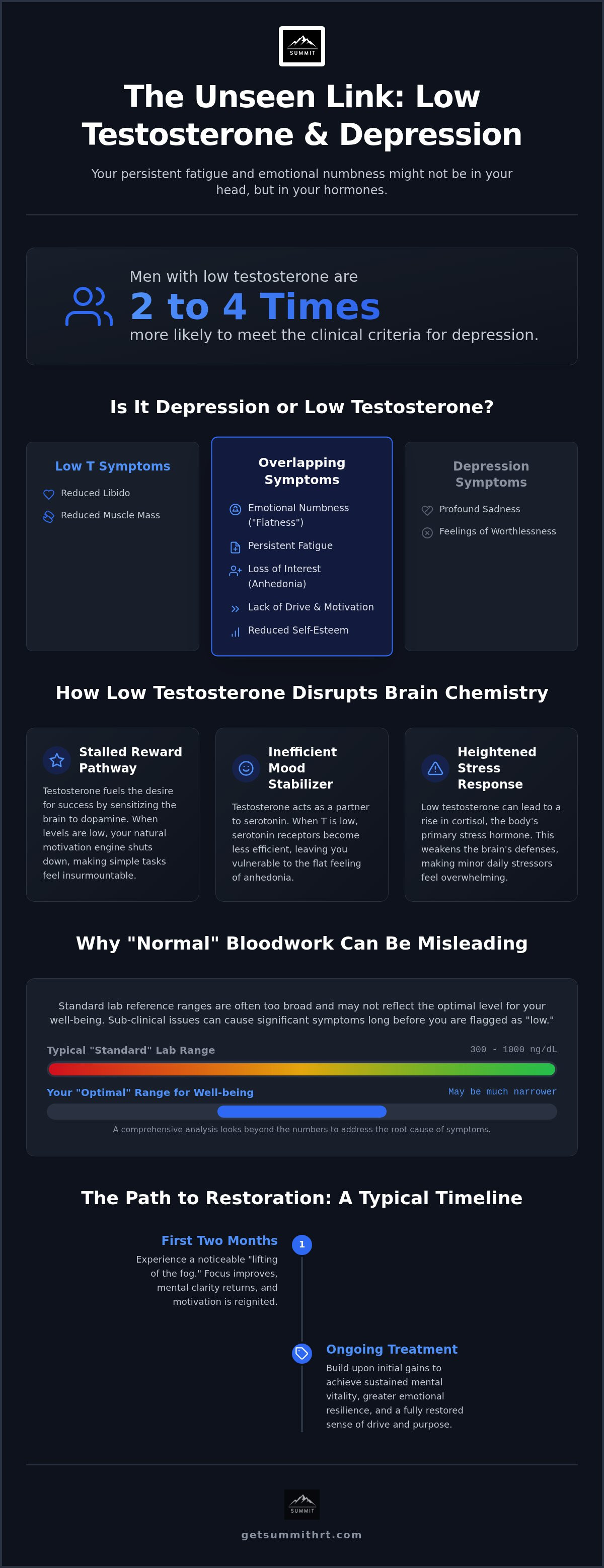
Did you know that men with low testosterone are two to four times more likely to meet the clinical criteria for depression than those with healthy levels? It's a staggering statistic that points to a deeper truth: your persistent fatigue and emotional numbness might not be in your head, but in your hormones. If you've felt "flat" or frustrated by "normal" bloodwork that doesn't match your reality, you aren't alone. Understanding the link between low t and depression is the first step toward finding a physical explanation for symptoms that feel purely mental.
You deserve to feel like yourself again, with the drive and motivation that once came naturally. We promise to show you how restoring hormonal balance can act as a catalyst for mental health, helping you move past the fog and back into a life of purpose. This guide breaks down the biological connection between testosterone and brain function, explains why sub-clinical deficiencies are often overlooked, and outlines a clear path to professional, medical-grade treatment. It's time to stop guessing and start using comprehensive data to reclaim your vitality and clarity.
Table of Contents
Beyond the Physical: Exploring the Link Between Low T and Depression
The Science of Mood: How Testosterone Influences Brain Chemistry
Misdiagnosis and Mimicry: Is it Depression or Low Testosterone?
Breaking the Cycle: How TRT Restores Mental Vitality and Clarity
Proactive Empowerment: Starting Your Journey with Summit Rejuvenation
Beyond the Physical: Exploring the Link Between Low T and Depression
Testosterone is often pigeonholed as a hormone solely responsible for physical strength and sexual function. However, its influence reaches much deeper into the very architecture of your brain. It acts as a neuroactive steroid, influencing the neural pathways that regulate how you process joy, motivation, and resilience. When these levels drop, it isn't just your muscles that suffer; your mental health can begin to erode as well. Understanding Testosterone's role in health and well-being is essential for anyone who feels "off" despite maintaining a healthy lifestyle.
The link between low t and depression is a biological reality that millions of people face without a clear diagnosis. Research indicates that men with confirmed hypogonadism are 2 to 4 times more likely to meet the clinical criteria for depression compared to those with healthy levels. This isn't merely a side effect of feeling tired. It's a direct result of the brain losing a key chemical regulator. Because society often views mood issues as purely psychological, this hormonal connection often becomes a silent epidemic, leaving patients to treat symptoms rather than the root cause.
The Overlapping Symptoms of Low T and Clinical Depression
Differentiating between traditional clinical depression and a hormonal deficiency can be difficult because the symptoms are so similar. Both conditions often involve persistent fatigue, irritability, and a profound loss of interest in hobbies, also known as anhedonia. However, hormonal "flatness" often feels distinct from the deep, crushing sadness typically associated with depression. It's a state of emotional numbness where life feels gray rather than dark. This lack of drive often triggers a negative feedback loop; as libido and self-esteem decline, the mental burden grows heavier, making it even harder to seek help.
Why Men and Women Often Suffer in Silence
Societal expectations play a significant role in why these issues go untreated. Men are frequently told that being "grumpy" or having low energy is just a natural part of aging, which leads them to dismiss serious symptoms. They might feel hesitant to discuss their mood with a primary care physician, fearing it's a sign of weakness rather than a medical imbalance. Women face similar challenges, as their hormonal shifts are often dismissed as "just stress" or menopause. For many, utilizing hormone replacement therapy for women is the missing piece in addressing persistent mood disturbances and reclaiming their emotional vitality.
The Science of Mood: How Testosterone Influences Brain Chemistry
Testosterone functions as a master key for your brain's communication network. It directly interacts with androgen receptors in regions responsible for mood, cognition, and emotional stability. When levels are optimal, the brain maintains a healthy balance of neurotransmitters. However, the biological link between low t and depression is rooted in how the brain handles neurochemicals like dopamine and serotonin. Without enough testosterone, the brain struggles to maintain the reward signals that make life feel satisfying and engaging.
Research into testosterone deficit syndrome and depression highlights that testosterone deficiency isn't just a physical state; it's a neurological one. It acts as a synergistic partner to serotonin, the chemical that stabilizes our mood. When testosterone is low, serotonin receptors may become less efficient, leaving you vulnerable to the flat feeling of anhedonia. Additionally, low levels can lead to a rise in cortisol, the body's primary stress hormone. This leaves the brain's defense systems weakened, making even minor daily stressors feel like massive psychological weights.
Testosterone and the Reward Pathway
Have you ever felt like even simple tasks, like answering an email or going to the gym, feel like an insurmountable mountain? This is often a result of a stalled reward pathway. Testosterone fuels the desire to seek out social and professional success by sensitizing the brain to dopamine. When these levels are depleted, your natural motivation engine shuts down. Rebalancing your hormones through trt therapy can help restart this engine, transforming that heavy sense of apathy into a proactive drive to engage with the world again.
The Amygdala and Emotional Regulation
The amygdala is the brain's emotional smoke detector, and testosterone helps keep it calibrated. Men with declining levels often report a sudden onset of social anxiety or a much shorter fuse for frustration. Without the stabilizing influence of testosterone, the amygdala becomes hyper-reactive to external stress. This biological shift is often why men who were once confident and calm suddenly find themselves feeling overwhelmed by social interactions. Restoring hormonal balance provides a necessary buffer, allowing you to respond to life's challenges with clarity rather than irritability. If you're tired of feeling on edge, a comprehensive bloodwork analysis can provide the map to your restoration.
Misdiagnosis and Mimicry: Is it Depression or Low Testosterone?
Many men spend years cycling through different antidepressants without finding relief. They describe a "fog" that won't lift, yet their primary care physician insists their hormone levels are within the "normal" range. This is the core of the misdiagnosis crisis. While traditional medicine often treats the mind and body as separate entities, The Science of Mood: How Testosterone Influences Brain Chemistry demonstrates that the link between low t and depression is often the missing piece of the puzzle. If you've tried SSRIs and still feel emotionally numb, the issue likely isn't a lack of serotonin; it's a deficiency in the hormone that drives your very vitality.
When hormones are the culprit, traditional mental health treatments often hit a wall. Antidepressant resistance is a common red flag. If your mood doesn't improve despite clinical intervention, it's time to look at the biological foundation of your health. Hormonal imbalances don't just affect your thoughts. They manifest as physical "tells" that help differentiate between clinical depression and low testosterone. Comprehensive bloodwork is the only way to move past guesswork and find the objective truth behind how you feel.
Differentiating the Symptoms
The hallmark of a hormonal deficiency is often a sense of being "empty" rather than "sad." While clinical depression often involves deep grief or despair, low testosterone presents as anhedonia, a total loss of interest in the things you once loved. You should also look for physical markers. Muscle loss, increased belly fat, and even changes in breast tissue (gynecomastia) are clear indicators that your mood issues have a biological origin. Even your sleep patterns provide clues. While depression can cause insomnia or oversleeping, Low T creates a state where you feel "always tired" regardless of how much rest you get.
The Pitfalls of Traditional Lab Ranges
Standard lab ranges are designed to capture a broad population average, not to define what you personally need to thrive. A man in his 30s might be told he has "normal" levels because his results match a 70-year-old's average. This is the "normal bloodwork trap" that leaves so many people suffering in silence. It's also vital to distinguish between Total Testosterone and Free Testosterone. Total T is the sum of all testosterone in your blood, but Free T is the actual amount available for your brain and body to use. This is why summit rejuvenation prioritizes precision diagnostics to identify sub-clinical deficiencies that traditional tests ignore. We treat the patient, not just the lab average.
Breaking the Cycle: How TRT Restores Mental Vitality and Clarity
Restoring your testosterone levels isn't just about physical performance; it's about reclaiming the sharp, decisive version of yourself that has been buried under a layer of hormonal fog. When you address the biological link between low t and depression, you aren't just masking symptoms with a temporary fix. You're giving your brain the essential tools it needs to regulate mood and motivation naturally. Data supports this shift. An analysis of over 3,200 men on TRT found that 83% of those who began treatment with moderate depression saw a clinically meaningful improvement in their symptoms over 12 months. On average, depression scores on the PHQ-9 scale dropped from 11.7, which is considered moderate, to a minimal score of 3.9.
This restoration acts as a force multiplier for your entire life. As your mood stabilizes, your sleep quality typically improves, and your energy for exercise returns. These lifestyle factors then feed back into your mental health, creating a positive upward spiral. You'll likely notice improved focus and memory, along with a renewed ability to handle daily stressors without feeling emotionally overwhelmed. The goal is to move you from a state of survival back into a state of thriving where your mental clarity matches your physical potential.
The Timeline of Mental Restoration
The journey to mental clarity happens in stages. During the first one to three weeks, most patients report a stabilization in their sleep patterns and a subtle rise in early morning energy. By weeks four to eight, the "lifting of the fog" becomes more pronounced. This is when the shift in mood and drive usually takes hold, making tasks that once felt draining feel manageable again. In the long term, maintaining optimal levels allows you to build a new, stable baseline for your mental health, preventing the erratic highs and lows associated with hormonal depletion.
Complementary Therapies for Peak Performance
While testosterone is the foundation, a holistic approach often yields the best psychological outcomes. Supporting your recovery with targeted nutrients like Vitamin D and B12 can enhance the mood-boosting effects of your therapy. Many patients also ask, are peptides good for you when paired with TRT? The answer lies in cellular health. Certain peptides can support cognitive function and tissue repair, working in tandem with hormone optimization to accelerate your return to peak vitality. By combining precision diagnostics with a comprehensive range of treatments, you ensure every aspect of your well-being is addressed. If you're ready to break the cycle of fatigue and low mood, start your comprehensive bloodwork analysis today to see what your body truly needs.
Proactive Empowerment: Starting Your Journey with Summit Rejuvenation
Understanding the link between low t and depression provides the clarity you've been seeking, but true restoration requires a proactive partner. It's one thing to recognize that your mood is a hormonal issue; it's another to have a clear, medical-grade path to fixing it. At Summit Rejuvenation, we act as your knowledgeable mentor, guiding you through a process designed to replace emotional numbness with renewed vitality. We don't believe in the clinical coldness of traditional medicine. Instead, we offer a transparent, supportive partnership that prioritizes your education and your results.
Our approach is rooted in precision. We know that cookie-cutter treatments often fail because they ignore the unique nuances of your biology. By identifying the specific link between low t and depression in your own body through our specialized testing, we can build a protocol that targets your deficiencies directly. You aren't just another patient on a chart. You're an individual with specific goals, and our ongoing monitoring ensures that your mental and physical health stay optimal as you progress through your treatment.
The Summit Rejuvenation Medical Process
We've streamlined the journey to restoration into three logical phases. It begins with a comprehensive lab panel. This isn't a standard T-test; it's a deep dive into your hormonal health, looking for sub-clinical deficiencies that most GPs overlook. Once your results are in, you'll have an expert telehealth consultation to discuss your symptoms, your goals, and your data. Finally, we provide direct-to-home shipping of your personalized treatment plan. This methodical flow ensures that you receive the highest level of care with total transparency at every step.
Reclaiming Your Life from Home
Busy professionals often struggle to find time for clinic visits, which is why we've pioneered a model that brings the specialist to you. Accessing hrt online allows you to manage your health with complete convenience without sacrificing clinical expertise. Our national telehealth model provides better access to hormone specialists than most local clinics can offer, ensuring you get the precision care you deserve regardless of your location. You don't have to settle for feeling "flat" or frustrated any longer. Ready to feel like yourself again? Schedule your consultation today.
Reclaim Your Mental Clarity and Emotional Drive
Understanding the link between low t and depression is a powerful realization. It transforms a vague sense of personal failure into a manageable medical reality. You now know that your emotional numbness and persistent fatigue aren't just in your head; they're often rooted in a biological imbalance that traditional lab ranges frequently overlook. By focusing on what's optimal for your unique body rather than what's merely average for the general population, you can finally find the explanation that standard bloodwork misses.
Summit Rejuvenation is here to act as your partner in this restoration. Through our national telehealth platform, you can access empathetic, expert-led medical consultations and precision diagnostics from the comfort of your home. We specialize in identifying the sub-clinical deficiencies that impact your mood and motivation, providing a clear path back to the person you used to be. It's time to stop settling for a life that feels gray and start prioritizing your long-term mental vitality.
Take the first step toward mental clarity—schedule your comprehensive bloodwork today. You deserve to feel focused, driven, and fully engaged with your life again.
Frequently Asked Questions
Can low testosterone feel like clinical depression?
Yes, low testosterone often presents with symptoms that are virtually identical to clinical depression. Persistent fatigue, irritability, and a lack of motivation are shared traits between the two conditions. However, while traditional depression often involves intense sadness, low T frequently feels more like emotional "flatness" or a loss of interest in life. This overlap is why the link between low t and depression is so frequently misdiagnosed in primary care settings.
Will TRT help if I'm already taking antidepressants?
TRT can be highly effective for men who haven't seen full relief from antidepressants, provided a hormonal deficiency is actually present. Some research suggests that certain antidepressants can occasionally lower testosterone levels further. If your mood issues are rooted in hormones, SSRIs alone might only mask the symptoms without fixing the biological cause. Restoring your T-levels can provide the missing piece that allows your brain chemistry to stabilize properly.
How long does it take for TRT to improve mood and anxiety?
Most patients begin to notice improvements in their mood and anxiety levels within 4 to 8 weeks of starting treatment. Early changes often include better sleep and a slight rise in energy during the first few weeks. As the hormone levels stabilize in your system, the mental fog begins to lift. You'll likely find that your fuse for frustration gets longer and your social confidence returns as your brain's emotional buffer is restored.
Can women experience depression due to low testosterone?
Yes, women also rely on testosterone for mood regulation and can experience depressive symptoms when their levels are deficient. While often associated with men, testosterone plays a vital role in female mental health, cognitive clarity, and libido. When women's levels drop, they may feel chronically exhausted or emotionally numb. Hormone replacement therapy for women is specifically designed to address these imbalances and restore their sense of well-being and vitality.
Is it possible to have depression symptoms if my T-levels are 'normal'?
It's absolutely possible to suffer from symptoms even if your lab results fall within the traditional "normal" reference range. These lab ranges are broad averages that don't account for your individual baseline or what you need to thrive. You might be at the bottom of the scale but still feel terrible because those levels aren't optimal for you. We focus on treating your symptoms rather than just chasing a population average on a report.
What are the first signs that TRT is working for my mental health?
The first signs often include a noticeable reduction in morning fatigue and a renewed sense of "drive" to handle daily tasks. You might find yourself more willing to engage in social activities or hobbies you've been avoiding. Many men describe the feeling as a lifting of the fog, where decision-making becomes easier and the world feels less overwhelming. These subtle shifts in motivation are the primary indicators that your reward pathways are restarting.
Are there side effects of TRT that could affect my mood?
While TRT generally improves mood, improper dosing or unmonitored protocols can lead to fluctuations in irritability or emotional sensitivity. This is why professional monitoring and personalized plans are essential. If levels are allowed to swing wildly, you might experience temporary mood spikes. Our specialized approach focuses on steady, controlled optimization to ensure your mental state remains calm, focused, and resilient throughout the entire duration of your treatment.
How do I know if my mood issues are hormonal or psychological?
Comprehensive bloodwork is the only definitive way to determine if your mood issues have a hormonal basis. If you have physical markers like muscle loss, increased body fat, or low libido alongside your low mood, there's a high probability of a hormonal link. Testing for Total and Free Testosterone provides the objective data needed to confirm the link between low t and depression. This clarity allows us to build a precise plan for your restoration.


Comments