2026 Diet Guide for Men on Testosterone Therapy
- Aug 2
- 13 min read
What if your testosterone therapy isn't actually failing you, but your dinner plate is? Many men believe that once they optimize their hormone levels, a leaner and more muscular physique will simply follow. However, without a targeted diet plan for men on testosterone therapy, you might still struggle with stubborn fat or midday brain fog despite having the T levels of a twenty-year-old. It's frustrating to feel like you've upgraded the engine of your body but can't find the right fuel to make it perform.
We know you want to protect your long-term health while reclaiming your vitality. This guide provides the clarity you need to synchronize your nutrition with your TRT protocol; we'll focus on maximizing muscle growth and protecting your cardiovascular markers. You'll discover how to balance your macros to avoid common side effects like high cholesterol or glucose spikes. We are moving beyond the confusion of keto versus high carb to give you a streamlined, evidence-based roadmap for sustainable energy and peak performance.
Table of Contents
Why Your Diet is the Ultimate Force Multiplier for Testosterone Therapy
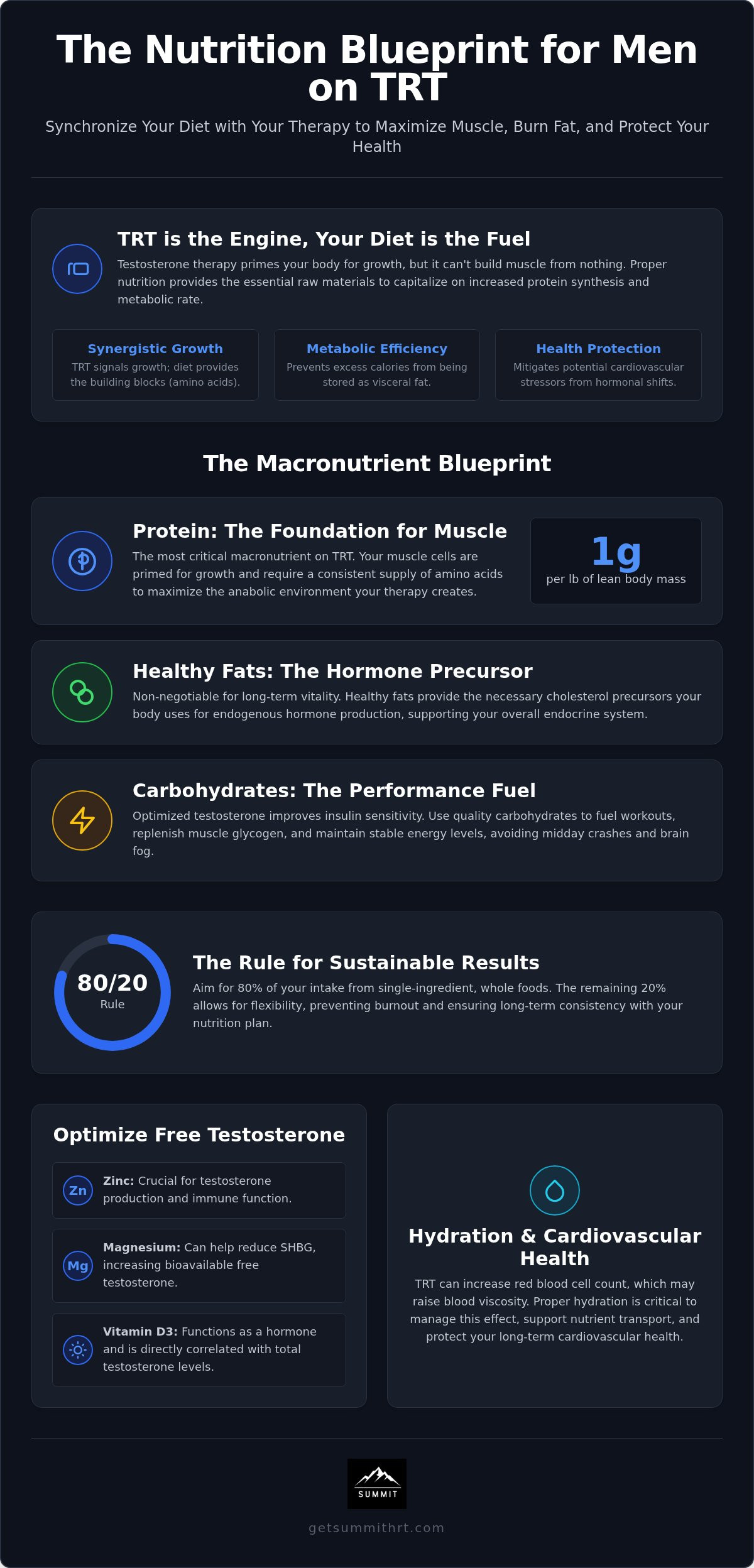
Think of testosterone as a powerful foreman on a construction site. He has the blueprints and the drive to build a stronger, leaner structure, but he can't do anything without the raw materials. In the context of your body, testosterone replacement therapy (TRT) significantly increases protein synthesis, but your diet provides the essential amino acids required to actually build that muscle. Without a structured diet plan for men on testosterone therapy, you're essentially hiring the best crew in the world and giving them nothing to work with.
Many men fall into the "magic bullet" trap, assuming that exogenous testosterone will automatically melt fat regardless of what they eat. The reality is more complex. If your diet is high in processed sugars and refined seed oils, your insulin levels remain chronically elevated. High insulin can actually encourage the body to store fat even when testosterone levels are optimized. By aligning your nutrition with your therapy, you protect the investment you're making in your health and ensure the hormone is working for you, not against you.
Synergistic Growth: TRT signals your cells to repair and grow; your diet provides the building blocks.
Metabolic Efficiency: Proper nutrition prevents the "spillover" effect where excess calories are stored as visceral fat.
Health Protection: A heart-healthy diet mitigates potential cardiovascular stressors sometimes associated with hormonal shifts.
The Science of Nutrient Partitioning on TRT
One of the most significant benefits of optimized testosterone is improved nutrient partitioning. This is the biological process that determines whether the calories you consume are burned for energy, stored in muscle tissue, or deposited as body fat. Testosterone encourages your body to prioritize muscle cells for calorie delivery. This is why a caloric surplus feels different on TRT; instead of just gaining a "spare tire" around your waist, you'll likely notice increased fullness in your chest and shoulders. Additionally, therapy often raises your basal metabolic rate (BMR), meaning your body burns more energy even while at rest. This metabolic edge only works, however, if you provide the right fuel at the right times.
TRT and Insulin Sensitivity: The Carbohydrate Connection
Optimized testosterone levels act as a natural insulin sensitizer, helping your body process glucose more efficiently. If you find yourself "crashing" after lunch or feeling a heavy brain fog after a carb-heavy meal, it's a clear sign that your current eating habits are fighting your therapy. When your hormones are balanced, your body should be able to shuttle carbohydrates into muscle glycogen rather than letting them sit in the bloodstream. Metabolic flexibility is the body's ability to efficiently switch between burning fats and carbohydrates based on availability and demand. Achieving this state ensures that your energy remains stable throughout the workday, allowing you to maintain the focus and vitality that TRT is designed to restore.
The Macronutrient Blueprint: Fueling Muscle and Burning Fat
While the previous section established why your hormones need nutritional support, this blueprint outlines the specific numbers for your diet plan for men on testosterone therapy. You aren't just eating for general health anymore; you're eating for hormonal synergy. A successful approach typically follows the 80/20 rule. This means 80% of your intake should come from single-ingredient, whole foods, while the remaining 20% allows for the flexibility needed to stay consistent. This balance prevents the psychological burnout often seen with overly restrictive regimes while ensuring your body receives high-quality fuel.
Protein: The Foundation of Muscle Protein Synthesis (MPS)
Protein is the most critical macronutrient for body recomposition on TRT. When you're utilizing trt therapy, your muscle cells are primed for repair and growth, but they require a consistent supply of nitrogen and amino acids. You should aim for approximately 1 gram of protein per pound of lean body mass. This isn't just a gym myth; it's a physiological requirement to maximize the anabolic environment your therapy creates. High-quality sources are essential because they contain higher concentrations of leucine, the primary amino acid that triggers the MPS pathway.
Grass-fed beef: Provides essential minerals like zinc and iron alongside high-quality protein.
Wild-caught fish: Offers lean protein with the added benefit of heart-healthy fats.
Pasture-raised eggs: A complete protein source that includes the healthy cholesterol your body uses for cellular repair.
Healthy Fats and Hormonal Synthesis
Many men mistakenly switch to a low-fat diet when they start a fat-loss journey. This is a significant error for those on hormone therapy. Cholesterol is the literal building block of steroid hormones. Even though you are receiving testosterone from an external source, your body still relies on healthy fats to manage systemic inflammation and maintain the health of every cell membrane. Omega-3 fatty acids are especially vital here. They help manage the blood markers and inflammation that TRT can sometimes mask, ensuring your cardiovascular system remains as strong as your muscles.
Focus your intake on monounsaturated fats and Omega-3s. Avocado, extra virgin olive oil, and macadamia nuts should be staples in your kitchen. These fats provide steady energy without the insulin spikes associated with processed snacks. If you're unsure how your current fat intake is affecting your lipid profile, consulting with a specialist for comprehensive bloodwork can provide the clarity needed to adjust your plan for peak performance.
Carbohydrates are your performance fuel, not the enemy. The key is timing. By consuming complex carbohydrates like sweet potatoes or oats around your training window, you provide the glycogen needed for high-intensity sessions. This targeted approach keeps your insulin levels stable throughout the rest of the day, allowing for maximum fat oxidation while keeping your energy levels high for the office and the gym.
Micronutrients and Superfoods That Optimize TRT Performance
If macronutrients are the fuel for your engine, micronutrients are the spark plugs that keep the internal combustion process running smoothly. You've already optimized your protein and fats; now you must focus on the vitamins and minerals that ensure your body actually utilizes the testosterone you're providing. A comprehensive diet plan for men on testosterone therapy must account for the increased metabolic demand your body experiences during therapy. Without these critical co-factors, you may find that your bloodwork shows high total testosterone, but you still feel sluggish or struggle with unwanted side effects.
The T-Engine Minerals: Zinc and Magnesium
Zinc is perhaps the most vital mineral for any man on TRT because it acts as a natural aromatase inhibitor. This means it helps prevent your body from converting too much of your supplemental testosterone into estrogen, which is a common cause of water retention and mood swings. Active men should aim for 30 to 50 mg of zinc daily, ideally sourced from whole foods like oysters and pumpkin seeds or high-quality supplements. Magnesium is equally important; it binds to sex hormone-binding globulin (SHBG), making it harder for SHBG to bind to testosterone. This leaves more "free" testosterone available for your muscles and brain to use. Aim for 400 mg of magnesium before bed to improve sleep quality, as deep sleep is the primary window for muscle growth and tissue repair.
Vitamin D3 and K2 also play a supporting role that many men overlook. Even with optimized T levels, a deficiency in Vitamin D can lead to bone density issues and lowered immune function. Since testosterone therapy can stimulate the production of new red blood cells, ensuring your bone marrow has the right nutrient support is a medical necessity. Pair your D3 with K2 to ensure calcium is directed to your bones rather than your arterial walls, protecting your long-term cardiovascular health.
Estrogen Management Through Nutrition
Maintaining a stable mood on TRT often comes down to how well your body metabolizes and clears estrogen. This is where cruciferous vegetables like broccoli, kale, and Brussels sprouts become your best allies. These superfoods contain diindolylmethane (DIM) and calcium d-glucarate, compounds that help the liver process and excrete excess estrogen metabolites. When you include these in your diet plan for men on testosterone therapy, you're providing your body with the tools to maintain a healthy hormonal balance naturally.
Fiber is another "secret" weapon in the gut-hormone axis. High fiber intake helps move processed hormones out of the digestive tract, preventing them from being reabsorbed into the bloodstream. This process is essential for keeping your SHBG levels in a healthy range, ensuring your energy stays consistent throughout the day. A healthy gut environment also supports the production of neurotransmitters like serotonin. Since your hormones and gut health are deeply linked, a fiber-rich diet is often the missing link for men who struggle with anxiety or irritability during the early stages of therapy.
Managing Inflammation and Blood Viscosity Through Hydration
While building muscle and burning fat are the visible goals, your internal plumbing deserves equal attention. Testosterone therapy often stimulates the production of new red blood cells, a condition known as polycythemia. While this can improve oxygen delivery to your muscles, it also increases blood viscosity, making your blood thicker. A high-performance diet plan for men on testosterone therapy must prioritize cardiovascular fluidity to ensure these extra cells don't lead to complications. Recent clinical evidence, including data from the 2026 TRAVERSE trial, suggests that TRT does not significantly increase major adverse cardiovascular events when managed correctly. However, maintaining optimal blood viscosity remains a cornerstone of proactive care. Hydration is not just a lifestyle choice in this context; it is a medical necessity to maintain healthy plasma volume.
Hydration Strategies for Hematocrit Management
Elevated hematocrit readings are often exacerbated by simple dehydration because a lower plasma volume makes red blood cells appear more concentrated. You should aim to consume at least half your body weight in ounces of water daily as a baseline. However, plain water often isn't enough for active men who are training hard. Incorporating electrolytes like sodium, potassium, and magnesium ensures that the water you drink actually enters your cells rather than just passing through your system. This balance is critical for maintaining the blood pressure stability that supports your long-term health.
The Baseline: Drink half your body weight in ounces daily (e.g., 100oz for a 200lb man).
Electrolyte Support: Add sea salt or an electrolyte mix to your morning water to improve cellular uptake.
Monitoring: Watch for signs of "thick blood" like headaches or a flushed face, which can signal it's time to increase fluids.
Heart-Healthy Superfoods for the Long Haul
Nitric oxide is the unsung hero of male vitality. Foods like beets, garlic, and pomegranate help dilate blood vessels, which improves overall circulation and supports erectile function. For men on TRT, prostate health is another priority that nutrition can address. Lycopene, found in cooked tomatoes and watermelon, has been shown to support prostate tissue health as you age. Additionally, you should manage your lipid profile by including soluble fiber from oats or beans and plant sterols from seeds. These nutrients help maintain a healthy balance between HDL and LDL cholesterol, ensuring your cardiovascular system stays as resilient as your physique.
Alcohol remains the fastest way to tank your TRT progress. It dehydrates the body, increases systemic inflammation, and disrupts the liver's ability to clear excess estrogen. If you want to see the full benefits of your therapy, limiting alcohol is non-negotiable. Monitoring these markers is the only way to know if your hydration and nutrition strategies are working. You can schedule a comprehensive bloodwork analysis with our team to get a clear picture of your hematocrit and lipid levels.
The Summit Approach: Integrating Nutrition, Peptides, and TRT
Your body isn't a static machine. It's a complex hormonal ecosystem that requires constant calibration based on real-time data. A generic diet plan for men on testosterone therapy often fails because it ignores the unique metabolic rate and blood chemistry of the individual. At summit rejuvenation, we move beyond the "one size fits all" mentality. We treat your nutrition as a medical protocol that evolves alongside your hormone levels. Through our national telehealth platform, you gain access to professional oversight that ensures your lifestyle choices are magnifying the effects of your clinical treatment rather than working against them.
Synergizing TRT with Medical Weight Loss
The most effective body recomposition strategies in 2026 involve a strategic synergy between hormones and peptides. While testosterone provides the anabolic drive to build muscle, certain peptides for weight loss, such as GLP-1 agonists, can dramatically accelerate fat oxidation. When these are integrated into a high-protein diet, they help preserve lean tissue even while you're in a caloric deficit. This combination is the key to avoiding the "skinny fat" appearance that often results from unmonitored dieting. By managing your appetite and improving nutrient partitioning, these peptides ensure that your body burns stored fat for fuel while your TRT protocol keeps your muscle mass intact.
Muscle Preservation: High protein intake combined with peptides prevents the metabolic slowdown common in traditional dieting.
Appetite Control: Peptides help regulate hunger signals, making it easier to stick to your macronutrient targets.
Professional Monitoring: Clinical guidance ensures your dosage and diet are perfectly balanced for your specific goals.
Precision Health Through Bloodwork
We believe that you can't manage what you don't measure. Your quarterly bloodwork is the most important tool in your nutritional arsenal. These labs provide a window into how your body is responding to your diet, allowing us to make precision adjustments to your macros and micronutrients. We don't just look at your testosterone levels; we monitor markers like HbA1c and fasting insulin to ensure your metabolism is becoming more efficient. If your blood sugar isn't trending downward or your lipids are out of range, your diet needs to change. This data-driven approach removes the guesswork and provides a clear, objective roadmap for your health journey.
This partnership between patient and provider is what defines our methodology. We act as an authoritative mentor, providing the education and transparency you need to take control of your vitality. Whether it's adjusting your zinc intake to manage estrogen or fine-tuning your carbohydrate timing for better gym performance, every decision is backed by your personal data. This level of customization is what transforms a simple diet into a sustainable, life-changing lifestyle that protects your heart and maximizes your results for the long haul.
Reclaim Your Peak Performance and Vitality
You now possess the biological blueprint and the nutritional strategy to transform your health. By prioritizing high-quality protein, essential minerals like zinc, and meticulous hydration, you ensure that your body utilizes every aspect of your therapy effectively. A successful diet plan for men on testosterone therapy isn't about rigid restriction; it's about providing the specific raw materials that support your heart, muscles, and metabolic health. When you align your daily habits with your hormonal profile, the results move beyond simple aesthetics and into true restoration.
Achieving these results shouldn't be a solo journey. Our team provides a comprehensive bloodwork analysis to identify your unique needs, followed by telehealth consultations with hormone experts who understand the nuances of your physiology. For your convenience, we ship all necessary prescriptions directly to your home. You've already taken the first step by educating yourself on the synergy between nutrition and clinical care. Now, let's work together to turn that knowledge into a sustainable reality of peak performance.
Start Your Personalized Vitality Plan with Summit Rejuvenation and begin your journey toward a stronger, more energized future today.
Frequently Asked Questions
Can I do Keto while on TRT?
Ketogenic diets are compatible with testosterone therapy, but you should monitor your performance during heavy lifting sessions. While keto is excellent for rapid fat loss and insulin control, some men find that the lack of glycogen limits their muscle-building potential. If your primary goal is hypertrophy, a moderate-carb approach often yields better results. Always base your decision on your specific metabolic response and the intensity of your exercise routine.
How much protein do I really need to build muscle on testosterone therapy?
Aim for approximately 1 gram of protein per pound of lean body mass to fully support the increased muscle protein synthesis triggered by your treatment. This intake ensures your body has the necessary amino acids to repair and grow tissue. Consuming high-quality sources like grass-fed beef or wild-caught fish at every meal helps maintain a positive nitrogen balance. This is a non-negotiable part of a successful diet plan for men on testosterone therapy.
Does alcohol affect my testosterone levels if I am on TRT?
Alcohol won't lower the concentration of testosterone in your blood, but it disrupts how your body utilizes the hormone. Chronic alcohol consumption increases the activity of the aromatase enzyme, which converts your supplemental testosterone into estrogen. This often leads to unwanted side effects like water retention and mood instability. Limiting intake is essential to ensure your liver can efficiently manage your hormonal balance and overall cardiovascular health.
What foods help lower estrogen levels in men naturally?
Focus on cruciferous vegetables like broccoli, cauliflower, and Brussels sprouts to help manage estrogen levels naturally. These foods contain diindolylmethane (DIM), a compound that supports the liver in metabolizing and clearing excess estrogen. Also, a high-fiber diet ensures that processed estrogen is excreted rather than reabsorbed through the gut. This nutritional strategy helps maintain the ideal testosterone to estrogen ratio, which is vital for mood stability and fat loss.
Should I take a multivitamin while on TRT?
You should prioritize specific nutrients like Zinc, Magnesium, and Vitamin D3 rather than relying on a generic multivitamin. While a broad supplement might offer general support, your diet plan for men on testosterone therapy should be tailored to your actual deficiencies. Quarterly bloodwork provides the clarity needed to determine exactly which minerals your body requires. This precision approach prevents over-supplementation and ensures you are only taking what is necessary for your specific hormonal health.
How much water should I drink to keep my hematocrit levels safe?
Drink at least half your body weight in ounces of water daily to maintain optimal blood viscosity and manage hematocrit levels. If you weigh 200 pounds, your goal should be at least 100 ounces of fluid per day. Proper hydration keeps your plasma volume stable, which prevents red blood cells from becoming too concentrated. Adding electrolytes like sea salt or potassium to your water further improves cellular hydration and supports healthy blood pressure.
Can I use intermittent fasting while on TRT?
Intermittent fasting is a viable strategy on TRT, particularly for men focused on improving insulin sensitivity and losing body fat. The key is ensuring you still consume your total daily protein requirement within your feeding window. Some men find that fasting helps them maintain a leaner physique without sacrificing energy. However, if you experience significant fatigue or a drop in gym performance, you might need to adjust your fasting window or caloric intake.
What is the best "cheat meal" strategy for men on hormone therapy?
The most effective "cheat meal" strategy involves a high-carb, lower-fat meal that focuses on replenishing muscle glycogen. This approach utilizes your improved insulin sensitivity to shuttle glucose into your muscles rather than storing it as fat. Avoid high-fat, high-sugar combinations that can lead to systemic inflammation and lethargy. By treating your off-plan meals as strategic refeeds, you can enjoy flexibility while still supporting the long-term goals of your hormone optimization journey.


Comments