Can Stress Cause Low Testosterone? The Biological Link and How to Break the Cycle
Did you know that acute stress can cause your testosterone levels to plummet by as much as 30 percent in just a few hours? In 2026, nearly 45 percent of men report experiencing chronic, unrelenting pressure, leading many to wonder: can stress cause low testosterone? If you are struggling with persistent fatigue despite a full night’s sleep or noticing stubborn weight gain around your midsection, you aren't just "burnt out." Your body is likely caught in a biological hijack where your primary stress hormone is physically suppressing your natural hormone production.
It is incredibly frustrating to lose your drive and motivation when you need them most. We understand that these symptoms are grounded in your biology, not just your mental state. This article explores the hidden connection between chronic stress and declining testosterone, explaining how your body's survival mechanisms can prioritize cortisol at the expense of your vitality. You will gain a clear understanding of the "cortisol steal" and see how a professional plan involving comprehensive bloodwork and personalized optimization can help you break the cycle and restore your peak performance.
Table of Contents
The Hormonal Hijack: How Stress Lowers Testosterone
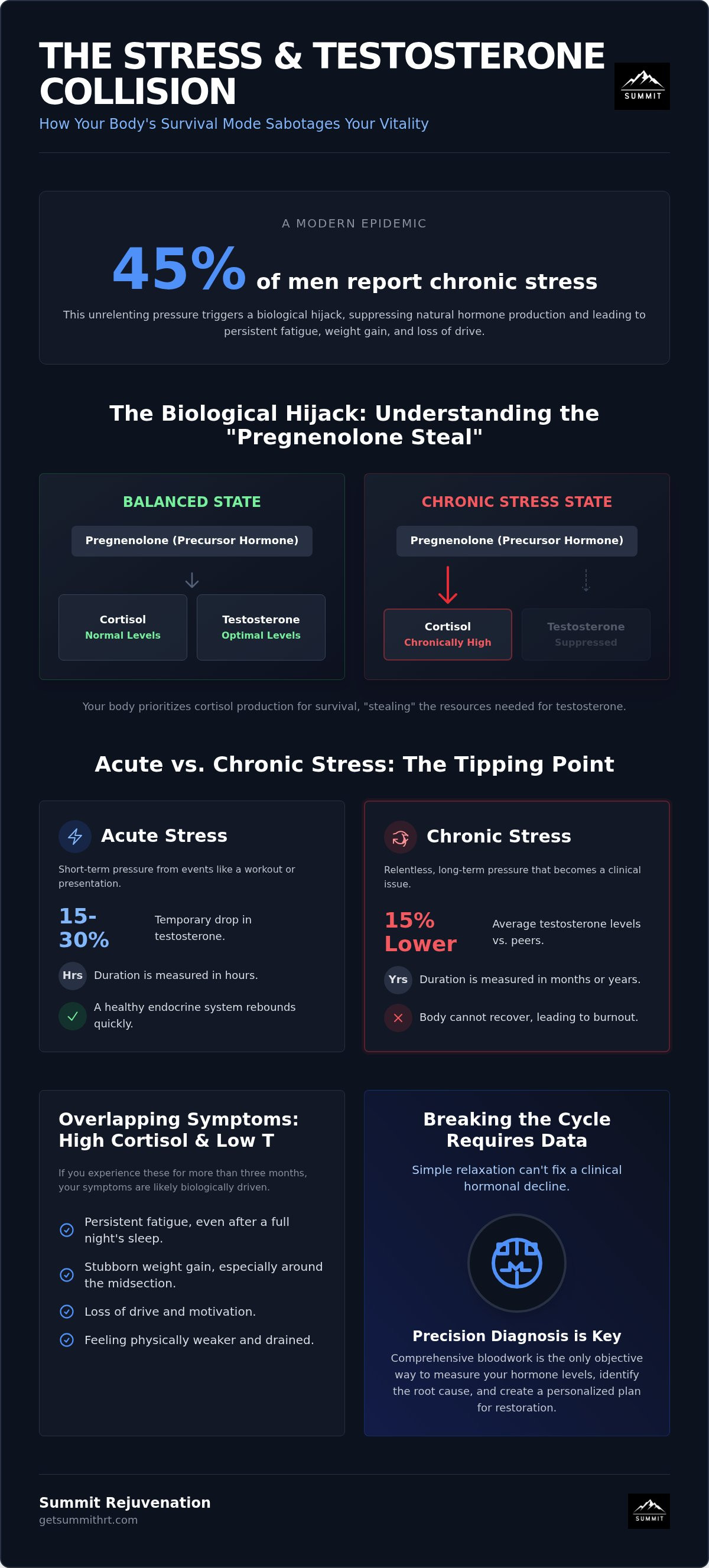
Stress-induced low T is a biological defense mechanism that sacrifices vitality for short-term survival. When you're constantly under pressure, your body enters a state of high alert that prioritizes immediate safety over long-term health. To understand how Testosterone levels drop, you have to look at the raw materials. Both cortisol and testosterone are synthesized from the same precursor hormone, pregnenolone. During periods of chronic tension, your body initiates what researchers call the "pregnenolone steal." It effectively hijacks the production line, diverting these essential building blocks to create cortisol instead of testosterone.
This resource competition is the primary reason why many men ask: can stress cause low testosterone? It's not just a mental feeling; it's a physical redirection of your hormonal assets. Understanding that stress can cause low testosterone is the first step toward reclaiming your health and breaking a cycle that often feels inescapable.
Cortisol vs. Testosterone: A Zero-Sum Game
Chronically elevated cortisol levels act as a direct inhibitor to the Leydig cells in your testes. These cells are the primary factories for your testosterone production. When you remain in a perpetual "fight or flight" mode, the endocrine system receives a clear message that the environment is unsafe for growth or reproduction. In the demanding professional world of 2026, this biological response often misinterprets a heavy workload or financial pressure as a physical threat to homeostasis. The result is a sharp decline in hormonal output that leaves you feeling drained, unmotivated, and physically weaker.
The Role of the HPA Axis
The Hypothalamic-Pituitary-Adrenal (HPA) axis serves as the command center for your stress response. It functions as a sophisticated signal loop between your brain and your adrenal glands. When stress becomes a constant companion, the HPA axis becomes overactive, which leads to the downregulation of the sex hormones. Essentially, your brain sends a signal to "shut off" the production of testosterone to conserve energy for the perceived crisis. If this loop stays active for months or years, the consequences become clinical. You aren't just tired; your internal messaging system has been recalibrated to a lower state of vitality that requires professional intervention to correct.
Acute vs. Chronic Stress: When Does It Become a Clinical Issue?
Not all stress is a physiological villain. Your body is naturally designed to handle short bursts of pressure through the "fight or flight" response. When you face acute and chronic stress, the body's reaction varies significantly based on the duration of the event. Acute stress, such as an intense workout or a high-stakes presentation, can cause testosterone to drop by 15 to 30 percent within hours. However, a healthy endocrine system rebounds quickly once the perceived threat passes.
The real clinical concern arises when that "off" switch never gets flipped. If you are asking can stress cause low testosterone, the answer lies in the persistence of the pressure. By 2026, we are seeing a rise in "Modern Male Burnout," a state where the endocrine system reaches a plateau of exhaustion. Research shows that men reporting high psychological stress have testosterone levels averaging 15 percent lower than their peers, an effect that is even more pronounced in men over 40. Instead of recovering, your testosterone production remains suppressed, leading to a permanent state of low vitality.
The Physical Toll of Overtraining and Work
Many driven men try to out-train their stress, but your body doesn't distinguish between a demanding boss and a grueling leg day. Both are stressors. when you combine professional "grinding" with extreme physical overexertion and sleep deprivation, you create a hormonal perfect storm. Sleep is the primary window for testosterone production. Missing even a few hours of rest due to work-related anxiety can slash your levels significantly, making it impossible for your body to repair itself. You can't simply work harder to fix a system that is failing due to overwork.
Signs Your Stress Has Become Chronic
It's a common misconception that a two-week vacation can fix a year of hormonal damage. If your symptoms, such as loss of drive or persistent fatigue, have lasted for more than three months, you are likely dealing with a clinical shift. Men with testosterone levels below 300 ng/dL often show cortisol responses to stress that are 40 percent higher than those with normal levels. This means that once your T drops, you actually become less resilient to the very stress that caused the drop in the first place, creating a self-perpetuating cycle of decline.
If you feel your "rebound" has disappeared, it's time to move beyond guesswork. Obtaining a comprehensive bloodwork analysis is the only way to see if your stress has caused a lasting hormonal deficit. Knowing your numbers allows us to build a plan that addresses the biological root of your burnout and helps you reclaim your edge.
Is It Stress or Low Testosterone? Identifying the Overlap
Deciphering whether your symptoms stem from a demanding lifestyle or a clinical hormonal deficiency is one of the most challenging aspects of modern men's health. Because the symptoms of high cortisol and low testosterone mirror each other so closely, many men spend years treating the wrong issue. You might try to "meditate away" fatigue that is actually caused by a physical lack of testosterone, or conversely, you might seek hormonal support when your primary issue is a dysregulated stress response. While these symptoms are often identical, the treatment protocols for each are distinct but complementary, requiring a strategy that addresses both your environment and your biology.
This confusion often leads to a vicious cycle that is difficult to break without intervention. Chronic stress lowers your testosterone levels, which in turn reduces your psychological resilience and increases anxiety. When your testosterone is low, your brain's ability to handle pressure diminishes, making every daily hurdle feel like a major crisis. This feedback loop ensures that as your hormones decline, your stress levels rise, further suppressing your natural production. It is a biological trap that can make you feel like a shadow of your former self.
Shared Symptoms Checklist
If you are wondering can stress cause low testosterone, you are likely experiencing a cluster of symptoms that exist in the "gray area" of both conditions. These shared markers include:
Persistent Fatigue: A deep exhaustion and "brain fog" that does not lift even after a full weekend of rest or extra caffeine.
Emotional Volatility: Increased irritability and a noticeably shorter "fuse" in social, family, or professional settings.
Decreased Drive: A significant loss of morning erections and a general decline in sexual desire or motivation to pursue goals.
The Differentiators: What Stress Alone Rarely Does
To find clarity, you must look for the physical markers that point specifically toward a hormonal decline. While stress can make you feel soft or tired, certain changes are almost exclusively tied to low testosterone levels. If you notice a significant loss of muscle mass despite maintaining a consistent training schedule, your body likely lacks the hormonal signal to maintain that tissue. Similarly, unexplained fat gain specifically in the chest and abdominal area, often referred to as "visceral fat," is a classic sign of a testosterone-to-estrogen imbalance. In more advanced cases, low T can even lead to anemia or changes in bone density, issues that lifestyle stress alone rarely triggers. Identifying these physical shifts is a critical step in determining if your symptoms have moved from a mental burden to a clinical biological issue.
Breaking the Cycle: Lifestyle Shifts and Medical Intervention
Breaking the hormonal feedback loop requires more than a simple weekend off. If you've been wondering can stress cause low testosterone, you must realize that once the HPA axis is severely dysregulated, "just relaxing" is often insufficient to fix the biological deficit. You need a dual-track strategy that combines intentional lifestyle shifts with clinical optimization. This approach addresses the external triggers while simultaneously repairing the internal damage. By 2026, the standard of care has moved toward this integrated model, recognizing that your environment and your biology are inextricably linked.
Foundational Lifestyle Changes
For those seeking a more personalized, high-touch approach to their recovery, you can explore VIP Concierge and Holistic Healing Appointments at the Quantum Resonant Healing Center, which offers specialized protocols designed to repair the damage caused by chronic stress.
Sleep is your most powerful tool for hormonal recovery. The 7-9 hour sleep rule is not just a suggestion; it is the specific window when your body reaches its peak morning testosterone production. If you cut this period short, you effectively cap your body's ability to produce the hormones you need for the following day. Micronutrient support also plays a critical role in this process. Stressed men often deplete their stores of Zinc, Magnesium, and Vitamin D, which are essential building blocks for healthy hormone synthesis. Additionally, introducing adaptogens or utilizing specialized stress-management resources like Achieve Hypnotherapy can help buffer your body's cortisol response, preventing minor daily pressures from triggering a full hormonal hijack.
Sometimes, lifestyle changes alone aren't enough to restart a stalled endocrine system. When your levels fall below the clinical threshold, starting Men's Hormone Therapy (TRT) becomes a necessary step for restoration. You can find deep-dive details in our TRT Therapy: The Comprehensive Guide to Testosterone Optimization in 2026. TRT provides a "hormonal floor" that prevents your levels from bottoming out during high-pressure periods. This biological foundation gives you the mental and physical energy needed to actually implement the stress-management habits that were previously impossible to maintain due to exhaustion.
Modern medicine also offers synergy through peptide therapy, which can work alongside hormone optimization to accelerate recovery and improve sleep quality. By addressing the biological deficit first, you regain the resilience required to manage life's stressors effectively. You don't have to navigate this journey alone or guess about your health. Take the first step toward reclaiming your vitality by scheduling a telehealth hormone consultation to determine if medical intervention is the right path for your recovery.
Precision Diagnosis: Why Bloodwork is the Only Answer
You cannot simply "feel" your way to a hormonal diagnosis. While symptoms like persistent brain fog and a loss of drive are clear indicators that something is wrong, they don't provide the objective data needed for a solution. Many high-performers spend months wondering, can stress cause low testosterone, while attempting to self-manage through supplements or caffeine. The reality is that your endocrine system is too complex for guesswork. To understand how your lifestyle is impacting your biology, you must measure it with precision.
A comprehensive bloodwork analysis serves as the diagnostic foundation for any effective recovery plan. We move beyond simple tests to look at the full hormonal landscape. This includes measuring your Total Testosterone, Free Testosterone, Sex Hormone Binding Globulin (SHBG), and Cortisol levels. By looking at these markers together, we can see exactly how much hormone your body is producing and, more importantly, how much of it is actually "free" and available for your cells to use. This data-driven approach removes the ambiguity and provides a clear path toward restoration.
Beyond the "Normal" Range
Standard laboratory reference ranges are often misleading because they are based on broad population averages that include individuals of varying health statuses. Being "normal" for a 60-year-old man isn't the same as being optimized for a high-functioning professional in 2026. A specialist looks at the ratios between your hormones, such as the relationship between cortisol and free testosterone, to determine your true vitality. This perspective is vital because Summit Rejuvenation treats the patient, not just the lab report.
The Telehealth Path to Vitality
For busy professionals, the traditional medical model can be a barrier to care. Our streamlined process brings expert medical oversight directly to you through HRT Online. The journey is methodical and highly organized. You complete your comprehensive bloodwork at a local lab, participate in a telehealth consultation with a hormone specialist, and receive your personalized medications delivered directly to your home. This model ensures that you receive the depth of traditional care with the efficiency of modern technology. Reclaiming your edge starts with a single step. Booking a consultation allows you to stop guessing and start optimizing your health with professional guidance.
Reclaim Your Vitality and Break the Stress Cycle
Understanding that can stress cause low testosterone is the first step toward physical and mental restoration. You've seen how the body's survival mechanisms prioritize cortisol over vitality, physically hijacking your natural hormone production. By 2026, the unrelenting pressures of professional life have made this biological imbalance common, but it doesn't have to be your permanent reality. Breaking this cycle requires a transition from guesswork to precision.
You can move beyond persistent fatigue by combining foundational lifestyle shifts with expert medical oversight. Summit Rejuvenation provides personalized treatment plans based on detailed lab data, ensuring your care is tailored to your unique biology. Our telehealth model offers convenient national accessibility, allowing busy professionals to prioritize their health without sacrificing their schedule. Take the first step toward optimization with a comprehensive bloodwork analysis from Summit Rejuvenation. Your path to peak performance and renewed drive is within reach; it's time to let science lead the way back to your best self.
Frequently Asked Questions
Can stress cause a permanent drop in testosterone?
Chronic stress can lead to long term suppression of the HPA axis, which often feels permanent without medical intervention. While the body technically retains the ability to recover, years of elevated cortisol can recalibrate your hormonal set point to a lower level. If you are asking can stress cause low testosterone that persists, the answer is yes. Professional optimization is frequently required to restart the production loop and restore your original vitality.
How long does it take for testosterone to return to normal after stress?
Recovery time varies based on the duration of the stressor and your baseline health. Acute spikes might resolve in hours, but chronic depletion often takes months of consistent lifestyle changes and medical support. If your levels don't rebound within three months of reducing pressure, it's a sign that the hormonal cycle is clinically disrupted. In these cases, a data driven approach is necessary to identify the specific biological roadblocks to your recovery.
Will taking testosterone help me deal with work stress?
Yes, because testosterone provides a hormonal floor that increases your psychological resilience. When your levels are optimized, your brain's ability to handle pressure improves, making daily professional hurdles feel more manageable. It doesn't remove the external stress of your job, but it gives you the biological tools to process that stress without crashing. This restoration of drive and focus is why many professionals seek hormonal support to maintain their edge.
Does high cortisol always mean low testosterone?
High cortisol and low testosterone are closely linked but not identical. However, the biological competition for precursor hormones means that elevated cortisol often leads to a decline in sex hormones. When your body is in a state of high alert, it prioritizes immediate survival over long term health. This is why many wonder can stress cause low testosterone. Most men will see a measurable drop in T levels if their cortisol remains high for extended periods.
Can exercise-induced stress lower my T levels?
Intense overtraining acts as a physical stressor that can temporarily drop levels by 15 to 30 percent. If you don't allow for adequate recovery, this acute dip can become chronic. Balancing high intensity training with restorative sleep is essential to ensure your fitness goals don't accidentally sabotage your hormonal health. You should monitor your energy levels closely, as overtraining can mimic the same endocrine disruptions found in high pressure office environments.
What are the first signs that stress is affecting my hormones?
The earliest indicators are often subtle shifts in mood and energy. You might notice a shorter fuse in social settings, a loss of morning erections, or persistent brain fog that remains despite resting. These are signals that your body is beginning to prioritize cortisol production at the expense of your vitality and drive. Recognizing these symptoms early allows for proactive intervention before the hormonal decline becomes a more serious clinical issue.
Is TRT safe if my low testosterone is caused by stress?
TRT is a safe and effective clinical tool when managed by experts, regardless of whether the root cause is lifestyle based or physiological. At Summit Rejuvenation, we use comprehensive bloodwork to ensure your treatment is precise and tailored to your needs. Restoring your levels can actually provide the energy needed to successfully implement long term stress management habits. It acts as a bridge to help you regain control over your health and performance.
How does sleep deprivation specifically affect testosterone?
Sleep is the primary window for testosterone synthesis, with peaks occurring during REM cycles. Missing even a few hours of rest can slash your morning testosterone levels significantly. Since stress often causes insomnia, this creates a dangerous loop where lack of sleep further suppresses the hormones you need to handle stress. Prioritizing seven to nine hours of quality sleep is the most effective natural way to protect your endocrine system from daily pressures.


Comments