Can HRT Help with Anxiety and Depression? The 2026 Guide to Hormonal Mental Health
What if the persistent fog of anxiety and low mood isn't a primary psychiatric flaw, but a simple shortage of the chemical fuel your brain needs to thrive? If you've spent months feeling "off" despite normal blood tests and standard therapy, you aren't alone. Many people find themselves asking, can hrt help with anxiety and depression when traditional antidepressants only offer side effects instead of relief. It's frustrating to experience a loss of interest in life and physical fatigue while being told everything looks fine on paper.
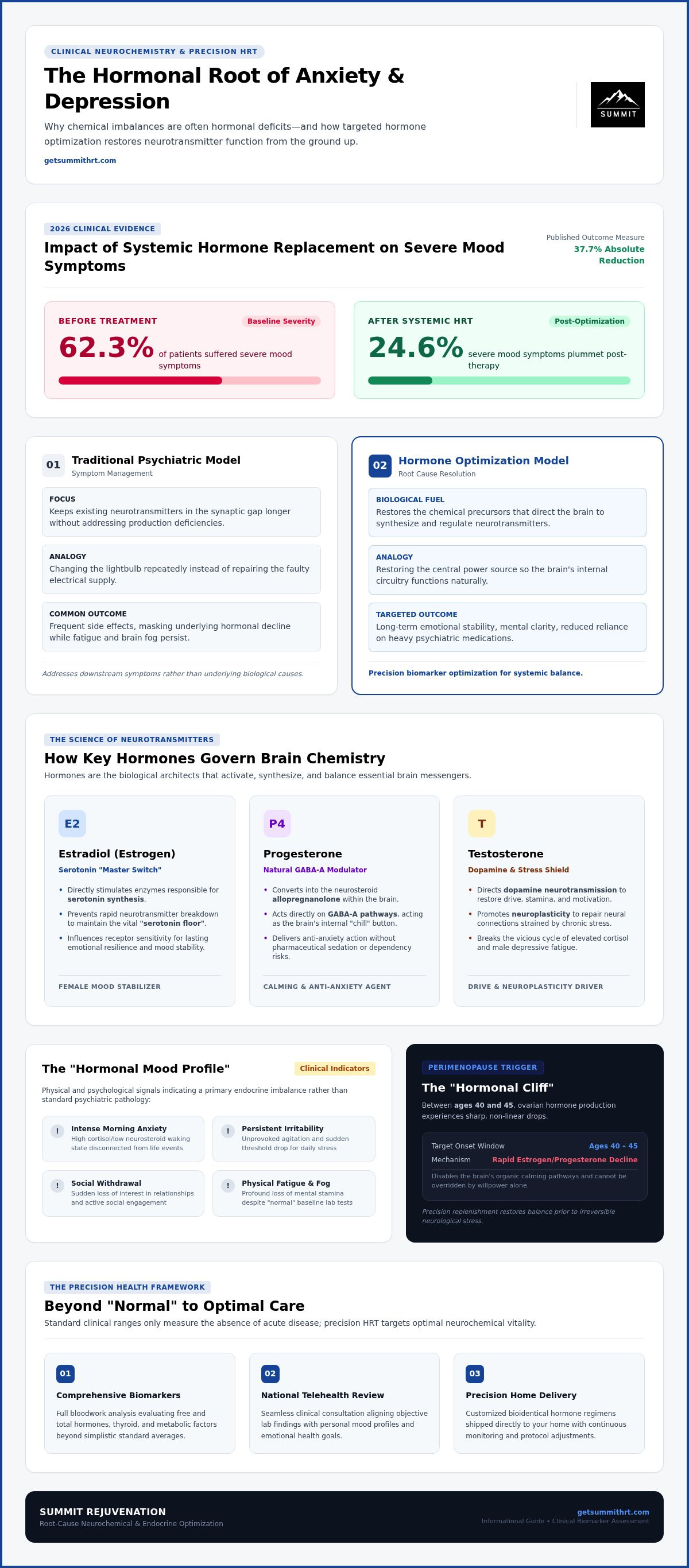
We believe that true mental health requires looking at the root cause rather than just managing symptoms. This guide reveals how restoring hormonal balance can alleviate persistent mood disorders; it explains why hormone replacement therapy might be the missing link in your journey toward emotional stability. We'll examine the 2026 clinical evidence where patients saw severe mood symptoms plummet from 62.3% to 24.6% through systemic treatment. You'll discover how precision biomarker testing and personalized optimization can help you avoid heavy psychiatric medication and finally reclaim your vitality.
Table of Contents
The Biological Link: How Hormones Govern Anxiety and Depression
We often hear about "chemical imbalances" in the brain, but this phrase rarely explains why the imbalance exists. For many, the root cause isn't a primary psychiatric flaw; it's a hormonal deficit. The endocrine system and the central nervous system are deeply intertwined. Hormones act as chemical messengers that tell your brain how to function, feel, and respond to stress. When these messengers are missing, your mental health suffers. Understanding this connection is vital because it changes the conversation from "what is wrong with me" to "what is missing from my system."
Traditional psychiatry frequently overlooks these triggers. Instead of investigating why serotonin or dopamine levels are low, practitioners often default to masking symptoms with standard medication. Recognizing the "Hormonal Mood Profile" is essential for finding the right path forward. This profile typically includes persistent irritability, a sudden desire for social withdrawal, and intense morning anxiety that feels disconnected from actual life events. You might ask, can hrt help with anxiety and depression when these physical symptoms persist? The answer lies in how hormone replacement therapy restores the biological foundation your brain relies on to maintain emotional stability.
Estrogen and Progesterone: The Female Mood Stabilizers
Estrogen and progesterone are powerful modulators of the female brain. Estrogen directly influences serotonin receptors, making this "feel-good" chemical more available and effective. Progesterone converts into a neurosteroid called allopregnanolone, which acts on GABA pathways to provide a natural anti-anxiety effect. During the "hormonal cliff" of perimenopause, which often begins between ages 40 and 45, these levels drop sharply. This sudden shift can trigger severe mood instability and anxiety that feels impossible to control through willpower alone. Without adequate hormonal support, the brain's natural "chill" button essentially stops working.
Testosterone and Cortisol: The Male Drive and Stress Response
For men, the relationship between testosterone and cortisol is a primary driver of mental health. Testosterone influences dopamine neurotransmission, which governs motivation, focus, and drive. When testosterone levels fall, cortisol (the stress hormone) often rises, creating a vicious cycle of fatigue and agitation. This state is frequently referred to as "male depressive disorder." It isn't just a lack of sadness; it's a profound loss of vitality and resilience. Restoring testosterone can break this cycle, lowering cortisol and returning a sense of calm authority to your daily life. It helps you reclaim the mental stamina needed to handle modern stressors without feeling overwhelmed.
The Science of Neurotransmitters: How HRT Rewires the Brain
Hormones aren't just background noise; they are the biological architects of your brain's chemistry. While traditional psychiatry focuses on keeping neurotransmitters in the synaptic gap longer, it often ignores the biological signals that tell the brain to produce those chemicals in the first place. This is where many patients find their answer when asking can hrt help with anxiety and depression. By restoring these essential precursors, you essentially rewire the brain's ability to regulate mood from the ground up. Think of it as fixing the power source rather than just changing a lightbulb.
Estradiol acts as a primary driver for serotonin availability. It stimulates the enzyme responsible for serotonin synthesis and prevents its rapid breakdown, ensuring your brain has a steady supply of this critical mood stabilizer. Without adequate estradiol, the brain struggles to maintain the "serotonin floor" required for emotional stability and resilience. Similarly, testosterone promotes neuroplasticity, which is the brain's ability to form new neural connections and recover from the damaging effects of chronic stress. In 2026, we define neurosteroids as specialized hormones produced within the brain and nervous system that rapidly modulate neuronal excitability to balance emotional responses.
GABA and the Calming Effect of Progesterone
Progesterone is often called nature's anti-anxiety agent because of its conversion into allopregnanolone. This neurosteroid acts on GABA-A receptors in the brain's calming centers, mimicking the soothing effects of certain anti-anxiety medications without the heavy side effects or risk of dependency. When progesterone levels drop, many people experience a specific type of nighttime anxiety characterized by racing thoughts and persistent insomnia. Utilizing current FDA consumer guidance on hormone therapy, we can see how systemic restoration provides the deep, restorative sleep necessary for mental health recovery. Restoring this balance allows the central nervous system to finally power down and recover at night.
Dopamine, Drive, and the Testosterone Connection
Testosterone is the primary fuel for the brain's reward-seeking pathways and dopamine regulation. Low levels are frequently linked to "executive dysfunction," which manifests as brain fog, indecision, and a paralyzing "anxiety of overwhelm." When dopamine signaling is weak due to low testosterone, everyday tasks feel like insurmountable obstacles, leading to a sense of defeat. TRT helps restore these pathways, improving focus and returning a sense of proactive drive to your daily life. This mental clarity is a cornerstone of emotional resilience. If you're ready to see how your levels impact your clarity, you can start with a comprehensive bloodwork analysis to identify your baseline.
HRT vs. Traditional Antidepressants: Which Path is Right?
For decades, the standard medical response to persistent low mood or chronic worry has been a prescription for an SSRI or SNRI. While these medications are life-saving for many, they don't address the biological "fuel shortage" caused by declining hormones. If you're asking can hrt help with anxiety and depression, it's often because you feel like your current treatment is only scratching the surface of a much deeper issue. Traditional antidepressants work by recycling the serotonin you already have, whereas hormone therapy addresses the production side of the equation.
By 2026, the clinical consensus on treatment-resistant depression has evolved significantly. Experts now recognize that a large portion of patients who fail to respond to standard psychiatric protocols are actually suffering from unaddressed endocrine shifts. In these cases, hormonal therapies for depression and mood regulation aren't just an alternative; they're the missing piece of the puzzle. It's also possible to use HRT as an adjunctive therapy. Restoring your hormonal floor can often make low-dose antidepressants more effective by sensitizing the brain's neurotransmitter receptors.
The SSRI 'Blunting' Effect vs. HRT Vitality
A common side effect of traditional antidepressants is "emotional blunting," where patients report feeling "gray" or numb. You aren't necessarily sad, but you can't feel joy or excitement either. This happens because SSRIs can inadvertently dampen the brain's reward centers. Hormone optimization works differently by restoring the natural neurochemical environment. For men, this often involves following The Modern Guide to Men's Hormone Therapy (TRT) to regain the competitive drive and emotional depth that psychiatric meds might suppress. You deserve to feel the full spectrum of human emotion, not just a muted version of yourself.
Identifying the True Root Cause
Determining if your mood is primarily hormonal requires looking beyond your thoughts and evaluating your physical state. Use this checklist to see if your experience aligns with a hormonal deficit rather than a primary psychiatric disorder:
Your anxiety or low mood is accompanied by physical markers like night sweats, muscle loss, or weight gain.
Standard antidepressants have provided little relief or have caused significant sexual side effects.
Your symptoms fluctuate significantly based on your cycle or age-related milestones.
You experience "physical" anxiety, such as a racing heart or jitters, even when your mind isn't focused on a specific stressor.
If these patterns sound familiar, focusing on hormonal restoration provides a more sustainable long-term solution. It allows you to address the root cause of your distress instead of simply managing the symptoms indefinitely.
Beyond 'Normal': Why Bloodwork is the Key to Precision Health
You've likely heard the phrase "your labs are normal," yet you still wake up with a heavy sense of dread or a lack of interest in the things you used to love. When patients ask can hrt help with anxiety and depression, the first step is moving past the statistical averages used by standard laboratories. Standard reference ranges represent the middle 95% of the population, which includes individuals of all health statuses and ages. Relying on these broad ranges is often why hormonal imbalances go undetected for years. We focus instead on "optimal" levels, which are the specific ranges where your brain and body function with peak vitality.
A truly comprehensive evaluation looks far beyond total testosterone or basic estrogen levels. We analyze Sex Hormone Binding Globulin (SHBG) and Free Testosterone to understand how much hormone is actually bioavailable for your brain to use. DHEA is another critical marker; it serves as a precursor for other hormones and acts as a neuroprotective agent that supports emotional resilience. Without these specific data points, any treatment plan is merely a guess. Precision health requires seeing the full picture of your internal chemistry to build a foundation for lasting stability.
Comprehensive Labs: What to Look For
Precision diagnostics must account for the secondary systems that influence your mood. A full thyroid panel is non-negotiable, as thyroid dysfunction frequently mimics or worsens the symptoms of clinical depression and anxiety. We also prioritize Vitamin D, which functions as a pro-hormone essential for neurotransmitter synthesis. Additionally, we track C-Reactive Protein (CRP) to identify systemic inflammation, a known biological driver of mood disorders. You can learn more about these critical markers in Summit Rejuvenation's guide to bloodwork analysis.
The Telehealth Revolution in 2026
Remote diagnostics have fundamentally changed how we approach hormonal mental health by removing geographical barriers to specialized care. You no longer need to settle for a general practitioner who might lack the specific expertise required for complex hormone optimization. Working with dedicated specialists ensures that your protocol is managed with a high level of precision and ongoing support. Precision monitoring ensures that your treatment is calibrated to your unique physiology, making it significantly safer and more effective than standardized, one-size-fits-all dosing. This modern model allows you to move from labs to doorstep delivery with streamlined efficiency.
Schedule your comprehensive bloodwork analysis today to discover your optimal levels and start your journey toward restoration.
Restoring Your Vitality: The Summit Rejuvenation Approach
Your Personalized Path to Empowerment
Your journey begins with a comprehensive bloodwork analysis, but it doesn't end there. During your initial consultation, we focus on the symptoms that actually impact your quality of life, such as morning anxiety, social withdrawal, or persistent fatigue. We look beyond the population averages to find the specific levels that allow your brain to function at its best. We treat patients across the entire United States, ensuring that location is never a barrier to receiving high-level expertise. For those seeking specific information on female-focused care, our Hormone Replacement Therapy for Women guide provides a detailed roadmap for reclaiming vitality during perimenopause and beyond. This personalized path ensures you aren't just another number in a database, but a partner in a results-driven medical process.
Accessible Care, Professional Results
The logistics of your care are designed to be as streamlined as possible. Once your personalized protocol is established, we facilitate direct-to-home medication and supply delivery. This efficiency allows you to focus on your recovery rather than navigating the hurdles of traditional pharmacy visits. Our commitment to 'Precision Vitality' means we don't just aim for the absence of illness; we aim for the presence of peak mental and physical health. Ongoing monitoring is a core part of our service, providing the professional support needed to maintain emotional stability as your body adjusts to its new, optimal state. We take the time necessary to be thorough and precise, ensuring that your transition to hormonal optimization is safe, effective, and professionally managed.
You don't have to navigate this journey alone. Taking a proactive approach to your hormonal health can be the catalyst for the emotional stability you've been seeking. Schedule your comprehensive bloodwork with Summit Rejuvenation today and take the first step toward restoring your vitality and reclaiming your mental clarity.
Your Path to Emotional Resilience and Vitality
Understanding the deep biological connection between your endocrine system and your mental health is the first step toward lasting restoration. We've explored how hormonal deficits often mimic primary psychiatric disorders and why addressing these gaps is essential for true emotional stability. If you've been searching for answers, you now know that can hrt help with anxiety and depression by restoring the chemical precursors your brain needs to function at its peak. It's time to move beyond managing symptoms and start addressing the root cause of your distress.
Summit Rejuvenation provides a streamlined path to recovery through specialized telehealth consultations and comprehensive bloodwork analysis. We focus on identifying your personalized optimal levels rather than settling for broad population averages that may leave you feeling unwell. With direct-to-home medication shipping and ongoing professional support, your journey toward vitality is both professionally managed and highly accessible. You don't have to settle for simply surviving when significant improvement is possible.
Take Control of Your Mood—Schedule Your Comprehensive Bloodwork Analysis with Summit Rejuvenation
We're here to act as your dedicated partner in health, providing the clarity and expertise you need to reclaim your life. Your restoration starts with a single, proactive choice.
Frequently Asked Questions
How quickly does HRT help with anxiety and depression?
Most patients begin to feel a noticeable shift in their anxiety levels and sleep quality within the first two to four weeks of starting a personalized protocol. However, the complete restoration of your mood and vitality typically takes three to six months of consistent optimization. This timeframe allows your brain's neurotransmitter receptors to fully recalibrate to your new, optimal hormonal environment. We monitor your progress closely through telehealth consultations to ensure your transition is smooth.
Can HRT replace my current antidepressant medication?
Hormone therapy can often reduce the need for high-dose antidepressants, but it isn't a wholesale replacement for everyone. Many individuals find that restoring their hormonal floor makes their current psychiatric medication more effective at lower doses. You should never discontinue or alter your antidepressant prescription without the direct supervision of your prescribing physician. Our specialists work alongside your existing care plan to ensure a safe, integrated approach to your mental health.
Is it safe to start HRT if I have a history of anxiety?
It's generally safe and often highly beneficial to start hormone optimization if your anxiety is linked to an underlying hormonal deficit. Many patients discover that their chronic worry is actually a symptom of low progesterone or testosterone rather than a primary psychiatric disorder. By using comprehensive bloodwork analysis, we identify specific imbalances that may be triggering your nervous system's "fight or flight" response. Restoring these levels often provides a sense of calm that traditional treatments missed.
Will HRT help with the brain fog associated with depression?
Addressing the question of can hrt help with anxiety and depression also involves tackling the debilitating brain fog that often accompanies these conditions. Testosterone plays a vital role in dopamine regulation and executive function, while estrogen supports the neural pathways responsible for memory and focus. By optimizing these levels, you can restore your cognitive resilience and clear the mental haze that makes daily tasks feel overwhelming. This clarity is a cornerstone of emotional recovery.
What happens if my bloodwork comes back in the 'normal' range?
If your results fall within the standard "normal" range but you still feel miserable, we look deeper to find your personalized "optimal" levels. Conventional lab ranges are based on broad statistical averages that include individuals who are unwell or aging. We prioritize how you feel and focus on the physiological peaks that support mental stamina and emotional stability. Our goal is to move you from a state of clinical adequacy to one of true vitality.
Are there specific hormones that help more with anxiety than others?
Progesterone is often the most effective hormone for immediate anxiety relief because it converts into neurosteroids that soothe the brain's GABA receptors. For men, testosterone is equally critical as it helps balance cortisol levels and reduces the "anxiety of overwhelm" by improving drive and focus. Every individual requires a different balance, which is why we tailor our protocols to address the specific hormonal gaps identified in your comprehensive bloodwork analysis.
Can men use TRT specifically to treat depressive symptoms?
Men frequently use testosterone replacement therapy to alleviate symptoms of "male depressive disorder," such as loss of interest, fatigue, and irritability. Low testosterone directly impacts dopamine pathways, leading to a state of anhedonia where nothing feels rewarding. TRT restores the biological motivation needed to engage with life again. While not a primary psychiatric drug, optimizing testosterone is a proactive health choice that significantly improves emotional resilience and overall mental stamina for men nationwide.
How do I know if my mood issues are hormonal or just stress-related?
Distinguishing between situational stress and a hormonal deficit requires looking at the persistence and physical nature of your symptoms. Hormonal mood issues often remain constant even when external stressors decrease and are typically accompanied by physical markers like muscle loss, night sweats, or unexplained weight gain. Comprehensive bloodwork analysis provides the definitive clarity needed to separate lifestyle factors from biological shortages. Understanding this distinction is the first step toward finding a root-cause solution for your mood.


Comments