Exercises to Maximize TRT Results: A Comprehensive Guide
- Aug 2
- 13 min read
Starting TRT is one thing. Actually unlocking everything it has to offer is another challenge entirely. If you've begun testosterone replacement therapy and you're wondering why your results feel incomplete, the missing piece is almost certainly what you're doing in the gym and how you're fueling your body around it. The right exercise to maximize TRT results doesn't just complement your therapy; it actively amplifies it, turning a solid foundation into something genuinely transformative.
You already know that TRT alone isn't a magic switch. Most men on therapy feel that pull toward the gym, that renewed drive and energy, but without a clear roadmap, it's easy to train hard without training smart. Structuring your workouts incorrectly, neglecting recovery, or eating in a way that undermines your hormonal environment can leave real gains on the table.
This guide cuts through the noise. You'll walk away with a clear understanding of which exercises build the most muscle on TRT, how to structure your training week for maximum hormonal response, and which nutritional strategies best support both your workouts and your therapy. Let's build the complete picture.
Table of Contents
Understanding the Role of Exercise in Maximizing TRT Results
Testosterone replacement therapy restores what time and biology have taken away, but it doesn't work in isolation. Your body needs a reason to put that testosterone to work. Exercise provides exactly that signal, triggering the biological processes that allow elevated testosterone levels to translate into real, measurable change. Choosing the right exercise to maximize TRT results isn't a bonus strategy; it's a core requirement of effective therapy.
When testosterone levels are optimized through TRT, your body becomes significantly more receptive to physical training. The hormonal environment shifts in your favor, making every well-structured workout more productive than it would have been before therapy. But without consistent physical stimulus, much of that potential goes unrealized.
How Testosterone Affects Muscle Development
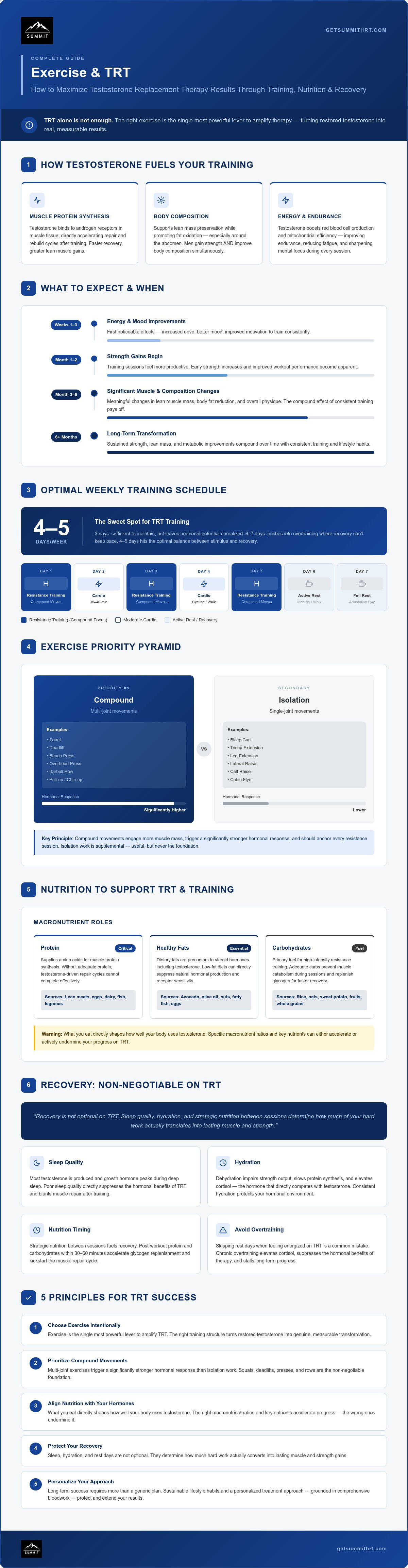
Testosterone drives muscle growth primarily by enhancing muscle protein synthesis, the process through which your body repairs and builds muscle fibers after training stress. At optimized levels, testosterone binds to androgen receptors in muscle tissue, directly accelerating this repair cycle. The result is faster recovery between sessions and a greater net gain in lean muscle over time.
Beyond muscle building, testosterone plays a direct role in metabolism and body composition. It supports the preservation of lean mass while promoting fat oxidation, particularly around the abdomen. This dual effect means men on TRT who train consistently often notice improvements in both strength and body composition simultaneously, rather than trading one for the other.
Energy regulation is another key mechanism. Testosterone influences red blood cell production and mitochondrial efficiency, which together improve endurance, reduce fatigue during training, and sharpen mental focus in the gym. You're not just stronger on paper; you feel it in every session.
Setting Realistic Expectations with TRT
Patience is part of the process. Most men begin noticing improvements in energy and mood within the first few weeks of therapy, but meaningful changes in muscle mass and strength typically develop over three to six months of consistent training. Individual responses vary based on factors including age, baseline hormone levels, training history, and nutrition quality.
Consistency matters more than intensity in the early stages. Showing up regularly, progressively increasing training demands, and eating to support recovery will compound over time in ways that sporadic hard effort simply can't replicate. TRT creates a favorable environment; your habits determine what gets built inside it.
It's also worth understanding that exercise to maximize TRT results looks different for every man. A personalized approach, grounded in comprehensive bloodwork and professional guidance, ensures your training aligns with your specific hormonal profile rather than a generic template.
Effective Workout Routines for Men on TRT
Knowing that testosterone amplifies your training response is one thing. Knowing exactly how to structure your sessions to capture that advantage is another. The right exercise to maximize TRT results isn't random effort; it's a deliberate framework built around frequency, movement selection, and progressive demand. Here's how to build it.
Creating a Balanced Workout Schedule
For most men on TRT, training four to five days per week hits the optimal balance between stimulus and recovery. Three days is enough to maintain, but it leaves hormonal potential on the table. Six or seven days consistently pushes into overtraining territory, where recovery can't keep pace with demand.
A practical structure that works well looks like this:
Days 1, 3, 5: Resistance training focused on compound movements
Days 2 and 4: Moderate-intensity cardio, such as 30 to 40 minutes of cycling or incline walking, to support cardiovascular health without blunting recovery
Days 6 and 7: Active rest, light mobility work, or walking
Rest days aren't gaps in your plan. They're when adaptation actually happens. Skipping them consistently is one of the most common mistakes men make when they feel that renewed energy from therapy. Protect your rest days the same way you protect your training days.
Key Exercises to Focus On
Compound, multi-joint movements should anchor every resistance session. These exercises recruit the largest muscle groups simultaneously, driving a stronger anabolic response than isolation work alone. The foundational lifts every TRT-supported program should include are:
Squats (back squat, goblet squat, or front squat variations): Targets quads, glutes, and hamstrings while engaging core stability
Deadlifts (conventional, Romanian, or trap bar): Builds posterior chain strength and promotes full-body neuromuscular recruitment
Bench Press (flat, incline, or dumbbell variations): Develops chest, shoulders, and triceps through a full range of motion
Rows and Pull-Ups: Essential for back thickness and postural balance against pressing work
Overhead Press: Builds shoulder strength and reinforces functional upper-body movement patterns
Progressive overload ties everything together. Adding small amounts of weight, increasing reps, or reducing rest periods over time ensures your body keeps adapting rather than plateauing. Without it, even a solid routine eventually stops producing results.
Functional movements matter beyond the gym too. Exercises that mirror real-world patterns, like hip hinges, carries, and unilateral leg work, improve daily movement quality and reduce injury risk as you build strength over the long term.
If you want a training plan that's built around your specific hormonal profile rather than a one-size-fits-all template, explore personalized TRT support at Summit Rejuvenation and see how comprehensive bloodwork analysis shapes a program that actually fits you.
Nutrition Guidelines to Support Your TRT Journey
Training hard is only half the equation. What you put on your plate directly determines how effectively your body uses the testosterone available to it, and without the right nutritional foundation, even a perfectly structured program built around exercise to maximize TRT results will underperform. Nutrition isn't a supporting role here; it's a co-star.
Foods to Emphasize in Your Diet
Three categories of food do the heaviest lifting for men on TRT, and each one serves a distinct biological purpose.
Lean proteins: Chicken breast, turkey, eggs, Greek yogurt, cottage cheese, white fish, and lean cuts of beef all supply the amino acids your muscles need to rebuild after training. Aim for a consistent protein intake distributed across your meals rather than front-loading it at dinner.
Healthy fats: Testosterone is synthesized from cholesterol, which makes dietary fat non-negotiable. Avocados, olive oil, whole eggs, fatty fish like salmon and mackerel, and mixed nuts all support healthy hormone production. Cutting fat too aggressively while on TRT is a counterproductive move many men make without realizing it.
Complex carbohydrates: Oats, sweet potatoes, brown rice, quinoa, and legumes provide sustained energy for training and replenish muscle glycogen afterward. They also help manage cortisol, a stress hormone that competes directly with testosterone when chronically elevated.
Recommended Macronutrient Ratios for Muscle Growth
A practical starting point for men on TRT focused on building lean muscle is roughly 30 to 35 percent of calories from protein, 30 to 35 percent from healthy fats, and 35 to 40 percent from complex carbohydrates. These aren't rigid rules; they're a calibrated starting point that you adjust based on how your body responds over four to six weeks. Track your energy levels, recovery quality, and strength progress as your real feedback loop.
Protein targets matter most. A commonly referenced benchmark is 0.7 to 1 gram of protein per pound of bodyweight daily for men actively building muscle. Hitting that target consistently, across multiple meals, is more important than any other single dietary variable.
Meal Timing and Frequency
Eating three to five balanced meals per day keeps amino acid availability steady throughout the day, which supports continuous muscle protein synthesis rather than sporadic peaks. Skipping meals or going long stretches without protein creates gaps that slow recovery.
Pre-workout nutrition should prioritize easily digestible carbohydrates and moderate protein consumed roughly 60 to 90 minutes before training. Post-workout, the priority shifts to fast-absorbing protein and carbohydrates within 30 to 60 minutes of finishing your session, when muscle tissue is most receptive to nutrient uptake.
Hydration is often underestimated. Testosterone influences fluid balance at the cellular level, and even mild dehydration impairs strength output, focus, and recovery. A practical daily target for active men is half an ounce to one ounce of water per pound of bodyweight, adjusted upward on training days and in warmer climates.
As a complement to solid nutrition, certain supplements can support exercise to maximize TRT results more effectively. Vitamin D, zinc, magnesium, and omega-3 fatty acids are the most evidence-supported options for men on hormone therapy. They're not replacements for a strong diet, but they fill gaps that food alone often misses. Always confirm supplementation choices with your prescribing provider, especially when managing an active TRT protocol.
For those interested in the scientific standards behind high-purity compounds used in analytical settings, you can visit Onyx Biolabs to learn about their specialized role in supplying laboratory-grade materials for research purposes.
Recovery Practices to Optimize Training Results
Training creates the stimulus. Recovery is where the actual results are built. This distinction matters more on TRT than it does for most men, because optimized testosterone levels accelerate the repair cycle, but only if you give that cycle the conditions it needs to run. Neglecting recovery while on therapy doesn't just slow progress; it actively works against the biological advantage you've worked to create.
The Role of Sleep in Recovery
Sleep is the single most powerful recovery tool available to you, and it's free. During deep sleep stages, your body releases growth hormone, repairs damaged muscle fibers, and consolidates the neuromuscular adaptations built during training. Consistently getting seven to nine hours per night isn't a luxury; it's a physiological requirement for anyone serious about using exercise to maximize TRT results.
Practical strategies that meaningfully improve sleep quality include:
Consistent sleep and wake times: Your circadian rhythm responds to regularity. Irregular schedules fragment sleep architecture and reduce time spent in the most restorative stages.
Keeping your bedroom cool and dark: Core body temperature drops naturally as you fall asleep. A cooler room, ideally between 65 and 68 degrees Fahrenheit, supports that process.
Limiting blue light exposure: Screens suppress melatonin production. Stepping away from devices 60 to 90 minutes before bed makes a measurable difference in sleep onset.
Avoiding alcohol close to bedtime: Alcohol fragments REM sleep and reduces growth hormone output overnight, directly undermining your recovery window.
TRT itself can influence sleep patterns, particularly in the early months of therapy. Some men experience improved sleep quality as low testosterone was previously disrupting their rest. Others may need dosage refinements if sleep disturbances emerge. Regular check-ins with your provider keep this in check before it becomes a pattern that erodes your results.
Incorporating Active Recovery
Active recovery sits between full rest and structured training. It keeps blood moving through fatigued muscle tissue, accelerates the clearance of metabolic waste, and reduces next-day soreness without adding meaningful training stress. Done right, it extends how hard you can push on your actual training days.
Effective active recovery options include light walking, easy cycling at conversational pace, swimming, yoga, and mobility-focused movement routines. The key word is light. If you're breathing hard or accumulating fatigue, it's no longer recovery; it's training.
Listening to your body is a skill worth developing. Persistent joint soreness, declining performance across consecutive sessions, disrupted sleep, and a general loss of motivation are reliable signals that your recovery isn't keeping pace. These aren't signs of weakness; they're data. Responding to them by pulling back for a day or two protects your long-term trajectory far better than grinding through.
Recovery is where your investment in exercise to maximize TRT results actually pays out. Protect it with the same intentionality you bring to your training sessions. If you want a complete program that accounts for your hormonal profile, training load, and recovery needs, connect with Summit Rejuvenation to explore a personalized TRT plan built around your full picture.
Integrating TRT with Lifestyle Changes for Long-Term Success
Therapy and training create the foundation. What sustains everything long-term is the lifestyle you build around them. Men who see the most durable results from TRT aren't just following a workout plan; they're constructing an environment where consistency becomes the default rather than the exception. That shift from effort to habit is where the real transformation lives.
Stress management deserves a place in this conversation. Chronically elevated cortisol actively suppresses testosterone and slows recovery, which means high-pressure lifestyles without adequate outlets can quietly erode the gains you're working to build. Practices like deliberate breathing, time in nature, or even structured downtime aren't soft additions to your protocol; they're protective mechanisms that keep your hormonal environment working in your favor.
Setting Goals and Tracking Progress
Vague intentions don't produce measurable results. SMART goals, those that are specific, measurable, achievable, relevant, and time-bound, give your effort a clear target. Instead of "get stronger," a SMART goal looks like "add 20 pounds to my deadlift over the next 12 weeks while maintaining body weight." That kind of precision creates accountability and makes it easy to spot when something in your approach needs adjusting.
Tracking methods matter less than consistency with whichever one you choose. Options worth considering include:
Training journals: Simple and effective for logging weights, reps, and how you felt during each session
Fitness apps: Useful for tracking volume over time and identifying plateaus before they become entrenched
Regular bloodwork: The most objective measure of how your body is responding to both therapy and training; nothing replaces actual data from your own biology
Body composition tracking: Progress photos and measurements often reveal changes that the scale misses entirely
Review your progress every four to six weeks and adjust accordingly. If strength is climbing but recovery feels compromised, that's feedback. If energy is high but body composition isn't shifting, nutrition likely needs refinement. Treat your data as a conversation, not a verdict.
Creating a Support Network
Isolation is one of the quieter obstacles in any long-term health journey. Having a training partner, joining a community of men navigating similar goals, or simply sharing your progress with someone who understands the process dramatically improves follow-through. Accountability doesn't require a formal structure; it just requires another person who notices when you show up and when you don't.
Online communities focused on fitness and hormone health have grown substantially and offer real value, particularly for men who don't have access to like-minded training partners locally. The key is finding spaces grounded in evidence rather than extremes, where the conversation centers on sustainable progress rather than shortcuts.
Combining the right exercise to maximize TRT results with these lifestyle pillars compounds over years, not just weeks. The men who sustain their results aren't necessarily the most disciplined; they're the ones who built systems that make consistency easier than inconsistency. If you're ready to build a personalized plan that integrates hormone therapy, training, and long-term health strategy, connect with Summit Rejuvenation to explore comprehensive TRT support tailored to your specific profile.
Your Stronger, Healthier Future Starts Now
Everything covered in this guide points to one clear truth: the right exercise to maximize TRT results isn't a single workout or a short-term fix. It's a system. Compound movements build the hormonal stimulus. Smart nutrition fuels recovery. Consistent sleep and lifestyle habits protect the progress you've earned. Each piece reinforces the others.
TRT gives your body a genuine advantage. What you do with that advantage depends entirely on how deliberately you build around it. The men who see lasting transformation aren't chasing perfection; they're showing up consistently with a plan that actually fits their biology.
That's exactly where Summit Rejuvenation comes in. Through telehealth consultations and personalized treatment plans grounded in comprehensive bloodwork analysis, their team helps you align your hormone therapy with a strategy built specifically for you, not a generic template.
You don't have to figure this out alone. Schedule your consultation with Summit Rejuvenation today and take the next step toward a stronger, more vital version of yourself. The foundation is already there; let's build on it.
Frequently Asked Questions
What type of exercises are best for men on TRT?
Compound, multi-joint movements deliver the strongest results for men on TRT. Squats, deadlifts, bench presses, rows, and overhead presses recruit the largest muscle groups simultaneously, generating a more powerful anabolic response than isolation exercises alone. These lifts should anchor your resistance sessions, with isolation work playing a supporting role rather than leading the program.
How often should I work out while on TRT?
Four to five training days per week is the practical sweet spot for most men on therapy. This frequency provides enough stimulus to take full advantage of optimized testosterone levels without outpacing your body's ability to recover. Splitting your week between resistance training and moderate cardio, with dedicated rest days, keeps both performance and recovery on track.
Can I lose weight while on testosterone replacement therapy?
Yes, and TRT can actively support that process. Testosterone promotes fat oxidation, particularly around the abdomen, while helping preserve lean muscle mass during a caloric deficit. Pairing therapy with consistent resistance training and a nutrition plan that supports both fat loss and muscle retention gives you a meaningful physiological advantage over dieting without hormonal optimization.
What dietary changes should I make when starting TRT?
Prioritize lean proteins, healthy fats, and complex carbohydrates as the foundation of your diet. Healthy fats are especially important since testosterone synthesis depends on dietary fat; cutting it too aggressively undermines your hormonal environment. Reducing processed foods, managing alcohol intake, and staying consistently hydrated are practical first steps that meaningfully support how your body responds to therapy and training.
How much protein do I need to support muscle growth on TRT?
A reliable target for men actively building muscle on TRT is 0.7 to 1 gram of protein per pound of bodyweight daily. Distributing that intake across three to five meals keeps amino acid availability steady throughout the day, which supports continuous muscle protein synthesis rather than sporadic peaks. Hitting this target consistently matters more than the precise source of protein you choose.
Are there any specific recovery practices I should follow on TRT?
Sleep is your highest-leverage recovery tool. Aiming for seven to nine hours per night protects the hormonal and muscular repair processes that make exercise to maximize TRT results actually stick. Beyond sleep, incorporating light active recovery sessions between training days, such as easy walking or mobility work, keeps blood flowing through fatigued tissue without adding meaningful training stress. Hydration and consistent meal timing round out the essentials.
How long will it take to see results from exercise on TRT?
Most men notice improvements in energy, mood, and motivation within the first few weeks of therapy, but meaningful changes in muscle mass, strength, and body composition typically develop over three to six months of consistent training and nutrition. Individual timelines vary based on age, baseline hormone levels, and training history. Regular bloodwork monitoring through a provider like Summit Rejuvenation helps ensure your protocol is calibrated to keep progress moving forward.


Comments