Managing Menopause Symptoms with HRT: The 2026 Guide to Precision Vitality
Updated: Aug 27
What if the debilitating fatigue and sudden weight gain you're experiencing aren't an inevitable part of aging, but a biological imbalance that you have the power to correct? You've likely been told that night sweats and brain fog are just something you have to endure, yet managing menopause symptoms with hrt shouldn't feel like a guessing game. It's frustrating to watch your vitality slip away while being told your lab results are "normal" despite your persistent exhaustion. You deserve a solution that goes beyond generic advice and targets your unique physiology with clinical precision.
In this guide, you'll discover how a data-driven, personalized approach to hormone replacement can eliminate disruptive symptoms and restore your quality of life. We're moving past the "one size fits all" era and into a period of precision medical care. We'll explore how comprehensive bloodwork analysis and specialized telehealth experts create a roadmap for your rejuvenation. You'll learn the exact steps to reclaim your mental clarity, protect your bone density, and finally feel like yourself again through a plan built specifically for your body's needs. It's time to transition from simply surviving to truly thriving.
Table of Contents
Beyond Hot Flashes: Why Menopause Requires a Precision Approach
The Science of Balance: How HRT Targets Your Specific Menopause Symptoms
Comparing HRT Delivery Methods: Pills, Creams, and Injections
The Vital Role of Comprehensive Bloodwork in Safe Hormone Management
Reclaiming Your Vitality: Starting Your Telehealth HRT Journey
Beyond Hot Flashes: Why Menopause Requires a Precision Approach
Menopause isn't just a change in your reproductive cycle. It's a systemic shift that impacts your brain, heart, bones, and metabolism. Managing menopause symptoms with hrt in 2026 has moved far beyond the generic prescriptions of the past. Modern medicine now focuses on precision. We look at your unique biological data to understand exactly how your hormone levels have shifted. This approach distinguishes between perimenopause, where levels fluctuate wildly, and menopause, where they remain consistently low. By identifying these nuances, we can tailor a plan that addresses your specific needs rather than applying a broad protocol to every patient—an approach championed by Living Well Dallas through specialized functional medicine consultations and comprehensive care for perimenopause and menopause.
To understand the depth of this shift, you can look at a comprehensive overview of Hormone Replacement Therapy to see how treatment has evolved. We must look at the difference between simple replacement and true optimization. Replacement therapy often aims for the bare minimum to stop hot flashes. Optimization, however, seeks to restore your levels to a point where you feel energetic, clear-headed, and strong. This proactive strategy uses individualized data to ensure you aren't just "fine," but truly thriving. Managing menopause symptoms with hrt is about reclaiming your quality of life, not just surviving the day.
The Multi-Hormone Impact of Menopause
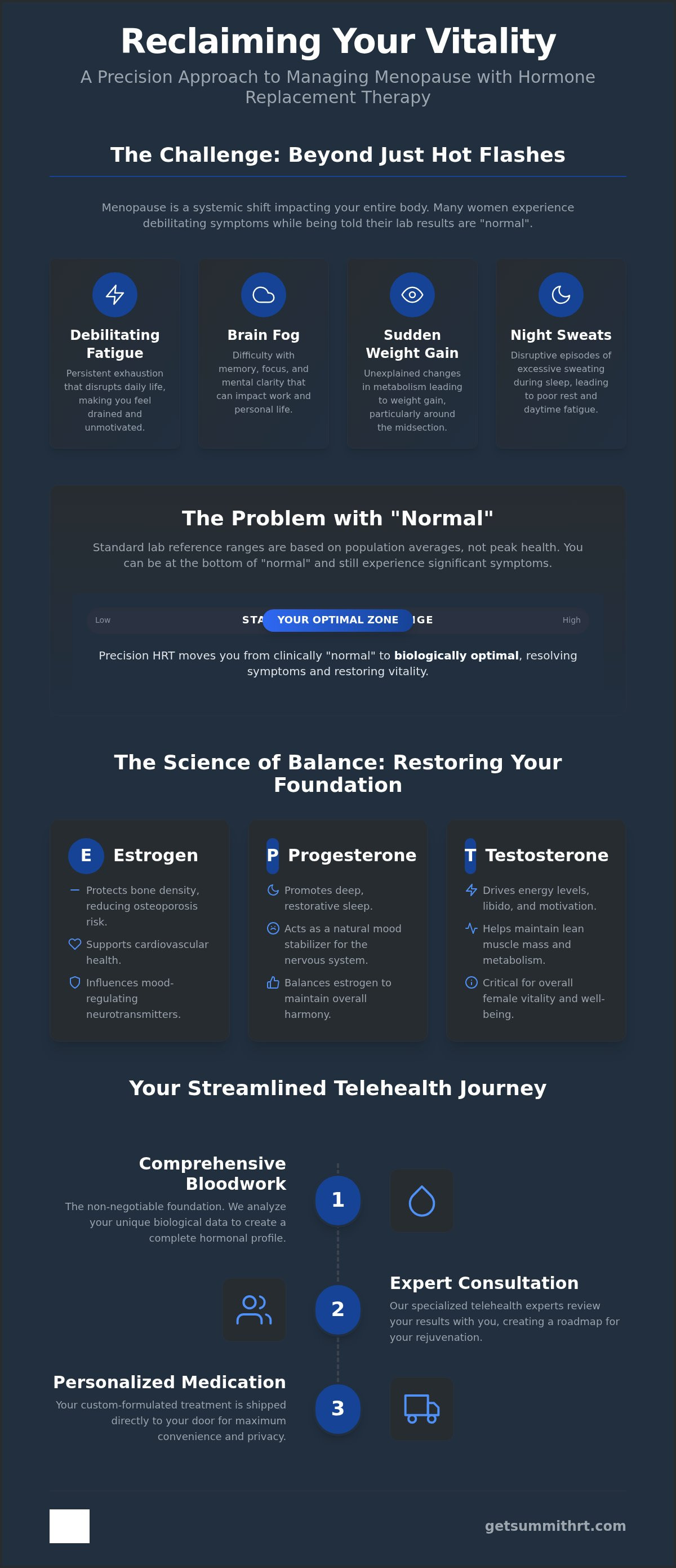
Hormonal balance is a delicate dance between several key players. Estrogen is essential for maintaining bone density and protecting your cardiovascular system. When it drops, your health risks can rise quietly. Progesterone acts as a natural stabilizer, regulating your mood and ensuring deep, restorative sleep. Many women also forget about testosterone. It's a critical component of female vitality, driving your libido and helping you maintain lean muscle mass. When these levels are optimized together, the synergy restores the vitality you thought was lost to time. If even one of these is off, the whole system feels the impact.
Why 'Normal' Bloodwork Often Fails Menopausal Women
You've probably had bloodwork done only to be told everything is "normal." The problem lies in the reference ranges used by traditional labs. These ranges are often based on a broad population average, which includes individuals who aren't at peak health. You can be at the very bottom of a "normal" range and still feel terrible. Precision medicine looks for your "Optimal Zone" instead. In 2026, the 'Optimal Zone' is defined as the specific range of hormone concentrations where a patient experiences complete symptom resolution and peak physiological function rather than just the absence of disease. This shift in perspective empowers you to take control of your health journey with data that reflects your actual lived experience.
The Science of Balance: How HRT Targets Your Specific Menopause Symptoms
When your estrogen levels plummet, your body's internal thermostat, the hypothalamus, becomes hypersensitive. This sensitivity triggers the sudden, disruptive heat known as hot flashes. By managing menopause symptoms with hrt, we can stabilize this thermoregulation process, effectively ending the cycle of night sweats and chills. This isn't just about comfort. It's about restoring the physiological stability your body needs to function correctly every day. You don't have to accept these disruptions as a permanent part of your life.
Beyond immediate relief, there's a critical preventative component to consider. Estrogen plays a vital role in bone remodeling. Without it, bone density can decline rapidly, which increases the risk of osteoporosis. HRT provides the necessary hormonal support to maintain bone strength and cardiovascular health as you age. As you weigh these protective benefits, you might wonder, Is hormone therapy right for you? Understanding the long-term protective qualities of balance is a major step in making an informed decision about your future health.
Mental Clarity and Emotional Stability
Hormones act as powerful messengers in the brain. Estrogen directly influences the production and uptake of neurotransmitters like serotonin and dopamine, which regulate your mood and focus. When these levels drop, many women experience what's commonly called "menopause rage" or unexplained anxiety. Progesterone serves as a natural sedative for the nervous system. By optimizing progesterone, we can help you achieve deeper, restorative sleep and a calmer emotional baseline. Rebalancing these messengers is the key to clearing the brain fog that makes daily tasks feel insurmountable. Managing menopause symptoms with hrt allows you to reclaim your cognitive edge and emotional resilience.
Physical Restoration and Metabolic Health
The shift in fat distribution, often called "menopause belly," is frequently a result of lost metabolic flexibility. Declining hormones affect how your body processes insulin and stores energy. HRT helps restore this metabolic balance, making it easier to maintain lean muscle mass and healthy fat distribution. Additionally, hormones are essential for collagen production and skin elasticity. Reclaiming your physical vitality involves more than just exercise; it requires the right internal environment. For a deeper look at this process, explore our guide on hormone replacement therapy for women. If you're ready to see how these changes can work for you, reviewing your current levels with a specialist is the most effective next step toward restoration.
Comparing HRT Delivery Methods: Pills, Creams, and Injections
Choosing the right administration route is a pivotal step in managing menopause symptoms with hrt effectively. While traditional medicine often focused on simple convenience, modern standards prioritize how your body absorbs and utilizes these hormones for maximum benefit. Your medical history, daily lifestyle, and specific symptom profile all influence which method will provide the most relief with the fewest risks. For a reliable foundation on these choices, you can review Hormone Therapy for Menopause to understand the standard clinical landscape. We believe that an informed patient is an empowered patient, and understanding these delivery mechanisms is essential to your success.
Oral vs. Transdermal: What You Need to Know
Oral hormone therapy is a common starting point, but it comes with a physiological hurdle known as first-pass metabolism. When you swallow a pill, it must pass through your digestive system and liver before entering your bloodstream. This process can alter the hormone's structure and increase the production of certain proteins that may affect cardiovascular health. Transdermal methods, such as creams and patches, bypass the liver entirely by absorbing directly through the skin. This route provides a more stable, steady-state release of hormones into your system throughout the day. In 2026, clinical protocols heavily favor bioidentical transdermal options because they mimic the body's natural delivery and offer a superior safety profile for long-term use.
The Rise of Injectable Hormone Therapy for Women
While creams are effective, they require daily application and can sometimes lead to inconsistent absorption if skin thickness or site rotation varies. Injectable HRT has emerged as a preferred choice for women seeking maximum precision and convenience. Injections provide the highest bioavailability, meaning your body can use nearly the entire prescribed dose without interference from skin barriers or digestive enzymes. This method creates exceptionally consistent blood levels, which is crucial for eliminating the "rollercoaster" effect of fluctuating hormones that often causes mood swings or return of symptoms. Many women find that a weekly or bi-weekly injection is far more manageable than a daily topical routine. These advanced methods are a cornerstone of Summit Rejuvenation protocols, where the goal is total physiological optimization. Managing menopause symptoms with hrt through injections allows for the fine-tuning necessary to reach your optimal hormone zones with clinical certainty.
The Vital Role of Comprehensive Bloodwork in Safe Hormone Management
Managing menopause symptoms with hrt isn't a "set it and forget it" process. It's a clinical partnership driven by concrete data from your own body. While some traditional providers might use a single lab test just to confirm you've entered menopause, we view bloodwork as a continuous navigation tool. This data ensures your treatment is both safe and effective, allowing us to adjust your protocol based on how your body actually responds to the therapy. Without comprehensive labs, any hormone plan is just an educated guess. You deserve the certainty that comes with precise medical monitoring.
Beyond FSH: The Markers That Actually Matter
A basic Follicle-Stimulating Hormone (FSH) test can tell you that your ovaries have slowed down, but it provides zero insight into how to restore your vitality. A precision approach requires a deeper look at several key markers that influence your daily well-being. We track these markers to get a holistic view of your internal environment:
Estradiol and Progesterone: These are the pillars of female hormonal health. Tracking their ratio is essential for managing mood, sleep quality, and bone density.
Total and Free Testosterone: Often ignored in women's health, testosterone is vital for maintaining libido, lean muscle mass, and mental drive.
Thyroid Function (TSH, Free T3, Free T4): Menopause symptoms often overlap with thyroid issues. We must ensure your metabolism's "master switch" is functioning optimally.
DHEA-S: This precursor hormone supports your adrenal system and overall energy levels.
Metabolic Markers: We monitor HbA1c and lipid panels to ensure your hormone therapy is supporting your cardiovascular health and metabolic flexibility.
The Iterative Process of Optimization
Your first lab panel provides the baseline for your initial prescription. However, that first dose is rarely the final destination. Managing menopause symptoms with hrt is an iterative process where we "dial in" your levels over time. About six to eight weeks after starting your protocol, you'll undergo follow-up labs. These results tell us exactly how well your body is absorbing the hormones and whether we've reached your optimal zone. This ongoing monitoring is the best way to prevent side effects and ensure you're getting the full benefits of the therapy. If you're ready to move beyond "normal" and start your journey toward optimal health, you can order your comprehensive bloodwork analysis today to see exactly where your levels stand.
Reclaiming Your Vitality: Starting Your Telehealth HRT Journey
Reclaiming your vitality shouldn't require navigating a maze of waiting rooms and generic advice. The evolution of precision medicine has made managing menopause symptoms with hrt more accessible and effective than ever before. You're no longer limited by the expertise available in your immediate zip code. Instead, you can take the lead in your health journey by partnering with specialists who prioritize your unique data. This modern approach transforms a complex medical transition into a clear, manageable path toward restoration.
Telehealth: Specialized Care Without the Waiting Room
Traditional medical models often fail busy women. You shouldn't have to sacrifice half your day for a brief appointment where your concerns might be dismissed as "just part of aging." Accessing hrt online allows you to connect with national-level hormone experts from the comfort and privacy of your home. These virtual consultations are intentionally longer and more thorough than standard office visits. We focus on education and partnership, ensuring you understand exactly how your protocol works. Digital monitoring also allows us to keep your treatment plan agile. When we see shifts in your labs or symptoms, we can adjust your plan quickly without the need for a physical office visit.
Your Path Forward with Summit Rejuvenation
We've designed a streamlined process that removes the friction from professional hormone management. This methodical journey ensures that every step is backed by clinical precision and your personal health goals. Managing menopause symptoms with hrt becomes a predictable, science-based experience when you follow this clear roadmap:
Step 1: Order your comprehensive lab panel. We provide the necessary orders for the specific markers we've discussed. You simply visit a local lab at a time that works for your schedule.
Step 2: Review your data with a specialized medical provider. During your virtual consultation, we'll analyze your results together. We move beyond "normal" to identify your optimal zones for estrogen, progesterone, and testosterone.
Step 3: Receive your personalized optimization plan and medications at your door. Once your protocol is finalized, your medications are shipped directly to your home. This ensures consistent access to the high-quality treatments you need to maintain your results.
This proactive model empowers you to stop reacting to symptoms and start investing in your long-term vitality. By choosing a dedicated partner in your health, you ensure that your journey is supported by expertise and transparency every step of the way.
Reclaim Your Future with Precision Care
You have the power to redefine your experience of aging. Managing menopause symptoms with hrt is no longer about accepting a generic standard of care; it's about utilizing your own biological data to reach an optimal state of health. By prioritizing comprehensive bloodwork, you move beyond the frustration of "normal" lab results and into a personalized strategy that restores your mental clarity, physical strength, and emotional balance. Whether you choose the steady support of transdermal creams or the precision of injections, your journey is guided by experts who understand that your vitality is non-negotiable.
You don't have to navigate this transition alone. Our streamlined model provides expert medical consultations via telehealth and ships your personalized medications directly to your door. The path to restoration is clear, professional, and entirely tailored to you. Schedule your comprehensive bloodwork and reclaim your vitality today. You deserve to feel like yourself again, and we're here to ensure you have the tools to make it happen.
Frequently Asked Questions
Is managing menopause symptoms with HRT safe for long-term use?
Modern clinical standards confirm that hormone therapy is a safe and effective option for many women when managed with precision. Safety is rooted in personalization and the use of bioidentical hormones that match your body's natural structure. By utilizing regular bloodwork and expert monitoring, we ensure your levels stay within the optimal zone. This proactive approach minimizes potential risks while maximizing the protective benefits for your bones and cardiovascular system.
How long does it take for HRT to start working on hot flashes?
Most women experience a noticeable reduction in the frequency and intensity of hot flashes within two to four weeks. While initial relief happens quickly, it typically takes about three months to reach a full steady state of hormonal balance. This period allows your body to fully adapt to the optimized levels. We use follow-up consultations to monitor your progress and make any necessary adjustments to your specific protocol.
Can HRT help with menopause-related weight gain?
Yes, hormone optimization is a powerful tool for restoring metabolic flexibility. Managing menopause symptoms with hrt helps correct the hormonal shifts that lead to increased abdominal fat and loss of lean muscle. By improving insulin sensitivity and energy regulation, a personalized plan makes it easier to maintain a healthy body composition. It's about fixing the internal environment so your lifestyle efforts actually produce the results you deserve.
What is the difference between bioidentical and synthetic hormones?
Bioidentical hormones are molecularly identical to the ones your body produces naturally, such as estradiol and progesterone. Synthetic hormones often have a different chemical structure, which can lead to different interactions with your body's receptors. We prioritize bioidentical options because they provide a more precise fit for your physiology. This precision generally results in a smoother restoration of vitality and a significantly better safety profile for long-term management.
Do I need a prescription for menopause hormone therapy?
You absolutely need a prescription from a licensed medical provider for professional hormone therapy. This requirement ensures that your treatment is based on a legitimate medical necessity and comprehensive bloodwork analysis. Our telehealth model includes a thorough review of your labs with a specialized expert. Once your personalized plan is established, your medications are prescribed and shipped directly to your door for your convenience and safety.
Will HRT help with the brain fog I'm experiencing during menopause?
Yes, clearing cognitive cloudiness is one of the most significant benefits of hormone optimization. Estrogen and testosterone are essential for neurotransmitter function and overall brain health. When these levels drop, focus and memory often decline. By managing menopause symptoms with hrt, you can restore the neurological balance required for mental clarity. Many women find they regain the sharp cognitive edge and productivity they thought were permanently lost.
Can I start HRT if I am still having irregular periods (perimenopause)?
You don't have to wait until your periods stop completely to begin your journey toward balance. Starting treatment during perimenopause can actually prevent many of the most disruptive symptoms from ever reaching a peak. We use detailed bloodwork to identify exactly where your levels are fluctuating. This allows us to create a supportive plan that stabilizes your system and smooths out the hormonal rollercoaster of the perimenopausal transition.
What happens if I stop taking hormone replacement therapy?
If you choose to stop your therapy, your hormone levels will eventually return to their baseline state. This means that symptoms like night sweats, fatigue, or mood swings may return as your levels decline again. We always recommend working closely with your specialist to adjust or taper your protocol rather than stopping abruptly. This partnership ensures that your body remains supported and that you have a clear plan for your ongoing health.


Comments