How to Balance Progesterone and Estrogen in 2026
What if your "normal" bloodwork is actually the reason you still feel exhausted and foggy? With over 56 million American women navigating perimenopause or postmenopause in 2026, the gap between standard lab results and actual well-being has never been more apparent. You know that feeling of being "off" despite a doctor's reassurance, especially when stubborn belly fat and mood swings become your new daily reality. Learning how to balance progesterone and estrogen isn't about chasing a single data point on a page. It's about understanding the dynamic ratio between these two powerhouse hormones to unlock true restoration.
You deserve more than generic advice that overlooks your unique physiological needs. We understand the frustration of seeking clarity in a system that often prioritizes "average" over "optimal." This article promises to reveal the precise medical and lifestyle strategies needed to restore your hormonal ratio and reclaim your vitality. We'll dive into why the mid-luteal phase is critical for testing, how transdermal estradiol has become the modern safety standard, and how a personalized, data-driven plan can finally move you from guesswork to measurable improvement.
Table of Contents
Understanding the Estrogen-Progesterone Ratio: Why 'Normal' Isn't Enough
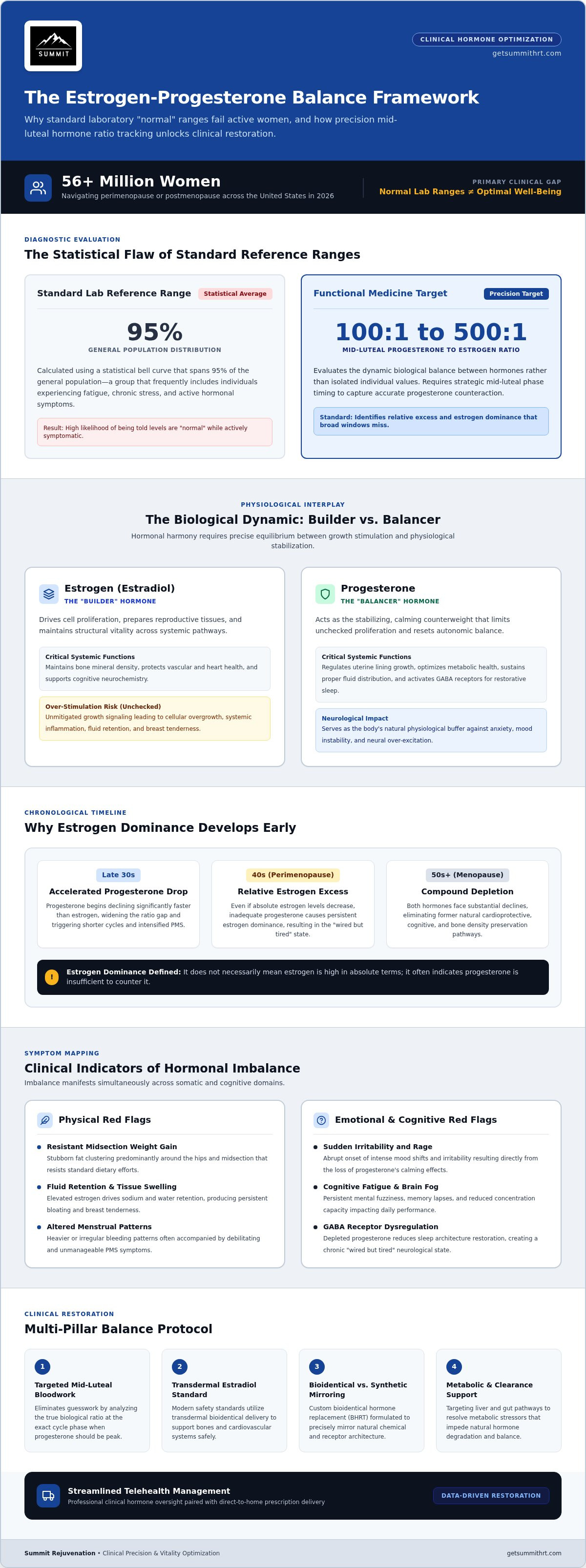
Achieving hormonal harmony requires looking beyond individual numbers. Estrogen and progesterone work in a delicate dance; while estrogen acts as the "builder" that prepares the body for reproduction, progesterone serves as the "balancer" that keeps growth in check. When women ask how to balance progesterone and estrogen, they're often dealing with a state known as estrogen dominance. This doesn't necessarily mean your estrogen is too high in absolute terms. It often means your progesterone isn't high enough to counter it, leaving your system in a state of relative excess.
Standard medical reference ranges are often too broad to be useful for individual optimization. These ranges are calculated using a statistical distribution that covers 95% of the general population, a group that frequently includes people who are fatigued, stressed, and symptomatic. This is why you can feel completely "off" while a technician tells you your results are fine. A comprehensive bloodwork analysis identifies the specific ratio between these hormones, providing the clarity needed for a personalized plan. For example, functional medicine standards look for a mid-luteal ratio between 100:1 and 500:1, rather than just checking if your levels fall anywhere within a wide, generic window.
The Role of Estrogen in the Female Body
Estrogen is essential for far more than just your monthly cycle. It helps maintain bone density, protects heart health, and supports cognitive function by influencing neurotransmitters in the brain. However, when estrogen levels are high relative to progesterone, the stimulatory effects can become overwhelming. You might experience persistent bloating, breast tenderness, and severe mood swings. In many hormone replacement therapy protocols, the goal is to harness these benefits without allowing the "builder" hormone to cause cellular overgrowth or systemic inflammation.
The Role of Progesterone as the Great Balancer
Progesterone is the calming force in your endocrine system. It counteracts estrogen's stimulatory effects on the uterine lining and promotes restorative sleep by interacting with GABA receptors in the brain. It also supports your metabolic health and helps your body manage fluid balance. During perimenopause, progesterone levels typically drop much faster than estrogen, often beginning as early as your late 30s. This creates a widening gap that leaves many women feeling anxious and wired but tired. Understanding how to balance progesterone and estrogen involves recognizing this early decline and addressing it through precision care that restores your body's natural equilibrium.
Signs Your Hormones Are Out of Alignment
Identifying the signs of imbalance requires looking past the surface. While the previous section explored the science of the ratio, your body communicates this divergence through a spectrum of physical and cognitive shifts. These signals often evolve as you move through different life stages. A woman in her 30s might experience debilitating PMS and shorter cycles, while a woman in her 50s faces the sharp decline of the roles of reproductive hormones that previously protected her heart and brain. Learning how to balance progesterone and estrogen starts with recognizing these markers before they become chronic health issues.
Physical Red Flags of Estrogen Dominance
Excess estrogen often presents as stubborn weight gain that resists traditional dieting, specifically clustering around the hips and midsection. You might notice your cycles becoming heavier or more irregular, often accompanied by intensified PMS that feels unmanageable. High estrogen levels cause the body to retain more sodium and water, which results in persistent, uncomfortable bloating and breast tenderness. These aren't just "part of aging"; they're clear data points indicating your hormonal ratio is skewed.
Emotional and Cognitive Indicators
The mental toll of hormonal misalignment is often the most distressing symptom for many women. When progesterone, the body's natural "anti-anxiety" hormone, drops, you might experience a sudden onset of intense irritability or "rage" that feels completely out of character. This shift often coincides with persistent brain fog and memory lapses, making it difficult to maintain your usual focus at work or home. Over time, these fluctuations erode your mental resilience and can contribute to long-term anxiety or a sense of being perpetually overwhelmed.
Hidden signs like sudden midnight wakefulness or a new, unexplained sense of social withdrawal are easy to dismiss as stress, yet they are critical diagnostic clues. We encourage you to track these symptoms alongside your cycle to provide your provider with a clear picture of your hormonal rhythm. When you understand how to balance progesterone and estrogen through data, you can finally move away from guesswork and toward real restoration. If these red flags have become your daily reality, a comprehensive bloodwork analysis can help bridge the gap between how you feel and what your data reveals.
How to Balance Progesterone and Estrogen Naturally
While medical intervention is often the catalyst for change, your daily habits provide the foundation for long-term stability. Understanding how to balance progesterone and estrogen naturally involves optimizing the pathways your body uses to process and clear these hormones. Your liver and gut are the primary engines for estrogen detoxification. If these systems are sluggish, estrogen can be reabsorbed into the bloodstream, worsening the ratio imbalance. Additionally, our modern environment is saturated with xenoestrogens; these are synthetic chemicals found in plastics and pesticides that mimic estrogen in the body, further tilting the scales away from equilibrium.
Dietary Strategies for Estrogen Detoxification
Your diet acts as a direct lever for hormone clearance. Cruciferous vegetables like broccoli, kale, and Brussels sprouts contain compounds that support Phase II liver detoxification, ensuring estrogen is safely metabolized. High fiber intake is equally vital. Fiber binds to excreted estrogen in the digestive tract, preventing it from recirculating back into your system. We recommend limiting alcohol and processed sugars, as these substances can trigger hormonal inflammation and strain the liver's capacity to maintain your delicate endocrine balance. By focusing on these nutrient-dense choices, you create an internal environment where medical therapies can work more effectively.
Stress Management and the 'Progesterone Steal'
Chronic stress is a primary thief of hormonal vitality. Biochemically, your body uses the same raw materials to produce both cortisol and progesterone. When you're perpetually in a "fight or flight" state, your system prioritizes the production of cortisol to manage the perceived threat. This process effectively "steals" the resources meant for progesterone. This pathway ensures survival, but it comes at the cost of your reproductive and emotional health. Lowering sympathetic nervous system activity through regular meditation or deep-breathing exercises can help signal to your body that it's safe to resume normal hormone production.
Sleep hygiene also plays a non-negotiable role in maintaining the luteal phase's progesterone output. Consistent, high-quality rest allows the hypothalamic-pituitary-gonadal (HPG) axis to reset, supporting the natural rhythm of your cycle. While these natural shifts are powerful, they often work best when paired with clinical hormone replacement therapy options that provide the precise levels your body can no longer produce on its own. Combining proactive lifestyle changes with professional oversight ensures that you aren't just managing symptoms but are actively restoring your health from the ground up.
Clinical Interventions: HRT and Bioidentical Solutions
While lifestyle adjustments provide the necessary groundwork, clinical intervention is often the most effective path for those with significant hormonal divergence. Traditional medicine frequently relies on synthetic hormones, which are designed to mimic human hormones but aren't identical in molecular structure. In contrast, bioidentical hormone replacement therapy (BHRT) uses molecules that are exactly the same as those your body produces. Determining how to balance progesterone and estrogen often requires this level of molecular precision to ensure your receptors respond naturally and efficiently.
Personalization is the cornerstone of modern care. A generic prescription ignores the specific ratio your body needs to feel its best. Through hormone replacement therapy for women, providers can tailor dosages to your unique bloodwork data. This customization extends to delivery methods, including transdermal creams, oral capsules, or precision injections. Each method has specific benefits; for example, transdermal options bypass the liver, while oral progesterone is often preferred for its sedative effects on the nervous system. For many women, adding peptides for weight loss provides the metabolic support needed to overcome stubborn weight plateaus caused by years of estrogen dominance.
The Benefits of Bioidentical Progesterone
Bioidentical progesterone is typically much better tolerated than its synthetic counterparts, known as progestins. Because the body recognizes the molecule, it can effectively restore the protective "calm" that many women lose during perimenopause. This restoration helps regulate sleep and reduces the "wired but tired" feeling common with low levels. We ensure your progress is monitored through regular follow-up bloodwork, allowing for micro-adjustments that keep your ratios in the optimal range as your body heals.
Integrating Peptides and Vitamin Therapy
Hormone therapy doesn't exist in a vacuum. Cellular optimization through peptides can significantly enhance the effects of HRT by improving insulin sensitivity and tissue repair. When considering how to balance progesterone and estrogen, we also look at targeted vitamin support. Magnesium and Vitamin B6 are essential cofactors for natural progesterone production and estrogen metabolism. Creating a "stack" of these interventions provides a comprehensive approach to vitality that goes far beyond simply masking symptoms. If you're ready to see how a data-driven plan can change your life, schedule your comprehensive bloodwork analysis today.
Starting Your Journey with Summit Rejuvenation
Restoring your hormonal health shouldn't feel like a second job. While the science behind how to balance progesterone and estrogen is complex, the path to achieving it should be straightforward and professionally managed. Summit Rejuvenation bridges the gap between feeling "off" and reclaiming your vitality by providing an integrated, data-driven approach. We move beyond the limitations of traditional office visits by offering a streamlined online HRT model designed for busy women who demand precision and convenience.
The Telehealth Advantage
Geographic location should never be a barrier to high-level endocrine care. Our telehealth platform provides national accessibility, allowing you to consult with expert hormone specialists from the comfort of your home. This model eliminates the need for repeated travel to a clinic, saving you time while ensuring you receive consistent, personalized oversight. Once your protocol is established, we utilize direct-to-home medication delivery to simplify your routine. This ensures you never miss a dose, which is critical for maintaining the stable hormonal ratios required for long-term symptom relief. You'll receive ongoing support and micro-adjustments as your body responds, making us a dedicated partner in your health journey rather than a distant provider.
Your First Steps to Balance
The journey to restoration begins with a clear baseline. We don't guess; we use data to drive every decision. The process is organized into three distinct phases to ensure thoroughness and clarity:
Comprehensive Bloodwork: You'll visit a local LabCorp facility to complete a detailed panel that looks at your specific hormone ratios rather than just broad reference ranges.
Expert Consultation: You'll meet virtually with a Summit Rejuvenation provider to interpret your results. This is where we listen to your symptoms and align them with your data.
Tailored Protocol: Based on your unique needs, we develop a personalized plan that may include bioidentical hormones, peptides, or targeted vitamins.
This methodical approach ensures that your care is tailored to your specific physiology. We believe in proactive empowerment, giving you the tools and education needed to understand your own body. By prioritizing transparency and directness, we build a foundation of trust that allows you to focus on what matters most: feeling like yourself again. Understanding how to balance progesterone and estrogen is a collaborative process, and we're here to guide you through every phase of your reclamation.
Step Into a Future of Hormonal Harmony
True restoration begins when you stop settling for generic medical advice and start looking at the precise data behind your symptoms. We've examined why the mid-luteal ratio is a more accurate marker of health than standard reference ranges and how bioidentical solutions can safely bridge the gap. Learning how to balance progesterone and estrogen is about more than just hitting a target. It's about reclaiming your mental clarity, physical energy, and the resilience you thought was gone forever.
Summit Rejuvenation is dedicated to providing the high-level expertise you need through a modern, accessible model. Our expert telehealth consultations and comprehensive bloodwork-driven plans remove the traditional barriers to professional hormone management. By utilizing direct-to-home medication delivery, we ensure your path to vitality is seamless and stress-free. You don't have to navigate this alone.
Take Control of Your Hormonal Health—Start Your Consultation with Summit Rejuvenation Today
Significant improvement is within your reach, and we look forward to helping you reclaim the vitality you deserve.
Frequently Asked Questions
What are the first signs of an estrogen-progesterone imbalance?
The earliest indicators often include disrupted sleep, heightened irritability, and changes in your menstrual cycle. You might notice your periods becoming heavier or closer together; this signals that progesterone isn't adequately balancing estrogen's effects. Other subtle shifts include persistent bloating and a new, unexplained sense of anxiety. Recognizing these signals early allows you to address the ratio before symptoms like brain fog or stubborn weight gain become chronic.
Can I balance my hormones naturally without HRT?
Lifestyle adjustments can support your endocrine system, but they often work best as a foundation for medical therapy. You can improve estrogen metabolism by increasing fiber and cruciferous vegetable intake, while stress management helps prevent the "progesterone steal" caused by high cortisol. However, if your body has stopped producing adequate levels due to age or perimenopause, natural methods alone may not provide the restoration needed to reclaim your vitality fully.
Is it safe to take progesterone and estrogen together?
It's not only safe but often medically necessary for women with an intact uterus to combine these hormones. Taking estrogen alone can cause the uterine lining to overgrow, increasing the risk of complications. Progesterone acts as the essential "balancer," protecting your tissues while calming the nervous system. Our providers use comprehensive bloodwork to determine the exact ratio you need, ensuring your treatment is both safe and highly personalized.
How long does it take to see results when balancing hormones?
Most women begin noticing improvements in sleep and mood within the first two to four weeks of starting a tailored protocol. However, physical changes like weight loss or improved skin texture typically take three to six months of consistent therapy to become fully evident. We monitor your progress through regular follow-up consultations to ensure your levels are optimizing correctly. Patience is key as your body adjusts to its restored hormonal equilibrium.
What is the difference between bioidentical and synthetic hormones?
Bioidentical hormones are molecularly identical to the hormones your body naturally produces, allowing for more seamless integration with your receptors. Synthetic hormones are often derived from non-human sources and have slightly different structures, which can lead to side effects for some individuals. We prioritize bioidentical options because they allow for precise personalization when learning how to balance progesterone and estrogen, mirroring your body's innate chemistry for better long-term health and vitality.
How does stress affect my progesterone levels?
Chronic stress forces your body to prioritize the production of cortisol over sex hormones, a process often called the "progesterone steal." Because cortisol and progesterone share the same biochemical building blocks, your system will sacrifice your hormonal balance to manage perceived threats. This results in lower progesterone levels, which worsens estrogen dominance. Reducing sympathetic nervous system activity is a critical step in protecting your natural hormone output and maintaining your energy.
Will balancing my hormones help with weight loss?
Restoring your hormonal ratio can significantly improve your metabolic health and make weight loss more achievable. Estrogen dominance often leads to insulin resistance and fat storage around the midsection, which is resistant to traditional dieting. By correcting the balance and potentially integrating peptides for weight loss, you can overcome these hormonal plateaus. Understanding how to balance progesterone and estrogen ensures that your metabolism is finally working with you rather than against you.
How often do I need bloodwork once I start hormone therapy?
We typically require follow-up bloodwork every three to six months during the first year of your treatment. These regular checks allow our providers to make precision adjustments to your protocol based on how your body is responding. Once you reach a stable, optimal state, testing frequency may decrease to once or twice a year. This ongoing monitoring is essential for maintaining your vitality and ensuring your hormone ratios remain perfectly aligned.


Comments