Managing Side Effects of Testosterone Injections: The 2026 Patient Guide
What if the side effects you're worried about aren't signs to stop, but actually the roadmap to your perfect protocol? You've likely felt the initial surge of energy and focus that comes with hormone optimization, only to be met with a sudden breakout or the anxiety of rising hematocrit levels. It's frustrating when the treatment meant to restore your vitality introduces new hurdles like hair thinning or confusion over when to use an estrogen blocker. We understand that these physical shifts can feel like a setback when you're simply trying to feel like yourself again.
This 2026 guide is designed to empower you with the knowledge that managing side effects of testosterone injections is a proactive science, not a reason for alarm. Following recent FDA updates that recognize testosterone as a modifiable marker of men's overall health, we now have clearer data than ever on how to maintain safety while maximizing results. You'll learn how to identify early warning signs, interpret your bloodwork with confidence, and implement a sustainable management plan. We will walk through the latest clinical strategies to stabilize your energy and keep your skin clear, ensuring your hormone journey remains both effective and predictable.
Table of Contents
Recognizing Common Side Effects vs. Initial Body Adjustments
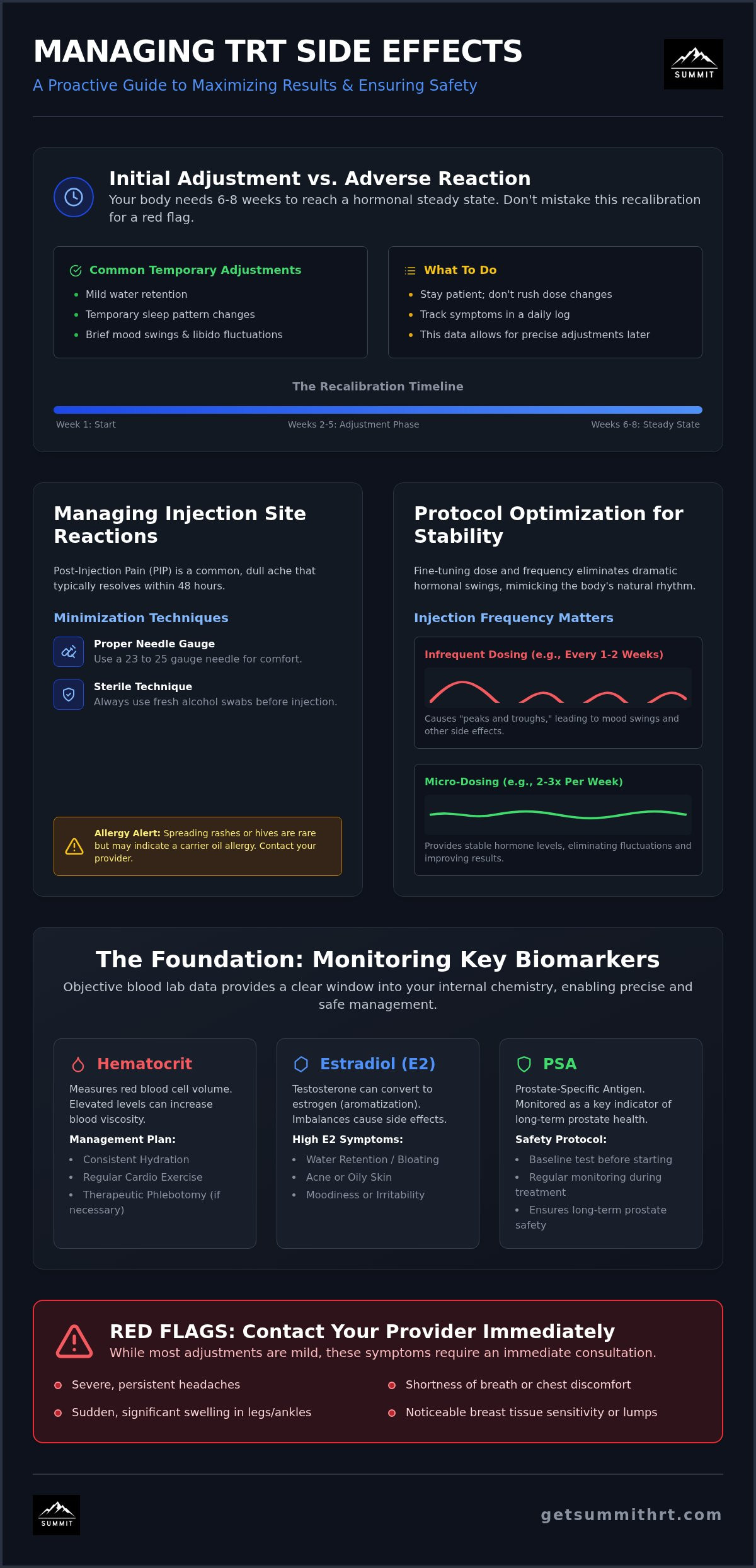
Starting hormone optimization is a significant biological shift. Your body requires a dedicated period of recalibration to integrate exogenous hormones. It's common to hear about the "honeymoon phase" where energy and focus spike, but the first few weeks often involve subtle, temporary adjustments. These shifts aren't necessarily adverse reactions. They're often signs that your system is reaching a new equilibrium. Most patients require 6 to 8 weeks to reach a hormonal steady state; until then, your internal chemistry is in flux.
During this window, you might notice mild water retention or temporary changes in your sleep patterns. These shifts occur as your receptors adapt to the consistent levels provided by Androgen Replacement Therapy. Distinguishing these temporary ripples from genuine adverse events is the foundation of managing side effects of testosterone injections. Understanding that your body is "learning" how to process this new baseline helps prevent unnecessary anxiety during the early stages of treatment.
Immediate Injection Site Reactions
Post-Injection Pain, often called PIP, is one of the most frequent early complaints. This typically feels like a dull muscle ache similar to a flu shot. It usually resolves within 48 hours. You can minimize this by using a proper sterile technique. Always use fresh alcohol swabs and ensure you're using the correct needle gauge; typically, a 23 to 25 gauge needle is standard for comfort. While a small amount of redness or a firm knot at the site is common, you should watch for spreading rashes or hives. Those are rare signs of a carrier oil allergy rather than a standard local reaction.
The Emotional and Physical Transition Period
Hormones don't level out in a straight line. You might experience brief mood swings or libido fluctuations during the first month as your natural production shuts down and the medication takes over. It's vital to stay patient. Don't rush to change your dose too early; doing so interrupts the stabilization process and makes managing side effects of testosterone injections much harder for your provider. We recommend tracking your symptoms in a daily log. This data allows your medical mentor to see patterns rather than isolated incidents, leading to much more precise protocol adjustments later on.
While most adjustments are mild, certain red flags require an immediate telehealth consultation. Reach out if you experience:
Severe, persistent headaches that don't respond to hydration.
Sudden, significant swelling in the lower legs or ankles.
Shortness of breath or chest discomfort.
Noticeable breast tissue sensitivity or lumps.
By staying observant and communicative, you ensure that your transition into hormone optimization is both safe and sustainable.
Monitoring Biomarkers: The Foundation of Side Effect Management
Subjective feelings are important, but objective data is the only reliable way to ensure your protocol remains safe. Biomarker monitoring is the practice of using clinical blood labs to track exactly how your body responds to treatment. Relying on guesswork often leads to over-correction or missed warning signs. This is why a comprehensive bloodwork analysis is mandatory for every patient. It provides a clear window into your internal chemistry, allowing us to manage your health with surgical precision. When we discuss testosterone therapy safety, we focus on the "Big Three" markers: Hematocrit, Estradiol (E2), and PSA. Our providers monitor these labs to catch potential shifts before you ever feel a physical symptom.
Understanding Hematocrit and Red Blood Cell Count
Testosterone naturally stimulates the production of red blood cells, a process known as erythrocytosis. While increased oxygen delivery often improves athletic performance, too many red blood cells can make the blood more viscous. Proactively managing side effects of testosterone injections involves keeping these levels in check through consistent hydration and regular cardiovascular exercise. If levels rise too high, therapeutic phlebotomy remains a standard and effective tool to reset your markers. In 2026 TRT protocols, maintaining a hematocrit level below 54% is generally considered the threshold for optimal safety and blood viscosity management. If you notice your markers trending upward, requesting your personalized lab panel early can help us make adjustments before issues arise.
The Role of Estradiol (E2) in Side Effect Management
Estradiol is often unfairly labeled as a "female" hormone, but it's essential for men's brain health, bone density, and cardiovascular protection. The goal isn't to eliminate estrogen; it's to maintain a healthy ratio relative to your testosterone levels. When estrogen climbs too high, you might experience water retention, moodiness, or nipple sensitivity. These are the primary indicators that your body is aromatizing more testosterone than it needs.
Our approach focuses on treating the individual, not just chasing a specific number on a lab report. If your E2 is slightly elevated but you feel excellent and have no physical symptoms, we often choose to monitor rather than intervene with medication. This nuanced perspective is key to managing side effects of testosterone injections without causing new imbalances. By prioritizing your actual well-being alongside your data, we create a protocol that feels as good as it looks on paper.
Practical Strategies for Estrogen and DHT-Related Side Effects
While tracking biomarkers provides the data we need, managing the physical manifestations of hormonal shifts requires a nuanced understanding of how your body processes testosterone. Two primary pathways often drive the most visible changes: aromatization, which converts testosterone into estrogen, and the conversion of testosterone into Dihydrotestosterone (DHT). Aromatization is a natural biological function, but excessive conversion can lead to unwanted tissue growth. Early detection of gynecomastia, characterized by nipple sensitivity or small lumps, is critical. We use targeted pharmacological interventions only when necessary to restore balance, ensuring that your trt therapy supports a healthy, balanced hormonal ecosystem rather than creating new complications.
Combatting Acne and Skin Changes
Your sebaceous glands are highly sensitive to androgen levels. When you begin treatment, these glands can overreact to the new hormonal baseline, leading to increased oil production and breakouts. Successfully managing side effects of testosterone injections in the skin often starts with a two-pronged approach. First, we recommend a dedicated hygiene routine using salicylic acid or benzoyl peroxide washes to keep pores clear. If topical treatments aren't enough, we look at your protocol. High-frequency injections can reduce the dramatic hormonal spikes that often trigger these skin flares. By smoothing out your levels, we often clear the skin without needing aggressive dermatological prescriptions.
Preserving Hair Health on TRT
There is a common misconception that testosterone therapy causes baldness. In reality, hair thinning is primarily driven by genetics and your follicles' sensitivity to DHT. If you aren't genetically predisposed to male pattern baldness, TRT is unlikely to change your hairline. However, for those with the gene, the increased DHT can accelerate the process. You don't have to choose between vitality and your hair.
Management options range from specialized topical solutions to DHT-blocking medications that can be integrated into your plan. It's important to maintain realistic expectations. While we can implement strategies to preserve your current hair health, TRT cannot regrow hair in areas where follicles have already gone dormant. Being proactive is the best defense. If you notice increased shedding, we can adjust your protocol or introduce supportive therapies to protect your follicles while you continue your optimization journey.
Protocol Optimization: Adjusting Dose and Frequency
Many patients struggle with side effects because their injection schedule creates a "Peak and Trough" effect. A large dose once every week or two leads to a massive hormonal spike followed by a significant crash. These spikes are often the primary trigger for issues like acne, mood swings, and high blood pressure. By shifting toward micro-dosing, which involves injecting daily or every other day, you mimic the body's natural diurnal rhythm. This strategy is one of the most effective tools for managing side effects of testosterone injections because it prevents the body from being overwhelmed by a single, large bolus of hormones.
When you're ready to discuss a change, be specific with your provider. Don't just say you feel "off." Bring your symptom log and explain that you're interested in stabilizing your serum levels through increased frequency. A transparent partnership with your medical team ensures that any protocol shift is based on your unique data and physical response rather than a generic template.
The Benefits of Increased Injection Frequency
Frequent injections stabilize serum levels, which directly reduces the rate of aromatization. When your levels don't spike, your body converts less testosterone into estrogen. This often eliminates the need for Aromatase Inhibitors (AIs), which can be difficult to balance. Additionally, many patients find success switching from Intramuscular (IM) to Subcutaneous (SubQ) injections. SubQ involves injecting into the fatty tissue, which often results in a slower, more consistent release of the hormone into the bloodstream. If you're ready to refine your approach for better comfort, you can consult with a Summit specialist to discuss a frequency adjustment.
When to Consider a Dose Reduction
A common myth in the hormone optimization community is that "more is always better." In reality, the goal of therapy is to find your "sweet spot"-the lowest possible dose that resolves your symptoms while maintaining zero side effects. If you're experiencing persistent water retention or elevated hematocrit despite a high-frequency schedule, your total weekly dose might simply be too high for your biology. Finding this balance requires patience and honest evaluation.
Use these steps to evaluate if your current dose needs a downward adjustment:
Review your most recent lab results to see if your trough levels are consistently above the optimal range.
Assess if your primary symptoms, such as libido or energy, have plateaued or actually worsened at a higher dose.
Check for physical markers like consistent edema (swelling) or a steady rise in resting blood pressure.
Talk to your provider about a modest 10% to 15% reduction in your total weekly milligrams.
Monitor your physical and emotional response for at least 4 weeks before deciding if the new dose is effective.
By prioritizing how you feel over a specific number on a page, you ensure your journey remains sustainable for the long term.
The Summit Rejuvenation Advantage: Proactive Telehealth Support
Local, brick-and-mortar clinics often operate on rigid schedules that don't account for the dynamic nature of hormone therapy. If you experience a sudden shift in your energy or skin health, waiting weeks for an in-person appointment can be discouraging. Accessing hrt online eliminates these delays by providing a direct, digital bridge to specialized care. This model isn't just about convenience; it's about the speed of intervention. When your protocol needs a tweak, you need a provider who can respond with agility and expertise.
When it comes to managing side effects of testosterone injections, timing is everything. Our telehealth platform allows for rapid protocol adjustments based on your real-time feedback and mandatory bloodwork. You aren't just another patient in a waiting room; you have a dedicated mentor who understands the nuances of your specific biology. This personalized partnership ensures that we catch minor imbalances before they become significant obstacles to your vitality. By prioritizing individual data over "one-size-fits-all" templates, we help you maintain a steady state of peak performance.
Telehealth: Convenience Without Compromising Care
We've streamlined the entire process to keep your focus on feeling better. Through secure video consults and real-time messaging, you can address concerns the moment they arise. There's no need to travel to a pharmacy or sit in a clinic for every minor question. We ship your medications and supplies directly to your door, ensuring your protocol remains consistent and uninterrupted. This ongoing accessibility creates a foundation of trust. You'll know that professional guidance is always within reach, whether you're at home or traveling.
Your Personalized Vitality Roadmap
Hormone optimization is rarely a solo endeavor. Often, the best results come from a multi-faceted approach that looks at your health holistically. Depending on your goals, we can integrate supportive therapies such as peptides for weight loss or high-grade vitamins to complement your TRT. This comprehensive strategy ensures that every aspect of your metabolism and energy is supported. Managing side effects of testosterone injections becomes much simpler when your entire system is functioning at its highest capacity.
Our promise is rooted in transparency and clarity. We continue to monitor your markers long after your initial consultation, refining your roadmap as your body evolves. You deserve a healthcare partner that is as invested in your long-term restoration as you are. Take control of your vitality today by scheduling a professional consultation with a Summit specialist. Let's ensure your path to peak performance is safe, effective, and tailored entirely to you.
Mastering Your Long-Term Vitality Protocol
Hormone optimization is a dynamic process that requires both patience and precision. You've learned that monitoring biomarkers like hematocrit and estradiol is the only objective way to stay ahead of physical shifts. By shifting toward increased injection frequency and maintaining a balanced hormonal ecosystem, you can eliminate the "peak and trough" fluctuations that often trigger unwanted reactions. Successfully managing side effects of testosterone injections isn't about stopping therapy; it's about refining your protocol to fit your unique biology.
With professional guidance, you don't have to guess about your health. You can optimize your TRT protocol and manage side effects with Summit Rejuvenation today. Our model provides personalized medical oversight and the convenience of telehealth, with a comprehensive lab analysis included to ensure every adjustment is backed by data. You deserve to feel your best without the frustration of unpredictable side effects. Take this knowledge and move forward with the confidence that your vitality is professionally managed and entirely within your control.
Frequently Asked Questions
What are the most common side effects of testosterone injections?
The most common side effects include mild acne, temporary water retention, and localized irritation at the injection site. Some patients may also notice changes in sleep patterns or libido during the initial 6 to 8 week adjustment period. Effectively managing side effects of testosterone injections involves recognizing these early shifts and communicating them to your provider. Most of these issues are easily resolved through precise protocol refinements rather than stopping your treatment.
How can I reduce acne while on TRT?
Reducing acne often requires a dual approach of improved hygiene and hormonal stabilization. You should use a salicylic acid or benzoyl peroxide wash daily to keep pores clear of excess sebum. If breakouts persist, increasing your injection frequency can help. By micro-dosing daily or every other day, you prevent the hormonal spikes that trigger sebaceous gland overactivity, leading to much clearer skin without needing aggressive medications.
Does TRT always cause high blood pressure or thick blood?
No, high blood pressure and increased blood thickness, known as erythrocytosis, are potential risks rather than guaranteed outcomes. These markers are closely monitored through mandatory hematocrit tests in your bloodwork. If your levels trend upward, you can often manage them through consistent hydration and regular cardiovascular exercise. In some cases, therapeutic phlebotomy is used to reset markers, ensuring your blood viscosity remains within a safe, optimal range for your health.
Can I manage TRT side effects without stopping my treatment?
Yes, you can absolutely manage side effects without discontinuing your treatment. In fact, managing side effects of testosterone injections is a standard part of the protocol optimization process for many patients. Most issues resolve by simply adjusting your total weekly dose or increasing your injection frequency to mimic the body's natural rhythms. Our telehealth model facilitates these rapid adjustments, ensuring you maintain the benefits of therapy while minimizing any physical or emotional discomfort.
What should I do if I experience pain at the injection site?
If you feel pain, first review your injection technique and equipment. Ensure you're using a fresh alcohol swab and the correct needle gauge, typically between 23 and 25 for intramuscular shots. Rotating your injection sites between the glutes, deltoids, and quads also prevents scar tissue buildup. If the pain is accompanied by a spreading rash or hives, contact your provider immediately to rule out a rare allergy to the carrier oil.
Is it possible to prevent hair loss while taking testosterone?
Preventing hair loss is possible by managing the conversion of testosterone into Dihydrotestosterone (DHT). While genetics determine your follicles' sensitivity, you can use topical solutions or DHT-blocking medications to protect your hairline. It's helpful to start these interventions early if you notice increased shedding. Remember that TRT doesn't cause baldness directly; it simply provides the substrate for DHT in men who are already genetically predisposed to male pattern thinning.
How often do I need bloodwork to monitor my TRT side effects?
Bloodwork frequency depends on where you are in your journey. We require a comprehensive bloodwork analysis before starting and typically every 8 to 12 weeks during the first six months of treatment. Once your levels are stable and you've found your "sweet spot" dose, monitoring usually shifts to every six months. This consistent oversight is the only objective way to catch internal shifts before they manifest as physical symptoms.
What are the signs that my estrogen is too high on TRT?
High estrogen, or estradiol, often presents as nipple sensitivity, significant water retention, or unusual mood swings. You might also notice a decrease in libido or increased body fat around the midsection. These are common signs of aromatization, where your body converts excess testosterone into estrogen. If these symptoms occur, we analyze your labs to determine if a frequency adjustment or a low-dose aromatase inhibitor is necessary to restore your hormonal balance.


Comments