How to Read Your Hormone Blood Panel for Optimal Vitality
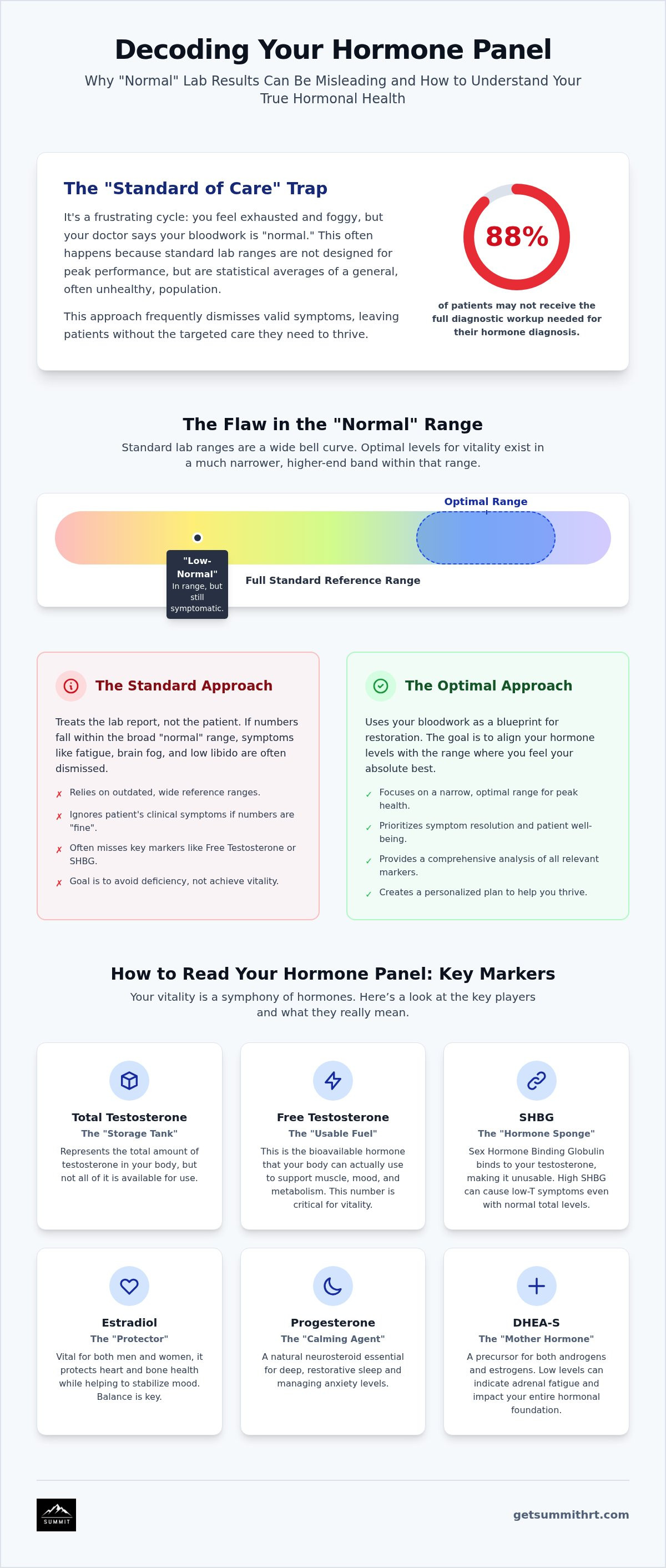
What if your "normal" bloodwork is actually the reason you still feel exhausted, foggy, and disconnected from your best self? You've likely sat in a doctor's office only to be told your results are fine, even though your body is screaming that something is wrong. It's deeply frustrating to have your symptoms dismissed simply because they fall within a generic reference range designed for the average population rather than your personal peak performance. Recent data from 2026 suggests that a staggering 88% of patients receiving certain hormone diagnoses didn't even get the full diagnostic workup they needed, leaving them stuck in a cycle of standard care that ignores individual vitality.
Learning how to read your hormone blood panel is the first step in reclaiming your health and moving past the confusion of medical jargon. We believe your lab results should serve as a blueprint for restoration, not just a way to avoid deficiency. In this guide, you'll learn how to identify the difference between standard and optimal ranges for key hormone markers. We'll provide the clarity you need to understand your unique biological profile and establish a logical, professional path forward toward the vibrant life you deserve.
Table of Contents
Beyond "Normal": Why Your Lab Ranges Might Be Misleading
When you finally receive your lab results, your eyes likely dart straight to the bold "H" or "L" markers. If those flags aren't there, your doctor might tell you everything is fine. However, the biggest hurdle in understanding how to read your hormone blood panel is realizing that "normal" is a statistical average, not a target for health. Most diagnostic labs establish reference ranges for blood tests based on the 95th percentile of the population they test. This means you are being compared to everyone else who walked into that lab; many of whom are dealing with chronic illness, obesity, or age-related decline. If the average person is unwell, being "normal" simply means you are as unhealthy as the average person.
Falling into the "Standard of Care" trap means a provider might ignore your brain fog, low libido, or fatigue simply because your numbers sit just inside the bottom edge of a bell curve. This rigid adherence to lab flags often prevents patients from receiving the care they need to thrive. We define Optimal Hormone Levels as the specific range where your symptoms resolve, your health markers improve, and you reclaim your sense of vitality.
The Statistical Flaw in Standard Lab Ranges
One major issue with standard ranges is their lack of nuance regarding age. In many clinical settings, a 25-year-old man and an 80-year-old man are measured against the same "normal" testosterone scale. This ignores the biological reality of what a young, active body needs to function. Additionally, as the general health of the population has declined over the last few decades, the "normal" curve has shifted lower. This creates a moving target that settles for mediocrity. We prioritize treating you as an individual, focusing on your clinical symptoms rather than just the digits on a piece of paper.
Why "Normal" Results Can Still Feel Like Low Testosterone
It is entirely possible to experience severe Low-T symptoms while having mid-range bloodwork. This often happens because of androgen receptor sensitivity or high levels of Sex Hormone Binding Globulin (SHBG), which acts like a sponge and prevents your body from using the hormones it produces. When learning how to read your hormone blood panel, it's vital to look beyond the surface total. The goal of TRT therapy is to move you into the upper-tier of optimal levels where you actually feel the benefits. Simply "passing" the test isn't enough when your quality of life is on the line; you deserve a protocol that targets your specific needs.
Key Sex Hormones: Interpreting Testosterone, Estradiol, and Progesterone
Understanding the core drivers of your vitality requires looking past a single number. When you learn how to read your hormone blood panel, you'll see that Total Testosterone is only part of the story. Think of Total Testosterone as your body's storage tank, while Free Testosterone is the fuel actually reaching your engine. Only the free portion is bioavailable to support muscle growth, cognitive clarity, and metabolic health. If your total is high but your free levels are low, you'll likely still feel the symptoms of a deficiency.
Estradiol and Progesterone are equally vital, even for men. Estradiol protects your heart and bones while maintaining mood stability. Progesterone acts as a natural neurosteroid; it's essential for deep sleep and managing anxiety. DHEA-S serves as the 'mother hormone' in the adrenal pipeline, acting as a precursor for both androgens and estrogens. If DHEA-S is low, your entire hormonal foundation is at risk. Mastering how to read your hormone blood panel ensures you're never left in the dark about your own biology.
Bioavailability: The Role of SHBG and Albumin
Sex Hormone Binding Globulin (SHBG) is a protein that binds to your hormones, acting like a chemical handcuff that prevents them from entering your cells. If your SHBG is too high, your 'Free' levels are suppressed. Factors like high-sugar diets or excessive alcohol can inflate SHBG, while certain lifestyle changes can help lower it. Calculating your Free Androgen Index provides a much clearer picture of your actual vitality than a standard total count.
Hormonal Balance for Women: Estradiol and Progesterone Ratios
For women, individual numbers rarely tell the whole story. Success with hormone replacement therapy for women depends on the delicate ratio between Estradiol and Progesterone. The myth of 'Estrogen Dominance' often ignores the fact that symptoms usually arise from a lack of Progesterone rather than too much Estrogen. Accuracy also depends on timing; you must test during the mid-luteal phase of your cycle to get a true reading of your peak levels.
Identifying these subtle patterns is what separates a generic check-up from a life-changing intervention. If you're ready to stop guessing, you can schedule a comprehensive bloodwork review to see where your levels actually stand and create a path forward.
The Support Cast: Thyroid, Cortisol, and Metabolic Markers
While Testosterone and Estradiol often get the most attention, they rely on a supporting cast of metabolic and endocrine markers to function correctly. If you want to master how to read your hormone blood panel, you must look at the thyroid and adrenal systems. These markers act as the infrastructure for your sex hormones. Chronic stress, for example, triggers cortisol spikes that can effectively "steal" the building blocks your body needs to produce testosterone and progesterone. Additionally, research consistently shows a link between Vitamin D3 levels and natural hormone production. Optimizing this single vitamin can sometimes provide a foundational boost to your energy before deeper therapy even begins.
Metabolic health markers like Fasting Insulin and HbA1c are equally critical. They tell us how well your body processes fuel and whether you are in a state of systemic inflammation. Inflammation, often measured by hs-CRP, can blunt the effectiveness of your treatment and lead to a faster decline in hormonal health. Understanding how to read your hormone blood panel means looking at these secondary markers to ensure your body is actually prepared to utilize the hormones you provide it.
Thyroid Optimization: More Than Just "In Range"
Standard labs often list a TSH (Thyroid Stimulating Hormone) up to 4.5 as "normal." However, many patients feel their best when TSH is under 2.0. Relying on TSH alone is a major diagnostic mistake because it only shows the signal from the brain, not the actual thyroid hormone available to your cells. You need to monitor Free T3, the active hormone responsible for your metabolic rate and body temperature. Because thyroid dysfunction mimics the symptoms of menopause or low testosterone, such as weight gain and lethargy, a complete panel is the only way to distinguish the root cause and find a path to restoration.
Metabolic Markers and Hormone Efficacy
Your metabolic health dictates how well your body responds to hormone therapy. High insulin levels create an environment of resistance that can actually prevent peptides for weight loss from working as intended. When your insulin is chronically high, your body stays in "storage mode," making it difficult to shed fat even with optimized hormones. By addressing metabolic health through bloodwork, we ensure that HRT is both safer and more effective. This comprehensive approach moves you beyond simple symptom management and toward true metabolic rejuvenation.
Step-by-Step: How to Analyze Your Hormone Panel Results
Once you have your results in hand, the real work begins. Learning how to read your hormone blood panel requires a methodical approach to ensure you aren't misinterpreting the data. First, check the units of measurement. Labs often switch between ng/dL, pg/mL, and nmol/L. A number that looks high in one unit might be dangerously low in another. Next, look for the "H" or "L" flags, but don't stop there. Many patients find that "low-normal" results, which sit just above the lab's cutoff, are the primary cause of their symptoms. These borderline numbers often explain why you feel suboptimal even when your doctor says you're fine.
Timing is the next critical factor. For men, testosterone should be drawn before 10:00 AM to capture peak levels. For women, testing Estradiol and Progesterone on the wrong day of the menstrual cycle renders the results nearly useless for optimization. Always cross-reference these numbers with your lived experience. If your labs are "perfect" but you still struggle with brain fog or low libido, the numbers aren't telling the whole story. Your symptoms are just as important as the data on the page.
Red Flags to Watch For in Your Labs
While focusing on sex hormones, certain red flags demand immediate attention. Elevated Prolactin can indicate a signaling issue in the brain that mimics low testosterone. During TRT, we also monitor Hematocrit to ensure blood thickness remains within a safe range. Finally, checking liver enzymes like AST and ALT ensures your body can process and clear optimization treatments effectively without undue stress on your organs. These markers are essential for maintaining long-term safety and efficacy.
Preparing for Your Next Blood Draw
To get the most accurate snapshot of your health, you must prepare correctly for your draw. Fasting for 12 hours is non-negotiable for accurate metabolic and lipid readings. You should also avoid Biotin supplements for at least 72 hours prior; this B-vitamin is notorious for causing false readings in hormone assays. Proper hydration is also essential. Dehydration can artificially inflate markers like Hematocrit and Kidney function, leading to unnecessary concern or adjusted protocols based on faulty data.
If you're looking at a confusing lab report right now, you don't have to decode it alone. You can order a comprehensive bloodwork analysis to get the clarity and professional guidance you need for a personalized path forward.
From Data to Action: Personalized Optimization with Summit Rejuvenation
Having the knowledge of how to read your hormone blood panel is a powerful first step, but data alone cannot restore your vitality. Raw numbers require a clinical lens to transform them into a safe, effective treatment strategy. While many services simply offer a transactional way to purchase medication, true hormone optimization requires a dedicated medical partnership. A professional review is non-negotiable because hormones don't work in isolation; they function as a complex, interconnected web where a change in one marker often triggers a shift in another. We use your comprehensive bloodwork as a precise blueprint to craft a protocol that is unique to your biology, symptoms, and long-term health goals.
The HRT online model has revolutionized how patients access high-level care. You no longer need to spend hours in a waiting room to speak with a specialist who might dismiss your concerns. Instead, you get expert analysis and a bespoke treatment plan from the comfort of your home. This streamlined approach ensures that your journey toward restoration is as efficient as it is thorough. Beyond the initial setup, our process includes ongoing monitoring to ensure your safety and continued progress as your body moves toward its peak state.
The Summit Consultation Process
Your journey begins with a deep-dive telehealth review of your blood panel. During this consultation, we don't just look at whether you "passed" a test. We discuss your subjective experience, matching your lab data to your real-world symptoms like fatigue or brain fog. If your labs are in the optimal range but you still don't feel your best, we adjust the protocol based on your feedback. Once your personalized plan is finalized, we handle the logistics by shipping your prescribed medications directly to your home. This creates a seamless transition from clinical data to active recovery.
Your Long-Term Partner in Vitality
Optimization is a marathon, not a sprint. Your body's needs will change as you reach your optimal state, which is why we prioritize follow-up labs at the 3, 6, and 12-month marks. These check-ins allow us to pivot your treatment and fine-tune dosages to maintain your results safely. We remain your dedicated partner throughout this process, ensuring that your hormonal health remains a pillar of your overall wellness. Ready to see what your numbers really mean? Schedule your comprehensive bloodwork analysis with Summit Rejuvenation today.
Your Path to Lasting Restoration
Your lab results provide a definitive map of your biological potential. By moving beyond standard reference ranges, you can identify the specific gaps that are preventing you from reaching your peak state. Whether you're balancing sex hormones or addressing metabolic health, the path to restoration begins with total clarity. Mastering how to read your hormone blood panel gives you the power to advocate for yourself rather than settling for mediocrity while your symptoms persist.
At Summit Rejuvenation, we help you translate this complex data into a bespoke treatment protocol designed for your specific physiology. We provide expert telehealth consultations to guide you through your results and offer discreet, direct-to-home shipping for all treatments. It's time to stop guessing and start optimizing with a partner who understands that "normal" isn't good enough. Get Started with a Comprehensive Bloodwork Analysis at Summit Rejuvenation today. You have the potential to feel better than you have in years; let's find your personal blueprint for vitality together.
Frequently Asked Questions
Can I read my own hormone blood panel without a doctor?
You can certainly look at the numbers, but you shouldn't interpret them in isolation. A professional medical review is essential to ensure safety and accuracy. While you might learn the basics of how to read your hormone blood panel, a specialist understands the complex interplay between markers like SHBG, prolactin, and cortisol. We provide expert telehealth consultations to help translate these raw data points into a safe, personalized treatment protocol.
What is the most important hormone to check for low energy?
Free Testosterone is often the primary driver of energy, but it's rarely the only factor. You must also evaluate Free T3 and cortisol levels. If your Free Testosterone is low, your body lacks the bioavailable fuel needed for muscle and cognitive function. However, if your thyroid is sluggish, your metabolic engine won't turn over regardless of your testosterone levels. A comprehensive panel looks at all these markers together to find the root cause.
Why are my hormone results "normal" but I still feel tired and have low libido?
Standard lab ranges are based on broad population averages, not your personal peak performance. You might fall within the bottom 5% of "normal," which most doctors consider acceptable but we view as suboptimal. If your results sit at the low end of the curve, you'll likely still experience symptoms of deficiency. We focus on reaching optimal levels where your symptoms actually resolve, rather than just avoiding a clinical "low" flag.
How often should I get a hormone blood panel done?
We typically recommend follow-up labs at the 3, 6, and 12-month marks once you begin optimization. This frequency ensures your protocol remains safe and effective as your body adjusts. If you aren't on a protocol yet, an annual check-up is a good baseline. However, if you're actively managing symptoms, more frequent testing allows us to pivot your treatment and fine-tune dosages to maintain your results over the long term.
Does fasting affect my hormone blood test results?
Yes, fasting for 12 hours is critical for accurate results, especially for metabolic markers. While sex hormones like testosterone are less affected by a single meal, markers like Fasting Insulin and Glucose will be skewed if you've eaten. To get the most precise blueprint of your health, you should only consume water before your draw. This consistency ensures that your baseline data is reliable and not influenced by temporary blood sugar spikes.
What is the difference between Total and Free Testosterone on a lab report?
Total Testosterone measures every bit of the hormone in your blood, including the portion bound to proteins. Free Testosterone is the unbound, bioavailable portion that your cells can actually use. When learning how to read your hormone blood panel, you'll see that the "Free" number is much more indicative of how you feel. High total levels mean very little if your hormones are "handcuffed" by proteins like SHBG and cannot reach your receptors.
What day of my cycle should I get my hormone blood panel drawn?
For women with a regular cycle, the most accurate time for testing is during the mid-luteal phase, usually day 19 to 21. This window captures your peak progesterone levels, which is essential for determining your estradiol-to-progesterone ratio. Testing during the wrong phase can lead to misleading data that doesn't reflect your true hormonal balance. If your cycle is irregular, our providers will work with you to determine the best timing for your draw.
Can supplements change the results of my hormone blood test?
Certain supplements can significantly skew your lab data. Biotin is the most common culprit; it's known to interfere with the assays used for thyroid and hormone testing, often causing false high or low readings. We recommend stopping Biotin and any high-dose multivitamins at least 72 hours before your blood draw. Always provide a full list of your current supplements during your telehealth consultation to ensure your results are interpreted correctly.


Comments