The Link Between Low T and Depression: Is It Your Mood or Your Hormones?
What if the grey cloud hanging over your life isn't a failure of your mindset, but a deficiency in your biology? For many men, the persistent loss of drive and the brain fog that disrupts professional performance feel like personal shortcomings. You may have already tried traditional therapy or antidepressants, only to find that the underlying flatness remains unchanged. It is exhausting to feel like a passenger in your own life while searching for a solution that never quite lands.
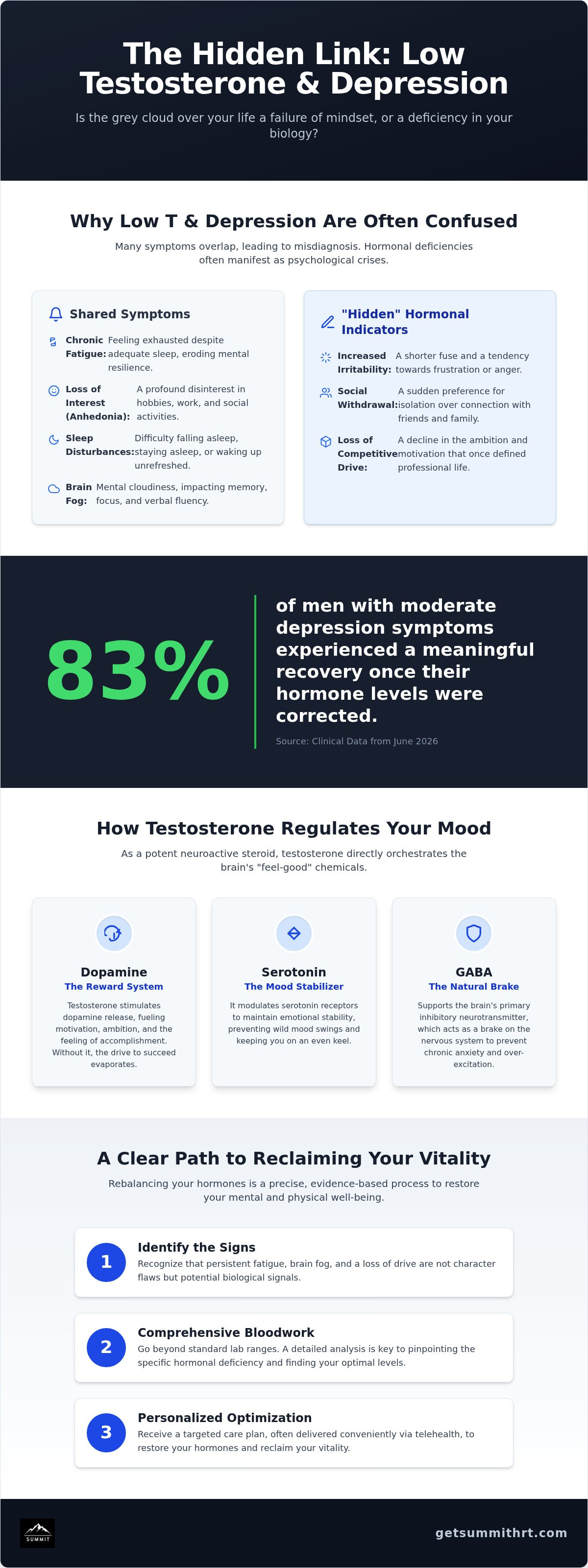
The frustration you feel is valid because the link between low t and depression is a biological reality. Recent clinical data from June 2026 shows that 83% of men with moderate depression symptoms experienced a meaningful recovery once their hormone levels were corrected. In this guide, you'll discover how testosterone acts as a master regulator for the brain's feel-good chemicals, including dopamine and serotonin. We'll explore the specific science behind hormone-driven mood shifts and provide a clear, evidence-based path toward reclaiming your vitality through comprehensive bloodwork and targeted care.
Table of Contents
The Overlapping Symptoms: Why Low T and Depression are Often Confused
The Neurochemical Connection: How Testosterone Regulates Your Mood
Beyond the 'Normal' Range: Why Your Labs Might Be Missing the Link
Identifying the Signs: When Mental Health Struggles Are Actually Hormonal
Reclaiming Your Vitality: The Path to Hormonal and Mental Balance
The Overlapping Symptoms: Why Low T and Depression are Often Confused
Distinguishing between clinical depression and a hormonal deficiency is often difficult because the biological link between low t and depression is so deeply integrated. While many people view testosterone solely through the lens of physical strength or libido, it functions as a primary driver of emotional stability. When levels drop, the resulting state is often a physiological deficiency that manifests as a psychological crisis. You aren't just "unhappy"; your brain is operating without the chemical support it requires to maintain a positive outlook.
The shared symptoms between these two conditions create a diagnostic challenge for traditional medicine. Chronic fatigue, a profound loss of interest in once-loved activities (anhedonia), and persistent sleep disturbances are common to both. However, low testosterone often brings "hidden" symptoms that traditional depression screenings might overlook. These include increased irritability, a sudden tendency toward social withdrawal, and a loss of the competitive drive that previously defined your professional life. Understanding Testosterone's role in the body reveals that these aren't personality flaws. They are indicators that your endocrine system is struggling to support your mental health.
Many men and women find that traditional antidepressants provide little relief when the root cause is hormonal. While SSRIs or therapy can be helpful for processing trauma or adjusting neurotransmitter levels, they cannot replace a missing hormone. If the foundation of your mood is chemically depleted, adding more serotonin to the system is often like trying to start a car with an empty fuel tank. The machine is intact, but it lacks the spark necessary to move forward.
The Fatigue-Mood Spiral
Low physical energy does more than just make you tired; it erodes your mental resilience. When you wake up feeling unrefreshed despite hours of sleep, your ability to handle daily stressors diminishes. This creates a hormonal mood trap where your lack of physical energy prevents you from engaging in the very activities, such as exercise or social connection, that are necessary to naturally lift your mood. To support this process, you can learn more about True Talk Arena for motivational guidance and social content that helps rebuild that sense of connection. Over time, this cycle of inactivity and exhaustion deepens the feeling of hopelessness, making it nearly impossible to "think" your way out of the slump.
Mental cloudiness is one of the most frustrating aspects of hormonal imbalance and is frequently misidentified as early-stage depression. Low testosterone levels can significantly impact spatial memory and verbal fluency, making it harder to find the right words or recall specific details during important meetings. This cognitive decline often triggers a secondary wave of anxiety. You may begin to worry about your job performance or your long-term health, not realizing that the "brain fog" is a direct result of your hormones failing to support cognitive function.
The Neurochemical Connection: How Testosterone Regulates Your Mood
Testosterone is far more than a physical fuel; it is a potent neuroactive steroid that crosses the blood-brain barrier to interact directly with your central nervous system. This means your hormone levels dictate how your brain processes reality and manages stress. The biological link between low t and depression is often found in the disruption of the brain's reward circuitry. When testosterone is optimal, it stimulates the release of dopamine, the neurotransmitter responsible for motivation and the feeling of reward. Without this hormonal spark, tasks that once felt exciting become chores, and the "drive" to succeed evaporates.
Beyond motivation, testosterone modulates serotonin receptors to maintain emotional stability. It ensures that your mood remains steady rather than reactive. Additionally, testosterone supports the function of GABA, the brain's primary inhibitory neurotransmitter. GABA acts as a natural brake system for the nervous system, preventing the over-excitation that leads to chronic anxiety. When these neurochemical pathways are deprived of testosterone, the result is a fragile emotional state that therapy alone cannot easily repair.
Testosterone and the Reward System
Healthy hormone levels make your goals feel achievable and rewarding. This biological mechanism is the foundation of proactive empowerment, as it provides the neurochemical permission to pursue excellence in your professional and personal life. A profound loss of drive is rarely a character flaw; it is usually a signal that your reward system is under-fueled. By prioritizing hormone optimization, you can move from a state of passive endurance to one of active achievement. This philosophy of reclamation is at the heart of Summit Rejuvenation, where we focus on restoring your natural vitality.
Neuroprotection and Brain Health
Maintaining optimal hormone levels is a vital long-term strategy for mental clarity and cognitive longevity. Testosterone plays a key role in neurogenesis, which is the process of growing new brain cells in the hippocampus. It also protects existing neurons from oxidative stress and inflammation, two primary drivers of cognitive decline. By addressing the link between low t and depression now, you are also safeguarding your brain against the cloudiness that often accompanies aging. Taking the first step toward lasting clarity starts with a comprehensive hormone assessment to see what is happening beneath the surface.
Beyond the 'Normal' Range: Why Your Labs Might Be Missing the Link
Standard medical advice often relies on a broad reference range that currently spans from 264 to 916 ng/dL. If your lab results come back at 270, a traditional practitioner might tell you that your levels are "normal" and dismiss your symptoms. This approach ignores the reality that "normal" is merely a statistical average of the population, which includes individuals of all ages and health statuses. It does not reflect what is physiologically optimal for a vibrant, high-performing life. When you are stuck in the bottom 5% of a range, you are technically "fine" by lab standards, yet you may be suffering from every symptom of a profound deficiency.
The link between low t and depression is frequently buried in these generic lab reports. To find answers, you must look beyond the surface. We prioritize comprehensive bloodwork that moves past simple totals to examine the nuances of your hormonal profile. By shifting the focus from "clinically normal" to "physiologically optimal," we can identify the biological root of your low mood and create a path toward genuine restoration.
The Problem with Age-Adjusted Ranges
Comparing a 35-year-old professional to an 80-year-old man is a flawed diagnostic model that fails the patient. Average testosterone levels have seen a steady decline over the last few decades, meaning today's "normal" is significantly lower than it was for previous generations. We advocate for a human-centric approach that treats the person, not just the number on the page. If you have the symptoms of a deficiency, your lab's arbitrary cutoff shouldn't be the final word on your health. Your subjective experience of drive and vitality is the most important data point we have.
SHBG and Free Testosterone
Total testosterone only tells half the story. To understand the link between low t and depression, we must look at Sex Hormone Binding Globulin (SHBG). Think of SHBG as a protein that acts like a set of handcuffs; it binds to your testosterone and prevents it from entering your cells. You can have a "high" total testosterone score, but if your SHBG is also high, your "Free Testosterone" remains low. Total testosterone is the fuel in the tank, but free testosterone is what actually powers the engine. Without enough free, bioavailable hormone, your brain cannot maintain the neurochemical balance required for a stable, positive mood.
Identifying the Signs: When Mental Health Struggles Are Actually Hormonal
Identifying whether your emotional state is a product of your circumstances or your chemistry requires a look at the physical evidence. While clinical depression often exists in a vacuum of the mind, the link between low t and depression is usually anchored by tangible bodily changes. Reflect on the timeline of your symptoms. If your loss of drive appeared alongside a stubborn increase in body fat or a noticeable decline in physical strength, your hormones are likely the primary driver. This realization is empowering because it shifts the focus from a vague mental struggle to a measurable, treatable biological condition.
Hormonal depression rarely travels alone; it usually brings a suitcase of physical indicators that distinguish it from purely situational or clinical depression. You might feel "grey" or flat even when things are going well in your life, which is a hallmark of a physiological deficiency. By paying attention to how your body has changed alongside your mood, you can begin to see the underlying pattern of your endocrine health.
Low T Symptoms in Men
In men, the most reliable indicators of a hormonal root are often found in the bedroom and the mirror. A consistent loss of morning erections or a significant drop in libido are classic signs that testosterone levels have fallen below your physiological needs. You might also notice an increase in body fat around the midsection that persists despite a clean diet and regular exercise. Beyond the physical, many men report a sudden, uncharacteristic irritability. If you find yourself snapping at loved ones or feeling "grumpy" without a clear reason, it's often your nervous system reacting to a lack of hormonal support.
Low T Symptoms in Women
For women, low testosterone often manifests as a sudden loss of professional confidence or a persistent, low-level anxiety that feels impossible to shake. This emotional shift is frequently accompanied by persistent brain fog and a frustrating inability to focus on complex tasks. Physically, you may notice a decrease in muscle tone and a "thinning" of the skin that makes you feel older than your years. For a deeper look at these specific challenges, our Hormone Replacement Therapy for Women guide provides comprehensive context.
If these signs resonate with your current experience, the most logical next step is to stop the guesswork. You deserve to know exactly what is happening inside your body so you can begin the journey of restoration. To get the clarity you need, schedule a comprehensive bloodwork analysis today and move closer to reclaiming your vitality.
Reclaiming Your Vitality: The Path to Hormonal and Mental Balance
Restoring your hormonal balance is not a one-time event; it is a methodical journey toward reclaiming your identity. When you address the biological link between low t and depression, you are essentially lifting a neurochemical veil that has obscured your motivation for too long. Understanding the link between low t and depression allows us to treat the root cause rather than just masking the symptoms with temporary fixes. For many, the relief is profound. It feels less like a sudden "high" and more like a return to the version of yourself that could handle challenges with ease and confidence.
Accessing this level of specialized care has become significantly more streamlined in 2026. Our telehealth model provides a discreet, efficient way to receive expert guidance without the logistical hurdles of traditional clinics. This modern approach ensures that busy professionals can prioritize their health without sacrificing their schedules. True hormonal health is a collaborative partnership. It requires continuous monitoring and precise adjustments to ensure your body remains in its optimal state.
The Role of Precision Bloodwork
Data-driven medicine is the antidote to the "trial and error" approach that often characterizes traditional mental health treatments. By using comprehensive bloodwork as our foundation, we eliminate the guesswork. We don't just look at testosterone; we monitor critical secondary markers like Estrogen and Hematocrit. These levels are essential for mood stabilization and long-term safety. Personalized dosing ensures that your therapy is tailored to your unique physiology, preventing the side effects that come from generic, one-size-fits-all protocols.
Starting Your Journey with Summit Rejuvenation
Beginning your restoration is a simple, three-step process designed for clarity and ease. It starts with an initial telehealth consultation where we discuss your symptoms and history in depth. Once your bloodwork is analyzed and a plan is established, we handle the logistics by shipping medications directly to your home. This ensures there are no gaps in your treatment and no unnecessary trips to a local pharmacy. You deserve a partner who is as committed to your mental clarity as you are. To move beyond the fog and start your recovery, schedule your bloodwork and take the first step toward mental clarity.
Reclaiming Your Mental Edge and Emotional Balance
Identifying the biological root of your mood shifts is the most significant step you can take toward lasting recovery. We've explored how testosterone acts as a master regulator for your brain's chemistry, influencing everything from your daily motivation to your cognitive clarity. By looking beyond generic lab ranges and focusing on your specific symptoms, you can finally validate that your feelings have a physical basis. The link between low t and depression is a clear call to action for anyone who feels stuck in a cycle of fatigue and flatness.
You don't have to navigate this journey alone or settle for "clinically normal" results that leave you feeling empty. Summit Rejuvenation provides expert telehealth consultations nationwide, ensuring you have access to specialized care regardless of your location. Our process begins with a comprehensive bloodwork analysis to find your optimal levels, followed by medications shipped directly to your door for a seamless experience. Reclaim your vitality and mental clarity with Summit Rejuvenation's expert TRT programs. It's time to stop surviving and start thriving with a body and mind that are fully supported.
Frequently Asked Questions
Can low testosterone be mistaken for clinical depression?
Yes, low testosterone is frequently misdiagnosed as clinical depression due to the overlapping symptoms of fatigue and loss of drive. Standard psychological screenings often fail to account for the physical link between low t and depression, leading many men to try antidepressants that don't address the underlying hormonal cause. If you feel "flat" despite lifestyle changes or therapy, checking your hormone levels provides the clarity needed to determine if your struggle is psychological or physiological.
How quickly does TRT improve mood and depression symptoms?
Most patients begin to feel a noticeable shift in their mood and energy levels within three to six weeks of starting therapy. While physical changes like muscle mass take longer, the neurochemical impact on your brain happens relatively quickly as dopamine and serotonin pathways are restored. It's vital to maintain consistent dosing and follow-up monitoring to ensure these early improvements stabilize into long-term emotional vitality and mental resilience.
Do I need to see a psychiatrist or a hormone specialist first?
We recommend consulting a hormone specialist first to rule out biological deficiencies that could be masquerading as mental health disorders. While psychiatrists are essential for addressing complex psychological trauma, a hormone specialist uses comprehensive bloodwork to identify measurable imbalances in your endocrine system. Starting with a biological assessment ensures that you aren't treating a physical deficiency with purely psychological interventions, saving you months of trial and error with traditional medications.
Is low testosterone a common cause of anxiety in men?
Yes, low testosterone is a significant driver of anxiety because it directly modulates GABA, the brain's primary calming neurotransmitter. When your levels are depleted, your nervous system can become over-excited, leading to a persistent state of "fight or flight" even without an external trigger. Restoring your hormones helps re-establish this natural braking system, allowing for a calmer, more controlled response to daily stressors and professional challenges.
Can women experience depression due to low testosterone levels?
While TRT cannot remove external stressors like job loss or family conflict, it significantly improves your biological capacity to handle them. By optimizing your neurochemistry, you gain the mental resilience and physical energy required to navigate difficult life phases. The link between low t and depression means that a deficiency makes existing stress feel insurmountable, whereas healthy levels provide the internal strength to take proactive steps toward resolution.
What happens if my bloodwork shows I am in the 'normal' range but I still feel depressed?
Standard laboratory ranges are based on broad population averages and often fail to identify individual deficiencies. If you fall in the "normal" range but suffer from persistent symptoms, we look at your "optimal" levels and specifically your Free Testosterone. You may have enough total hormone in your system, but if it's bound by proteins, your brain isn't receiving the benefit. We treat the patient, not just the number on the lab report.
Is hormone therapy a long-term commitment for mental health?
Hormone optimization is generally viewed as a long-term strategy for maintaining health and vitality. Because the therapy manages a chronic deficiency rather than "curing" it permanently, most individuals continue treatment to sustain their improved mood and energy. We view this as a partnership where we continuously monitor your levels through telehealth and bloodwork, ensuring your protocol remains perfectly tailored to your evolving needs and lifestyle goals over time.


Comments