Signs Your TRT Dose Is Too High: How to Find Your Optimal Sweet Spot
Updated: Sep 2
More testosterone doesn't always mean more vitality; sometimes, pushing your numbers higher is exactly what’s holding you back from the results you deserve. You likely started therapy to reclaim your edge, but now you're facing unexpected signs your trt dose is too high, such as sudden adult acne, oily skin, or a constant "wired" feeling that borders on anxiety. It's deeply frustrating when your lab results show high numbers, yet you feel worse than you did before you began your journey. You aren't alone in this experience, and it's often a signal that your body is struggling to process an excessive dose.
This guide helps you distinguish between healthy optimization and a protocol that has overshot the mark. We'll show you how to identify the physical and emotional warning signs of surplus testosterone and explain the critical relationship between T levels and estrogen. By the end of this article, you'll understand how to work with your medical partner to refine your treatment, ensuring you achieve maximum vitality with minimum side effects. It's time to move beyond chasing high numbers and find the sustainable sweet spot that supports your long-term health in 2026.
Table of Contents
Beyond the Numbers: Why a Higher TRT Dose Isn’t Always Better
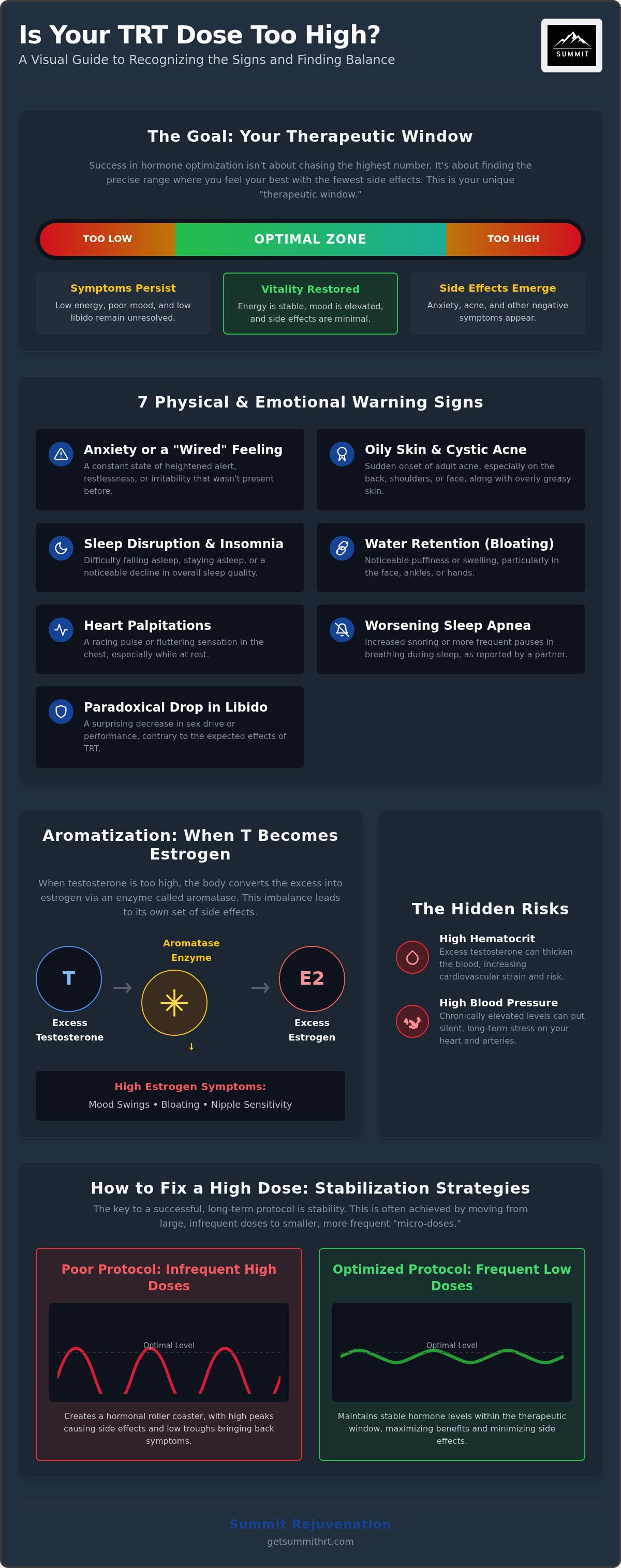
Success in hormone optimization isn't measured by who has the highest lab results; it's defined by the "therapeutic window." This window represents the precise range where you experience the maximum relief from symptoms while maintaining the fewest possible side effects. Many men mistakenly believe that pushing their total testosterone to 1200 ng/dL or higher will automatically lead to better results. In reality, overshooting this window often triggers the very signs your trt dose is too high that you're trying to avoid. You don't need a massive number to feel like yourself again. You need the right number for your unique biology.
Androgen sensitivity refers to how efficiently your body's receptors respond to testosterone, a trait that varies significantly from one person to the next. When you flood these receptors with supra-physiological levels, you disrupt your body’s hormonal homeostasis. Your biological systems don't just accept the excess; they rebel. This internal pushback is why you might feel more fatigued or irritable at a "high" dose than you did at a moderate, stable one. Your body is designed to find balance, and pushing too hard against that natural equilibrium usually results in diminishing returns.
The Myth of the "More is Better" Mindset
There's a common misconception that more testosterone translates linearly into more muscle mass and endless energy. However, hormone therapy follows the law of diminishing returns. Once you've saturated your receptors, adding more hormone doesn't increase benefits; it only increases metabolic stress. Over time, chronic exposure to excessive levels can lead to receptor downregulation. This is where your body actually becomes less sensitive to the hormone because it's trying to protect itself from the surplus. It's a physiological defense mechanism that can leave you feeling sluggish despite having sky-high levels on paper.
Optimization vs. Maximization
Your physiology is unique. A dose that makes your neighbor feel like a superhero might be toxic for your specific system. One major factor is Sex Hormone Binding Globulin (SHBG), a protein that dictates how much "free" testosterone is actually available for your tissues to use. If you have low SHBG, even a modest dose can result in high free T levels, potentially leading to signs your trt dose is too high if the protocol isn't tailored to your bloodwork.
Effective trt therapy prioritizes how you feel over arbitrary lab targets. While Androgen replacement therapy is a powerful tool for restoration, the goal is always optimization. This means finding the lowest effective dose that restores your vitality and keeps your health markers in a safe, sustainable range as we head into 2026. This patient-centric approach ensures you stay energized without putting unnecessary strain on your system.
7 Physical and Emotional Signs Your TRT Dose Is Too High
Identifying the signs your trt dose is too high requires paying close attention to your body’s daily feedback. While lab results provide a snapshot in time, your symptoms are real-time indicators of how your physiology is responding. It’s common for physical or emotional changes to manifest weeks before your next scheduled blood draw reflects a significant jump in levels. Tracking these shifts alongside comprehensive bloodwork ensures you stay within the therapeutic window where you feel your best.
Distinguishing between the initial adjustment period and a dose that is genuinely too high is vital for long term success. In the first few weeks, your body is recalibrating, and you might notice mild, temporary changes. However, if the following red flags persist or worsen after the two month mark, your protocol likely needs an expert adjustment:
Persistent anxiety or a "wired" feeling that doesn't subside.
Frequent heart palpitations or a racing pulse at rest.
Chronic insomnia or a significant decline in sleep quality.
Worsening of existing sleep apnea or new snoring issues.
Cystic acne on the back, shoulders, or face.
Noticeable water retention, especially in the face or ankles.
A paradoxical drop in libido or sexual performance.
The "Amped Up" Feeling: Anxiety and Sleep Disruptions
When testosterone levels exceed what your nervous system can handle, you might feel over-caffeinated or constantly on edge. This "amped up" state often leads to heart palpitations and a disruption of your natural sleep architecture. High doses can interfere with deep REM sleep, leaving you tired despite spending enough hours in bed. Understanding the risks of testosterone therapy is essential, particularly regarding sleep apnea, which can be significantly exacerbated by aggressive dosing that thickens the blood or affects respiratory drive during sleep.
Physical Changes: Skin, Hair, and Water Retention
Excessive testosterone often leads to a surge in sebum production, resulting in sudden adult acne that feels difficult to manage with standard skincare. You might also notice rapid water retention, known as edema, which creates a "puffy" appearance in the face or causes your socks to leave deep indentations around your ankles. Furthermore, if you are genetically predisposed to male pattern baldness, an excessively high dose can accelerate hair thinning due to the increased conversion of testosterone into Dihydrotestosterone (DHT). If these physical changes appear, it's a strong indicator that your current dose is overshooting your body's needs. Reaching out for a telehealth consultation can help you quickly identify if these shifts are dose-related.
The Paradoxical Libido Drop
It sounds counterintuitive, but more testosterone does not always equal a higher sex drive. There is a "libido saturation" point where androgen receptors become overwhelmed, leading to a loss of sensitivity and a decline in desire. Sexual function relies heavily on the delicate T-to-E ratio; when testosterone is too high, it often converts into excess estrogen, which can cause erectile dysfunction or moodiness. Finding your sweet spot means maintaining enough testosterone to drive desire without triggering the hormonal imbalances that shut it down.
The Hidden Risks: Hematocrit, Blood Pressure, and Cardiovascular Strain
While acne or anxiety are visible indicators, some of the most serious signs your trt dose is too high happen beneath the surface. These silent shifts in your blood chemistry and cardiovascular system require vigilant monitoring to ensure your path to vitality remains safe. Aggressive dosing can lead to polycythemia, a condition where your body produces too many red blood cells, effectively thickening your blood and increasing its viscosity. When your blood becomes too thick, it moves through your veins like sludge rather than a fluid, forcing your heart to work harder with every beat.
Understanding Blood Viscosity and Hematocrit
Hematocrit measures the percentage of red blood cells in your total blood volume. In 2026, the medical consensus generally places the upper safety limit for hematocrit at 54%. When your levels climb beyond this threshold, you may experience persistent headaches, dizziness, or a noticeably ruddy, red complexion in your face and neck. While therapeutic phlebotomy, or donating blood, can provide temporary relief, it's often just a band-aid. The actual cure for chronic polycythemia is refining your dose to a level your body can manage without over-producing red cells. This proactive adjustment protects your long-term health while maintaining the energy benefits you seek.
Cardiovascular Health Markers
High blood pressure is a common but often silent side effect of an aggressive protocol. Excessive testosterone can cause water retention and increased sympathetic nervous system activity, both of which drive up pressure and put unnecessary stress on the left ventricle of your heart. Over time, this strain can lead to structural changes in the heart muscle that are difficult to reverse. Monitoring your resting heart rate is a simple way to track this; a steady climb often signals that your dose is over-activating your nervous system and keeping you in a constant state of "fight or flight."
Your lipid profile also deserves close attention during therapy. Excessive dosing can suppress HDL, the good cholesterol, while potentially raising LDL, the bad cholesterol. This shift moves your cardiovascular risk profile in the wrong direction, even if you feel physically strong. This isn't just a concern for men; hormone replacement therapy for women also requires careful cardiovascular monitoring to ensure that optimization doesn't tax the heart. Whether you're male or female, the goal is a sustainable protocol. Regular bloodwork remains your best tool for catching these silent signs your trt dose is too high before they become significant health obstacles.
Aromatization: When Testosterone Turns Into Excess Estrogen
Your body is a master of balance. When you introduce more testosterone than your system can handle, it activates a backup plan called aromatization. This process uses the aromatase enzyme to convert surplus testosterone into Estradiol (E2), the primary form of estrogen in men. While some conversion is healthy, an aggressive dose triggers a massive spike in E2, leading to several telltale signs your trt dose is too high. Instead of feeling more masculine and energized, you might suddenly find yourself dealing with emotional volatility, extreme bloating, or nipple sensitivity, which is often a precursor to gynecomastia (breast tissue growth).
Many providers try to fix this by "crushing" estrogen with Aromatase Inhibitors (AIs), but adding more pills to mask a dosing error is rarely the best path. Estrogen is not the enemy; it's a vital hormone for your heart, bones, and cognitive function. The goal is to find your "sweet spot" ratio where your E2 supports your health without causing side effects. Often, simply reducing your testosterone dose is the most effective way to resolve the signs your trt dose is too high without the need for additional medications.
The Estrogen Misconception
A common mistake is assuming that lower estrogen always equals better results. In reality, men need a certain amount of E2 to maintain a healthy libido, burn fat, and protect brain health. If you drop your estrogen too low, you'll experience joint pain, dry skin, and a complete loss of sex drive. This makes diagnosing hormonal issues tricky because high and low estrogen symptoms often overlap. This is why we insist on sensitive Estradiol testing in your lab panels, ensuring we have the most accurate data before making any protocol shifts. If you're ready to see how your current levels stack up, you can schedule a consultation with our expert team today.
Managing Aromatization Naturally
Your metabolic health plays a significant role in how much testosterone you convert. Adipose tissue, or body fat, is rich in aromatase enzymes; the more body fat you carry, the faster you'll aromatize your dose. Supporting your metabolism through nutrition and specific nutrients like zinc can help stabilize this process. You might also wonder, are peptides good for you when trying to optimize your overall hormonal environment? While peptides can support metabolic efficiency, the foundation of a side-effect-free journey is always a testosterone dose that aligns with your body's capacity to process it. By refining your protocol, you allow your body to maintain homeostasis naturally.
How to Fix a High TRT Dose: Stabilization Strategies
If you've identified the signs your trt dose is too high, the next step is a methodical stabilization of your protocol. You don't need to abandon therapy; you simply need to refine it. Reclaiming your vitality requires a patient, data-driven approach that prioritizes how you feel over chasing a specific number. Expert hrt online providers specialize in these remote adjustments, using telehealth to monitor your symptoms and bloodwork as you navigate toward your sweet spot. Following a structured framework ensures that every change you make is purposeful and safe.
Step 1: Increase Injection Frequency
One of the most effective ways to eliminate side effects is "micro-dosing." Instead of a single large injection once a week, try splitting your total dose into twice-weekly or even every-other-day (EOD) injections. This strategy significantly reduces the massive "peaks" in testosterone levels that often trigger aromatization or thick blood, while preventing the "troughs" that lead to energy crashes. Many patients find that switching from Intramuscular (IM) to Subcutaneous (SubQ) injections also provides a more stable release of the hormone, leading to a smoother experience with fewer fluctuations in mood and energy.
Step 2: Titrating the Dose Downward
Sometimes, a simple 10-20% reduction in your total weekly dose is all it takes to resolve side effects while maintaining all the benefits of therapy. This is called "titrating to effect." The goal is to find the lowest effective dose that resolves your symptoms. During your telehealth consult, be prepared to describe your physical and emotional shifts in detail. Clear communication allows your provider to make precise adjustments that align with your unique androgen sensitivity. It's about finding the balance where you feel strong and focused without the "wired" feeling of an excessive dose.
Step 3: Re-Evaluating Lifestyle Factors
External factors can exacerbate the signs your trt dose is too high. Chronic stress, high alcohol consumption, and poor sleep all interfere with how your body metabolizes hormones. Because body fat contains the aromatase enzyme, carrying excess weight increases the rate at which testosterone converts to estrogen. Utilizing tools like peptides for weight loss can help lower your body fat percentage, which in turn reduces the likelihood of estrogen-related side effects. Additionally, staying properly hydrated is critical for managing hematocrit levels and supporting cardiovascular health.
Step 4: The 6-8 Week Rule
Patience is the final, mandatory step in any stabilization framework. After making a change to your frequency or dose, you must wait at least 6 to 8 weeks before re-testing your labs. It takes this long for your blood chemistry to reach a new steady state. Testing too early provides inaccurate data and can lead to unnecessary "hormone chasing," where you make constant, reactive changes that never allow your body to find its equilibrium. Commit to the new protocol, track your symptoms daily, and let the data guide your next move as we move through 2026.
Reclaim Your Vitality with a Precision Protocol
Mastering your hormone therapy means looking beyond the numbers on a lab report to focus on how you actually feel. You've learned that pushing for the highest possible dose often leads to diminishing returns and unwanted signs your trt dose is too high, such as persistent anxiety, skin issues, or cardiovascular strain. True success comes from finding the therapeutic window where your energy and libido are restored without compromising your long-term health. By prioritizing stability through frequent dosing and monitoring your internal markers, you can maintain your edge sustainably throughout 2026.
You don't have to navigate these adjustments alone. Our team provides expert medical oversight and comprehensive bloodwork-driven protocols to ensure your journey is both safe and effective. Through convenient telehealth monitoring, we help you make the precise adjustments needed to reach your goals and maintain peak performance. Find Your Optimal "Sweet Spot" – Schedule a Consultation with Summit Rejuvenation today. Take the first step toward a protocol that works for your unique biology and restores your total sense of self.
Frequently Asked Questions
Is 200mg of testosterone a week too much for TRT?
For many men, 200mg per week is on the higher end of the therapeutic spectrum and can lead to supra-physiological levels. While some individuals require this dose due to low androgen sensitivity or high SHBG, others may experience significant side effects. The goal of therapy is optimization, not maximization. Your provider should use comprehensive bloodwork to determine if this dose keeps you within a healthy, sustainable range without taxing your system.
Can too much testosterone cause anxiety and panic attacks?
Yes, an excessive dose can over-stimulate the central nervous system, leading to feelings of being wired, restless, or anxious. In some cases, this over-activation can escalate into full panic attacks or heart palpitations. These are classic signs your trt dose is too high and show that your body's in a constant state of fight-or-flight. Balancing your protocol often resolves these neurological symptoms quickly by restoring hormonal homeostasis.
How long does it take for side effects to go away after lowering my TRT dose?
You'll likely notice an improvement in acute symptoms like anxiety or heart palpitations within two to three weeks of a dose reduction. However, it takes approximately six to eight weeks for your blood chemistry to fully stabilize at a new level. During this period, your body's recalibrating its hormone receptors and metabolic processes. Patience is essential; avoid making further adjustments until you've verified your new baseline with updated lab results.
What are the early warning signs of gynecomastia on TRT?
The earliest indicators of gynecomastia include unusual sensitivity, itching, or a tingling sensation behind the nipples. You might also notice a small, firm lump or puffiness in the chest area. These symptoms suggest that your testosterone is aromatizing into excess estrogen at a rate your body can't handle. If you catch these signs early, a simple dose adjustment or change in injection frequency can often reverse the process before permanent tissue forms.
Does high testosterone cause high blood pressure?
High testosterone can lead to elevated blood pressure through several mechanisms, including increased water retention and a surge in red blood cell production. When your blood thickens, your heart must pump with greater force, which increases the strain on your arteries. This is why regular monitoring of your hematocrit and blood pressure is mandatory. Maintaining a dose that stays within your therapeutic window is the most effective way to protect your long-term cardiovascular health.
Can a high TRT dose cause hair loss?
If you're genetically predisposed to male pattern baldness, an excessively high dose can accelerate hair thinning. This happens because a portion of your testosterone converts into Dihydrotestosterone (DHT), a potent androgen that can shrink hair follicles. While signs your trt dose is too high often include skin issues like acne scarring, rapid hair loss is a clear signal that your DHT levels have likely overshot the healthy range. Reducing your dose often slows this conversion process, though for those seeking to address existing skin marks, ogzyskinandscalptattoo.com offers specialized paramedical tattooing solutions.
You shouldn't stop TRT cold turkey without medical supervision. Abruptly halting therapy causes your hormone levels to crash, which can lead to severe fatigue, depression, and a return of your original low-T symptoms. Instead of stopping, work with your telehealth provider to identify the root cause of your discomfort. Most issues are resolved through a controlled dose reduction or a change in injection frequency rather than a complete cessation of treatment.
How often should I get bloodwork if I suspect my dose is too high?
If you suspect your dose needs an adjustment, you should wait at least six to eight weeks after your last protocol change before getting new bloodwork. This timeframe allows your body to reach a steady state, providing an accurate reflection of your current levels. At Summit Rejuvenation, we use these comprehensive panels to guide every adjustment. Frequent testing during the stabilization phase ensures that we'll find your optimal sweet spot with precision in 2026.


Comments